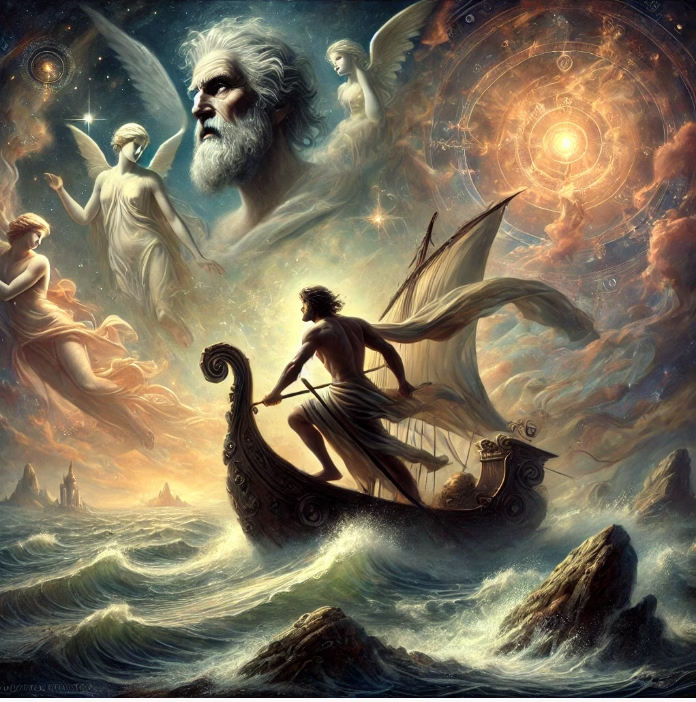
Homer’s Odyssey is an epic that has journeyed through millennia. Its tales of adventure, monsters, and a hero’s return still fascinate us. What gives this ancient Greek poem its enduring power? According to Rudolf Steiner’s spiritual science, the Odyssey is far more than a collection of myths. It is a profound depiction of the human soul’s evolution. It mirrors the trials of developing consciousness. This article explores Homer’s Odyssey through the lens of Rudolf Steiner’s insights. It reveals the poem’s deep spiritual meaning. This meaning remains vital for modern spiritual seekers.
Greek Consciousness and the Odyssey’s Setting
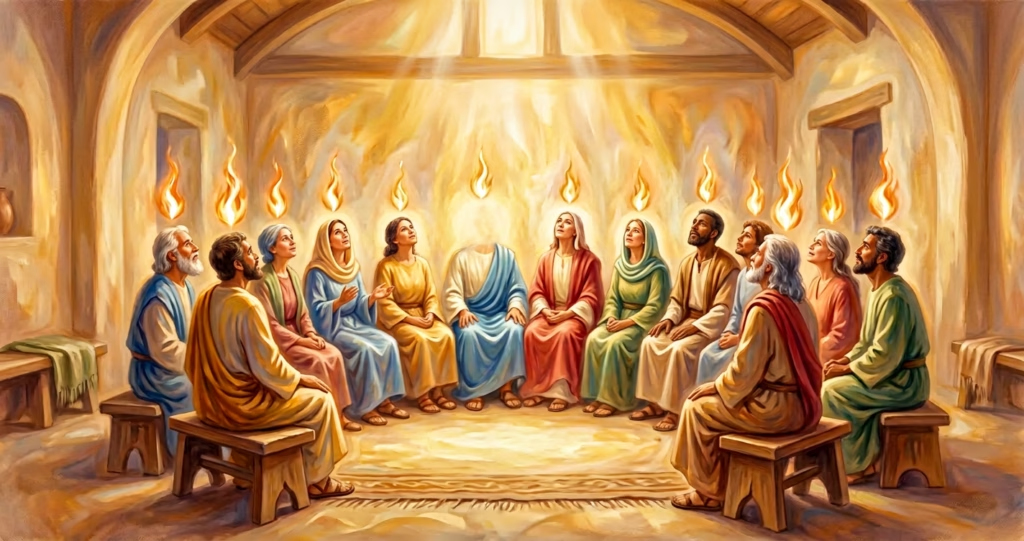
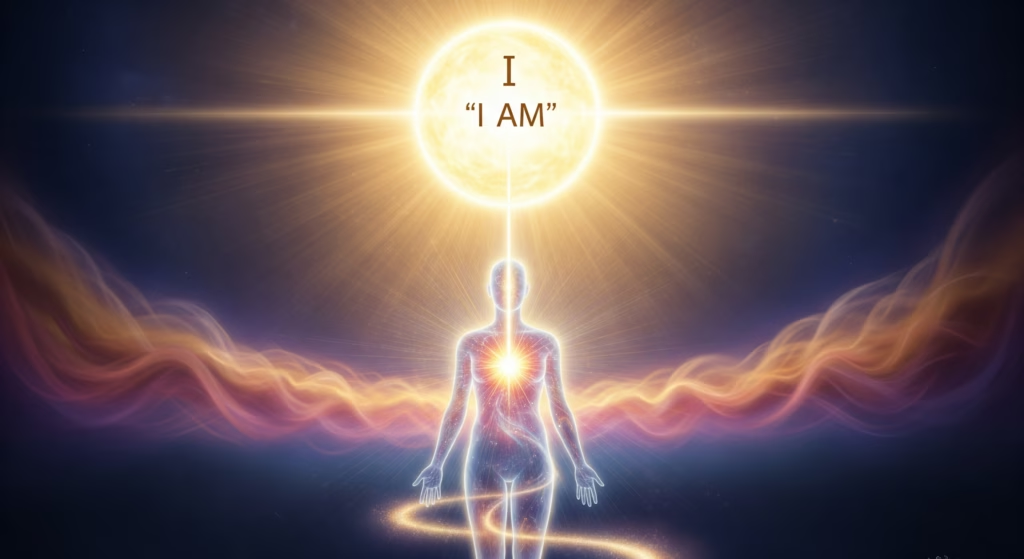
Rudolf Steiner described human history as an evolution of consciousness. Each cultural epoch brings new soul capacities to the forefront. The ancient Greek period, the fourth post-Atlantean epoch, was pivotal. It saw the development of what Steiner termed the intellectual soul or mind-soul (Verstandes- oder Gemütsseele). This was a shift from the earlier, more dream-like, pictorial consciousness of previous cultures. Humanity began to develop a more objective, intellectual grasp of the world. The individual “I” or ego started to awaken with greater self-awareness. Homer’s Odyssey, Steiner indicated, reflects this critical transition. (Insights drawn from GA 92, The Occult Truths of Myths and Legends, and GA 180, Ancient Myths and Evolution).
Odysseus, the epic’s hero, embodies this emerging intellectual soul. He is known for his cunning, his resourcefulness, and his capacity for endurance. These are qualities of an ‘I’ learning to navigate the world through its own thinking and will. However, this new intellect was still surrounded by remnants of older worldviews. The gods still intervened. Mythical beings still held sway. The Odyssey, therefore, portrays the human soul caught between an fading, divinely guided past and a future of greater individual responsibility. Its narrative unfolds against this backdrop of evolving inner human faculties.
Odysseus’s Journey: An Archetypal Path of Soul Development
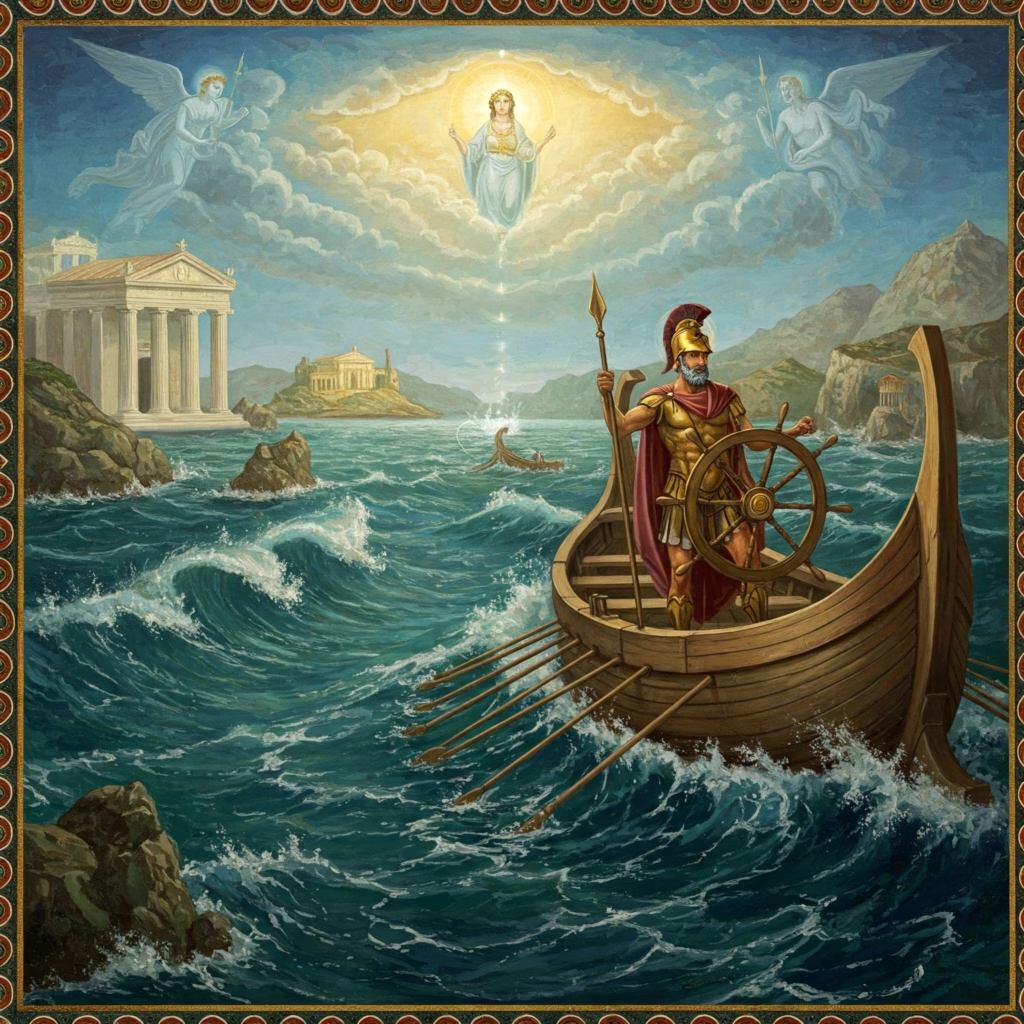
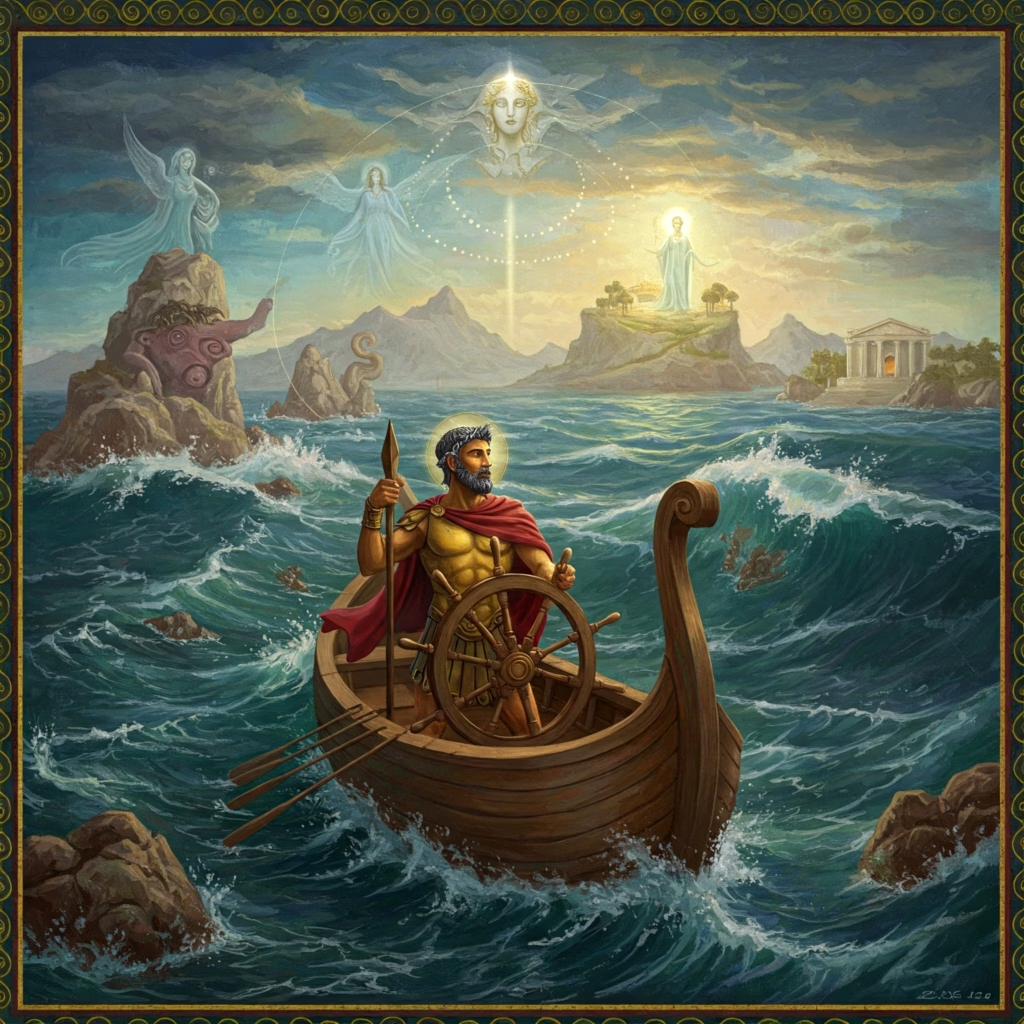
From Steiner’s spiritual-scientific perspective, the long and arduous journey of Odysseus back to Ithaca is a powerful allegory. It represents the human soul’s own odyssey. This is a journey towards self-knowledge and spiritual homecoming. Each island, each encounter, symbolizes inner trials. These trials test and develop new capacities within the soul.
The Call to Return and Early Trials
Odysseus’s deep longing for Ithaca—his nostos or homecoming—is central. This reflects the soul’s innate yearning for its spiritual origin. It is a desire for integration and wholeness. Early encounters test his resolve. For instance, the Lotus-Eaters offer forgetfulness. This represents the temptation to abandon one’s spiritual purpose. It is the danger of losing oneself in passive, sense-bound existence. Odysseus must actively rouse his men from this stupor. This shows the need for a conscious will to stay on the path.
Confronting Brute Force and Lower Impulses
The encounter with the Cyclops Polyphemus highlights another stage. Polyphemus represents a primitive, one-sided form of consciousness. He embodies brute strength lacking true insight. Odysseus overcomes him not through equal force, but through cunning intellect. This victory, however, incurs the wrath of Poseidon. This suggests that the newly won intellect, if used unwisely or boastfully, can create further karmic entanglements. The journey requires not just cleverness, but also wisdom.
The Dangers of Transformation and Illusion
Circe, the enchantress, transforms Odysseus’s men into swine. This powerful image points to the soul’s danger. It can become ensnared by lower, animalistic desires and lose its human form. Odysseus, with divine aid from Hermes, withstands Circe’s magic. He even learns from her. This signifies the ‘I’ learning to master its instinctual nature. It must spiritualize its desires rather than succumb to them.
The Sirens represent another peril. Their beautiful song lures sailors to their doom. Steiner often spoke of how ancient wisdom, once directly perceived, could become dangerous if approached only with the intellect without moral development. The Sirens can symbolize the allure of such old, perhaps Luciferic, forms of knowledge or sensory experiences. These can distract the soul from its true path if not met with conscious inner strength. Odysseus binds himself to the mast. This shows the need for self-discipline. He hears their song but is not overcome. This allows for experience without succumbing to illusion.
Navigating Perilous Choices and Timeless Allurements
The passage between Scylla and Charybdis depicts the soul’s journey. It must navigate between destructive polarities. One cannot be avoided without risking the other. This reflects the need for balance and careful judgment in life’s challenges. Later, Calypso offers Odysseus immortality and eternal youth on her idyllic island. This represents a subtle temptation. It is the lure of a timeless, dream-like existence, devoid of further struggle or development. However, the human soul, in this epoch, is destined for individual growth through earthly experience. Therefore, Odysseus must choose his mortal, challenging path towards Ithaca. He chooses becoming over static being.
The Descent into the Underworld (Nekuia)
Odysseus’s journey to the land of the dead, the Nekuia, is a profound episode. From a spiritual-scientific viewpoint, this often symbolizes an initiatory experience. It is a conscious encounter with the soul world, the realm beyond physical senses. Here, Odysseus gains knowledge from the shades of the departed. He learns about his own destiny and the nature of existence beyond death. This descent into darkness is crucial for gaining higher wisdom. It is necessary for his eventual return and restoration. This mirrors the seeker’s need to confront the shadow aspects of existence to achieve true enlightenment.
The Role of Divine Beings and Emerging Human Individuality
Throughout the Odyssey, gods and goddesses play active roles. Athena is Odysseus’s divine protector and guide. She represents wisdom and inspired thought. Poseidon, conversely, acts as his antagonist, symbolizing the challenging forces of the elemental world or karmic consequences. Rudolf Steiner explained that in ancient times, human beings experienced spiritual beings more directly. These beings guided and sometimes tested humanity.
However, the Odyssey also emphasizes Odysseus’s own resourcefulness. His intellect, endurance, and cunning are his primary tools. While he receives divine aid, his successes often depend on his human initiative. This reflects the evolving consciousness of the Greek epoch. The ‘I’ was strengthening. Humanity was gradually moving from being led by the gods to becoming more self-directed. This transition, however, was fraught with new dangers. The intellect, if not guided by higher moral principles, could lead to hubris and further suffering.
Ithaca and Penelope: The Soul’s Homecoming and Faithful Striving
The ultimate goal of Odysseus’s ten-year voyage is his return to Ithaca and his reunion with his wife, Penelope, and son, Telemachus. Ithaca symbolizes more than a physical place. It represents the soul’s true home. This is a state of inner integration and spiritual self-possession. It is the place where the ‘I’ can truly be itself, in its rightful kingdom.
Penelope, faithfully weaving and unweaving her shroud, is a powerful symbol. She can be seen as the human soul principle itself. She maintains her integrity and loyalty to her true spiritual counterpart (Odysseus, the ‘I’) despite many trials and temptations (the suitors). Her weaving can symbolize the patient work of the soul. It creates and dissolves forms while awaiting its full spiritual awakening and reunion with the conscious ego.
Before Odysseus can reclaim his kingdom, he must slay the suitors. These suitors represent the chaotic, degraded forces that have overrun his household (his inner life) during his absence. They symbolize base desires, arrogance, and the misuse of resources. Their defeat is necessary for the restoration of spiritual order. This is the soul’s purification before the ‘I’ can truly reign in its own inner kingdom.
The Odyssey’s Enduring Message for Modern Spiritual Seekers
Rudolf Steiner’s spiritual science allows us to see Homer’s Odyssey not just as ancient literature, but as a timeless map of the soul’s journey. Its relevance for modern spiritual seekers is profound. We too are on an odyssey. We navigate a complex world full of its own Sirens, Cyclopes, and Calypsos. These are the modern distractions, materialistic dogmas, and spiritual illusions.
Odysseus’s story encourages us to:
- Cultivate Inner Strength and Resilience: Like Odysseus, we face many trials. We need endurance and a firm hold on our spiritual purpose.
- Develop Discerning Intellect and Heart-Wisdom: Cunning intellect alone is not enough. It must be guided by compassion and a connection to higher truth, as Odysseus gradually learns.
- Remain Faithful to Our Spiritual Core: Like Penelope, the soul must remain true to its highest aspirations despite worldly pressures and delays.
- Confront and Transform Inner Obstacles: The “suitors” represent our own inner tendencies that prevent spiritual homecoming. These must be consciously addressed.
- Recognize the Journey Itself as Transformative: Every experience, every challenge, contributes to the soul’s growth and wisdom, preparing it for its ultimate Ithaca.
The Greek epoch, as portrayed in the Odyssey, was a crucial preparation. It developed the intellectual capacities that, much later, would be needed to begin to comprehend the Mystery of Golgotha. This event, the incarnation of the Cosmic Christ Spirit in the man Jesus at the Baptism and his deed on Golgotha, became the central turning point of Earth evolution. The individualized ‘I’, whose early struggles we see in Odysseus, was eventually to become the vessel for a new kind of spiritual understanding. The Christ impulse, then, could be received by a humanity that had passed through the stage of intellectual development mirrored in Greek culture.
Conclusion: The Eternal Voyage of the Soul
Homer’s Odyssey, interpreted through Rudolf Steiner’s spiritual science, transcends its historical setting. It becomes a living narrative of the human spirit’s evolution. Odysseus is an archetypal figure. He represents the emerging ‘I’. He struggles with external dangers and inner temptations. His journey reflects the path each soul must travel. It is a path towards self-awareness, integration, and union with its spiritual source.
The challenges faced by Odysseus are, in essence, the challenges of developing human consciousness. The epic offers timeless wisdom. It guides us in navigating our own life voyages. It encourages us to seek our spiritual Ithaca with courage, intelligence, and a faithful heart. The Odyssey reminds modern spiritual seekers that the path to true selfhood is long and arduous. Yet, it is also filled with profound learning and the promise of ultimate homecoming.