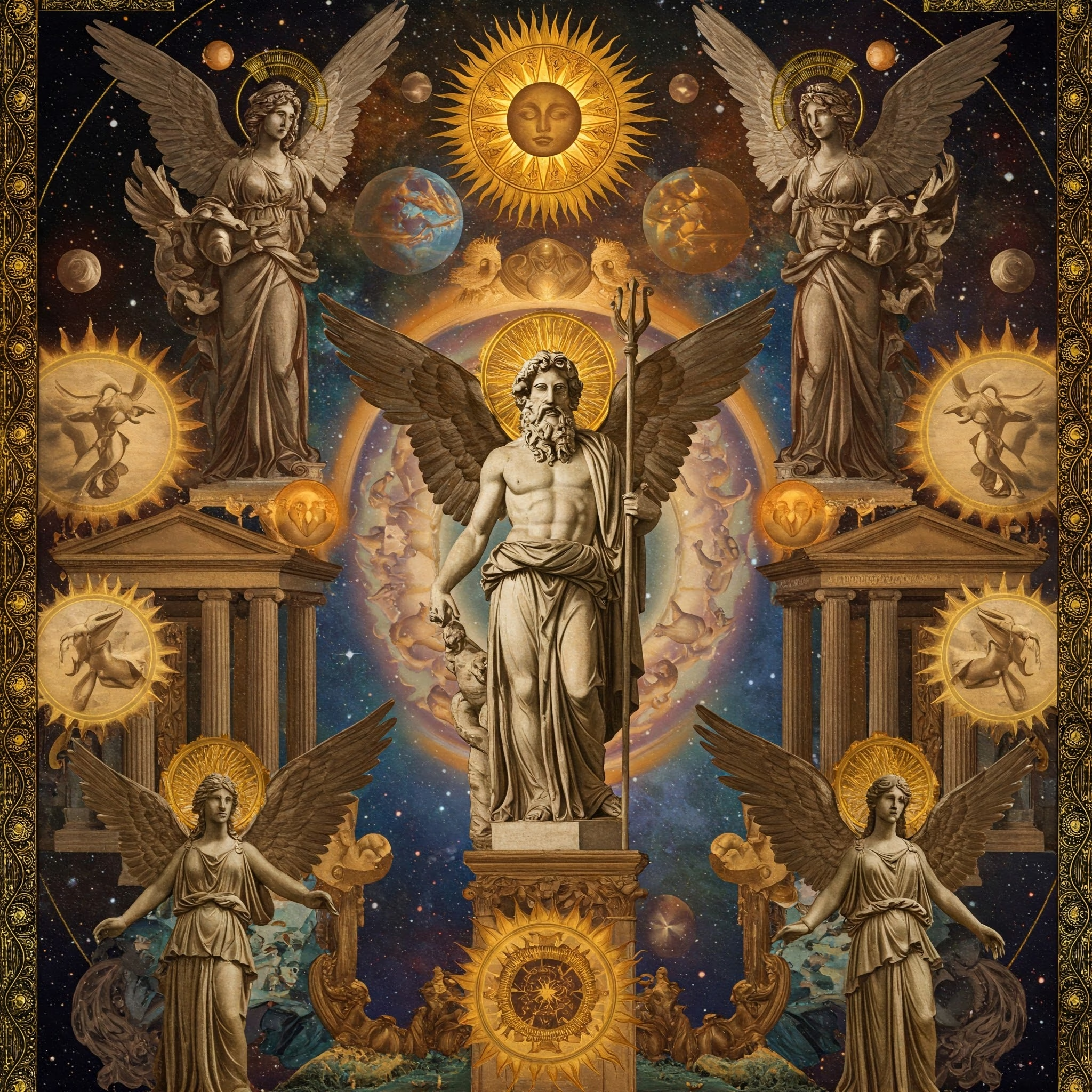
The enduring power of Greek mythology, particularly the narratives surrounding the Olympian gods, hints at truths deeper than simple allegory or ancient storytelling. When approached through spiritual science, embracing the Rudolf Steiner about Olympian Gods perspective, these figures emerge as vivid imaginations reflecting the interplay between guiding Spiritual Hierarchies and the potent cosmic and soul forces shaping our world and human evolution. Understanding this dynamic interplay reveals the profound spiritual wisdom encoded within these ancient myths.
Myth: The Soul’s Perception of Spiritual Reality
As we established, myths are not primitive fictions but the language of an earlier human consciousness, one more directly receptive to supersensible realities. This consciousness perceived the actions of spiritual beings and the flow of cosmic forces not through abstract concepts, but through living pictures and inspired narratives. Greek mythology, with its Olympian pantheon, represents a specific stage in this perceptual evolution, bridging the gap between ancient clairvoyance and the dawning intellectual soul. The Rudolf Steiner Olympian Gods view seeks to read these myths as inspired records of spiritual history and cosmic processes.
The Olympian Pantheon: Hierarchies Wielding Cosmic Forces
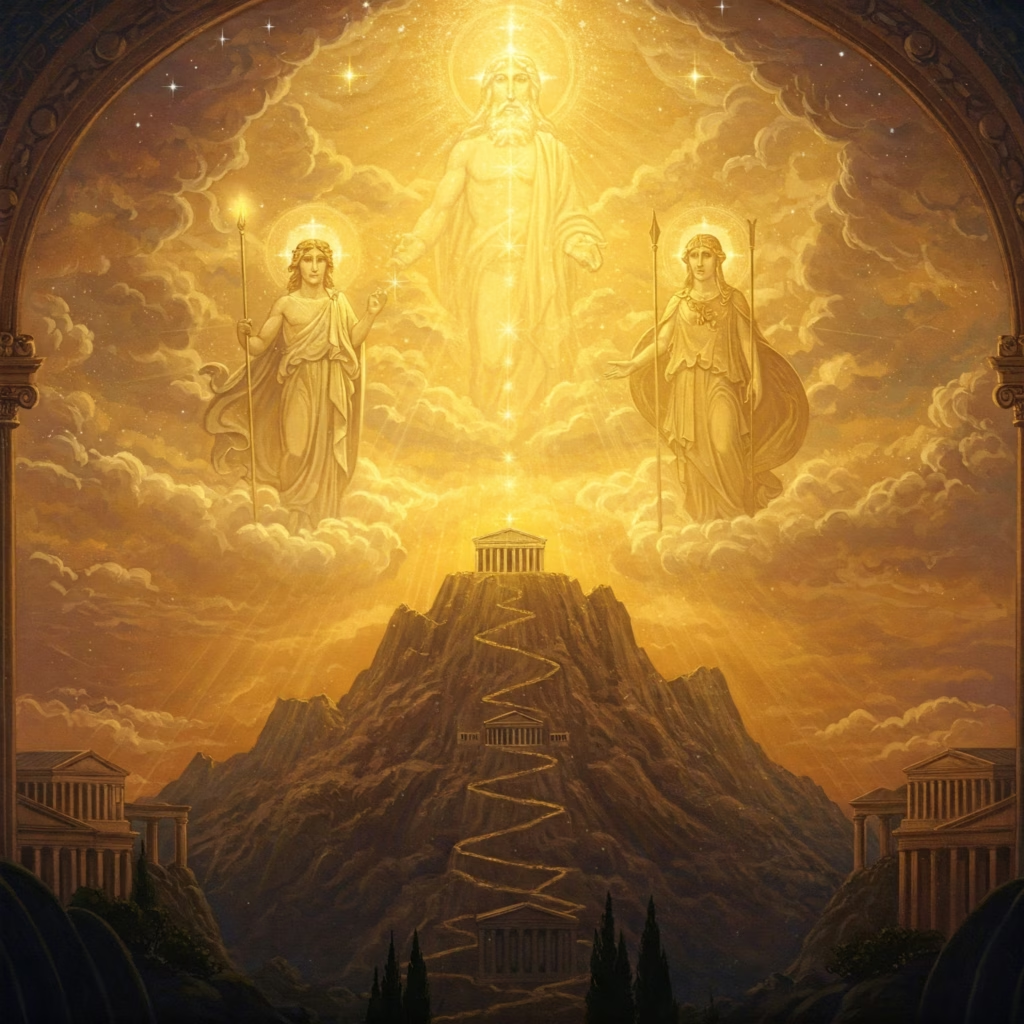
The Olympian gods, ruling from their mythological mountain peak, can be understood as imaginative reflections of how various ranks of the Spiritual Hierarchies interact with specific forces active in the cosmos and the human being. Let us examine key figures through this dual lens, understanding both the hierarchical level often involved and the forces they particularly embody:
- Zeus (Jupiter): Etheric Order and the Spirits of Form (Exusiai): Zeus, the Sky-Father and King of the Gods, embodies the principle of Cosmic Order and Ruling Intelligence working primarily within the etheric realm. His overthrow of the chaotic Titans symbolises the establishment of form and law over untamed elemental forces. This form-giving, ordering activity is characteristic of the Spirits of Form (Exusiai), the hierarchical beings whose task involves shaping planetary systems and guiding the forms of nature and human consciousness according to cosmic wisdom. Zeus’s thunderbolt represents the descending spiritual power that maintains this order. His expansive, sometimes seemingly capricious, nature in myth reflects the manifold ways this form-giving intelligence permeates world events and human bloodlines, always working from the encompassing etheric periphery inwards. The Rudolf Steiner Olympian Gods understanding sees him as the guiding etheric intelligence of the Greek epoch.
- Hera (Juno): The Astral Soul Life and Archangelic Guidance: As Zeus’s consort and Queen, Hera represents the forces of the ensouled cosmos, particularly the astral life in its potential for both devotion and powerful emotion (often depicted as jealousy). She guards the sanctity of established bonds (like marriage), reflecting the astral body’s role in relationships and feeling. Her influence relates to the guidance offered by beings of the Third Hierarchy, likely Archangels, who work deeply into the soul-life of peoples, nurturing specific feeling capacities and cultural bonds necessary for evolution. She embodies the receptive soul principle responding to the ordering forces of the spirit (Zeus).
- Apollo: Solar Clarity, Harmony, and Archangelic/Archai Influence: Apollo, the radiant Sun God, is a potent imagination of the forces of Clarity, Harmony, Spiritual Light, and Healing Wisdom. He represents the ordering power of the Sun working into the world through art (music, poetry), prophecy (clear vision), and harmonious measure. He stands against darkness and chaos. His influence aligns strongly with the guiding cultural impulses fostered by Archangels and particularly the Archai (Time Spirits or Spirits of Personality) who oversee entire epochs. Within the Rudolf Steiner’s Olympian Gods context, Apollo is seen as the highest expression of the Sun principle accessible before the true Cosmic Sun Spirit, Christ, incarnated, thus preparing humanity spiritually and culturally for that central event.
- Athena (Minerva): Intellectual Soul Wisdom and Archai Influence: Athena, born from the head of Zeus, embodies the force of Wisdom manifesting as clear, objective Thought – the intellectual soul taking hold in humanity. She represents strategy, conscious artistry (crafts), and the application of intelligence to life. Her emergence signifies the growing independence of human thinking, a key characteristic of the Greek epoch fostered under the guidance of the Archai. While Apollo represents inspired, artistic clarity, Athena embodies the emerging power of human reason itself, channelled towards purposeful action and cultural development.
- Poseidon (Neptune) & Hades (Pluto): Forces of the Soul Depths/Etheric and the Physical/Unconscious Will: These brothers of Zeus govern realms distinct from the spiritual heights. Poseidon wields the force of the fluidic, ever-moving etheric and astral depths, reflected in the sea’s power and changeability. His domain is the subconscious life of feeling and formative forces, often erupting with elemental power. Hades rules the underworld, representing the unconscious will forces bound to the physical body and the mineral earth, the realm of death, decay, and hidden foundations. While appearing fearsome, Hades’ realm represents the necessary grounding in the physical-mineral reality and the subconscious will from which conscious life arises and to which the physical returns. These figures reflect how hierarchical influences differentiate down into the soul and physical constitution.
- Other Olympians: Differentiated Soul Forces & Planetary Influences: Figures like Ares (Mars) embody the force of impulsive, aggressive will working through the astral body. Aphrodite (Venus) represents the potent forces of earthly love, desire, and sensual beauty, also rooted in the astral. Hephaestus (Vulcan) signifies the transformative power of the will applying intelligence to earthly substance (fire, metalworking). Hermes (Mercury) embodies the forces of communication, intellectual dexterity, and mediation between realms, reflecting Angelic and Archangelic functions. Each Olympian, within the Rudolf Steiner Olympian Gods view, reflects specific forces and the spiritual beings guiding or working through those forces, often having connections to specific planetary spheres whose influences shape earthly and human life.
Greek Consciousness: The Intellectual Soul Awakens
The Olympian myths flourished during the fourth post-Atlantean epoch, the Greco-Roman age. This was the period, according to spiritual science, when humanity developed the Intellectual or Mind Soul. Human consciousness was transitioning from the pictorial, dreamlike clairvoyance of earlier cultures towards clearer, more objective thinking and a stronger sense of individual identity.
The Olympians, with their defined personalities yet cosmic scope, mirror this stage. They are intermediaries, bringing cosmic order (Hierarchies/Forces) into a form graspable by the developing human intellect and soul. The Greeks experienced thinking not yet as something entirely self-generated by the “I,” but often as an inspiration or influx from these divine beings (Athena, Apollo, the Muses). Art and philosophy blossomed as humanity strove to create earthly reflections of the perceived cosmic harmony and wisdom embodied by the Rudolf Steiner’s Olympian Gods imagery.
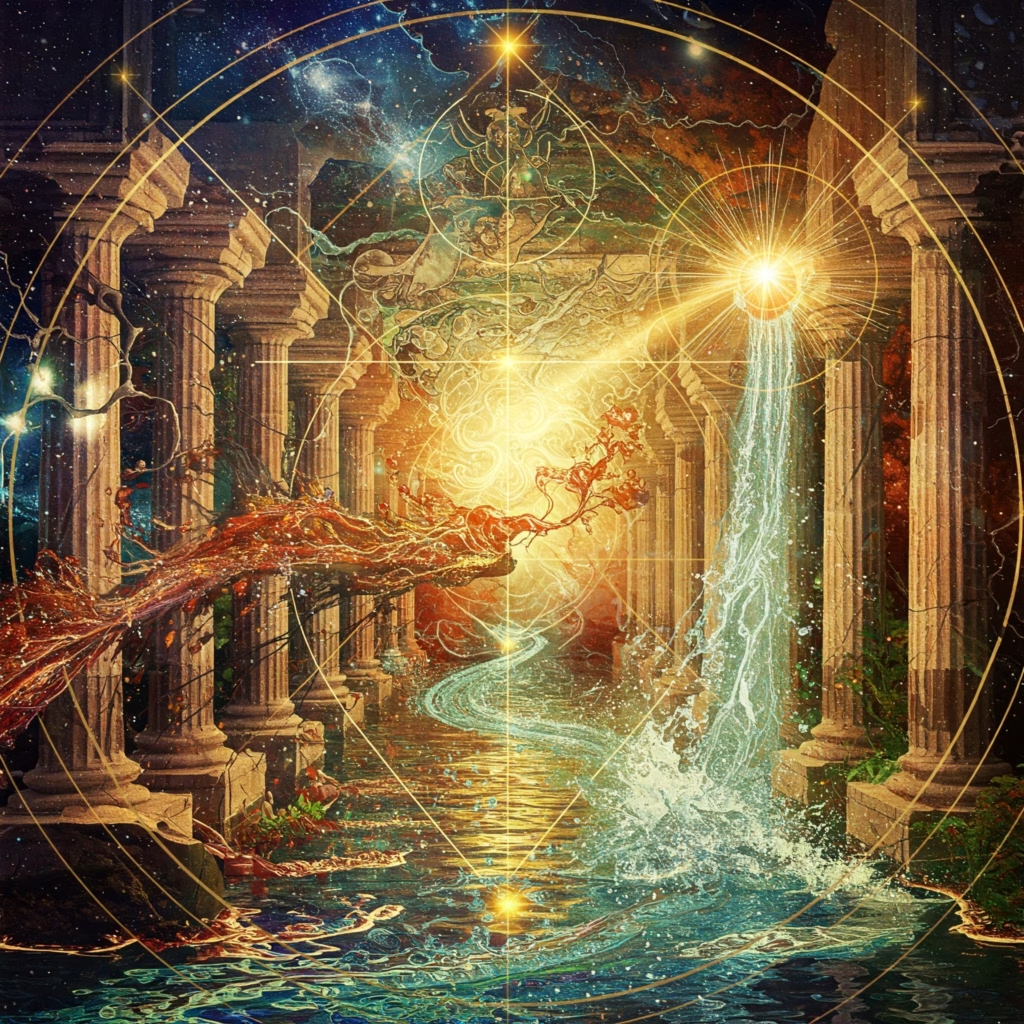
Olympian Age: Preparation for the Mystery of Golgotha
Spiritual history, as revealed by anthroposophy, is not random but follows a divine plan centered on the Mystery of Golgotha – the incarnation, death, and resurrection of Christ. In this grand narrative, the entire Greek culture, under the guidance reflected in the Olympian myths, played an indispensable preparatory role.
- Forging the Instrument of Thought: The clarity of thought fostered by the Greek spirit, influenced by figures like Athena and Apollo, developed the intellectual capacity necessary for humanity to eventually receive and begin to comprehend the profound spiritual truths revealed through Christ, the incarnate Logos.
- Cultivating the Soul: Greek art, drama, and philosophy explored the full spectrum of human soul experience, refining the astral body and preparing it to receive the transformative impulse of Christian love.
- Pointing Towards the Sun Spirit: Apollo, the Sun God, served as a placeholder, a reflection of the true Sun Spirit, Christ, preparing humanity to recognize Him upon His arrival. The Mysteries connected with the Greek gods provided esoteric pathways that hinted at the deeper realities of death, initiation, and rebirth, foreshadowing the ultimate overcoming of death through Christ’s resurrection.
Thus, the Rudolf Steiner Olympian Gods understanding situates Greek mythology not as an endpoint, but as a vital, divinely guided prelude to the central event of Earth evolution.
Conclusion: Olympian Echoes in the Modern Soul
Engaging with the Rudolf Steiner’s Olympian Gods perspective allows us to appreciate Greek mythology as a window into the spiritual world as perceived by a specific, crucial stage of human consciousness. These divine figures embody the interplay of guiding Spiritual Hierarchies and the cosmic and soul forces they wielded to shape human destiny.
By looking beyond the surface narrative to the hierarchical influences and the forces represented – the ordering etheric intelligence of Zeus (Exusiai), the astral soulfulness guided by Hera (Archangels), the solar clarity of Apollo (Archai/Archangels), the intellectual wisdom of Athena (Archai), the soul depths of Poseidon, the unconscious will of Hades, the impulsive force of Ares, the earthly love of Aphrodite, the transformative craft of Hephaestus, the mediating intellect of Hermes (Angels/Archangels) – we gain insight into the spiritual dynamics underlying cultural evolution.
For us today, these myths serve as more than historical artifacts. They remind us of the reality of the spiritual hierarchies, the power of cosmic forces working into our lives, and the evolutionary journey of human consciousness. They offer living pictures that can still nourish the soul and awaken an understanding of the spiritual foundations upon which our present age, with its unique challenges and its call for a conscious connection to the spirit, is built.