He died at twenty-eight, a trained mountain engineer who found mathematics more mystical than most people find prayer, and left behind six short prose poems written in the shadow of a grave. Rudolf Steiner considered Novalis one of the purest examples in modern history of a soul working directly out of genuine spiritual knowledge — not through years of disciplined esoteric training, but through the sudden, grief-triggered return of memories Steiner believed belonged to a life Novalis had already lived before this one.
A Mathematician Who Found God in Numbers
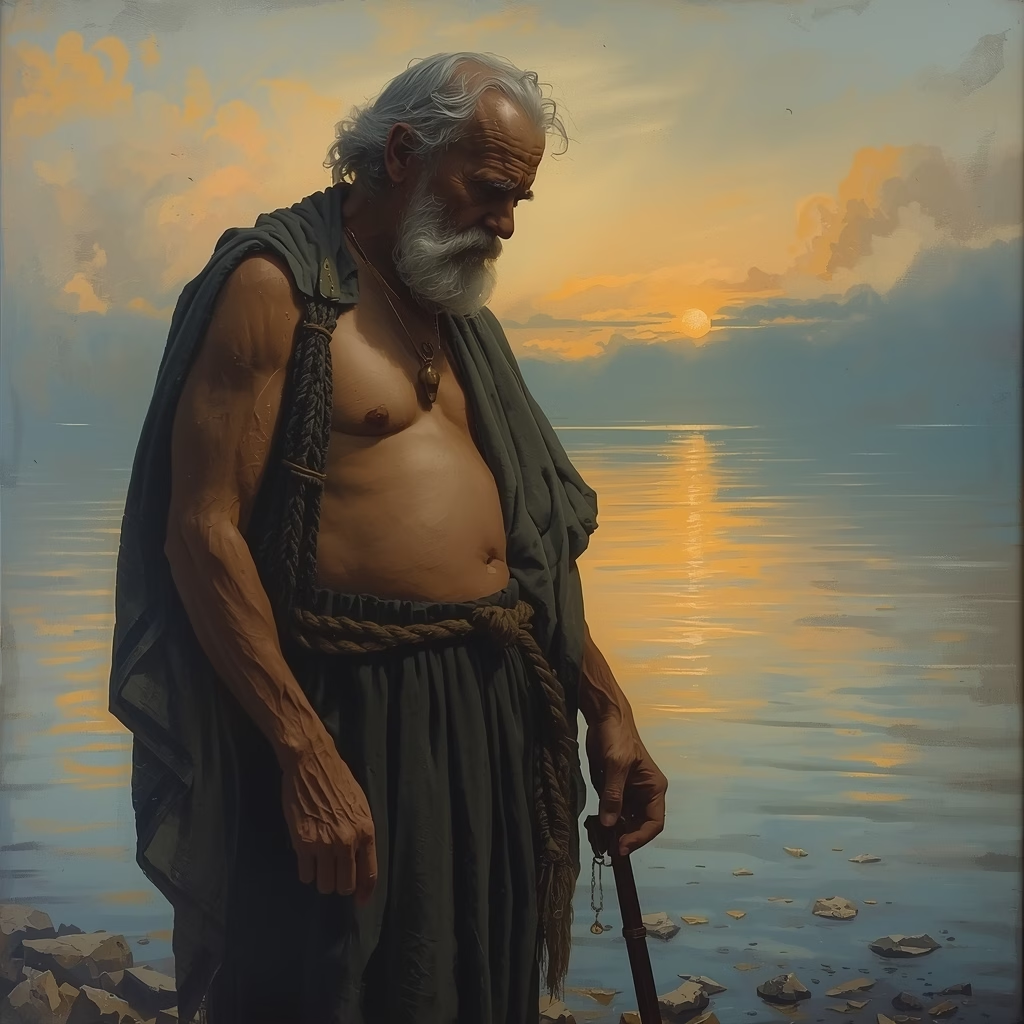
In an October 1908 lecture given in Berlin, collected in Answers Provided by Anthroposophy Concerning the World and Life (GA 108), Steiner described how Novalis trained as a mountain engineer, a career resting entirely on mathematics and law. For most people, mathematics remains cold. For Novalis it became something else entirely: “life in the mathematical imagination became a great poem which filled him with delights” — mathematics functioning as “the warmest way to the spiritual life.”
Not Discipline, But Memory
Steiner drew a sharp distinction between Novalis and his contemporary Goethe. Goethe arrived at his spiritual development through a regulated course toward genuine initiation, built up deliberately over time. Novalis’s case was different in kind — a young man who “gave the German intellectuals more than a hundred thousand others could give,” and whose life, Steiner said, was “actually a memory of a previous one.” Specific spiritual experiences from earlier incarnations, on this account, presented themselves directly to Novalis’s soul and flowed out, largely unbidden, into his poetry — a soul that did not need to build its spiritual insight brick by brick, but arrived already largely formed.
The Girl Who Was Barely a Girl
The circumstance that opened this memory had a name: Sophie von Kühn, whom Novalis met as a young girl in Grüningen. Steiner rejected comparing the bond to an ordinary romantic attachment, saying instead “there was in Sophie von Kühn something like the lives of various beings.” He dismissed skeptics who pointed to Sophie’s spelling-error-riddled letters as proof of youthful illusion, countering that Goethe himself, meeting her in Jena, had been deeply impressed.
I Will Emulate Her in Death
Sophie died young, and Novalis settled into a mood he named himself: Ich sterbe ihr nach — “I will emulate her in death.” Steiner insisted he was never again separated from her soul, and that a later woman in his life, Julie von Charpentier, functioned only as “the earthly symbol of Sophie von Kühn’s deceased soul,” a visible stand-in for a bond that had already moved onto a different plane entirely. What poured out of this bond was the actual content of the Hymns to the Night — wisdom Steiner describes as genuinely dissolved out of his soul, released specifically because of what this first soul-bond had opened in him.
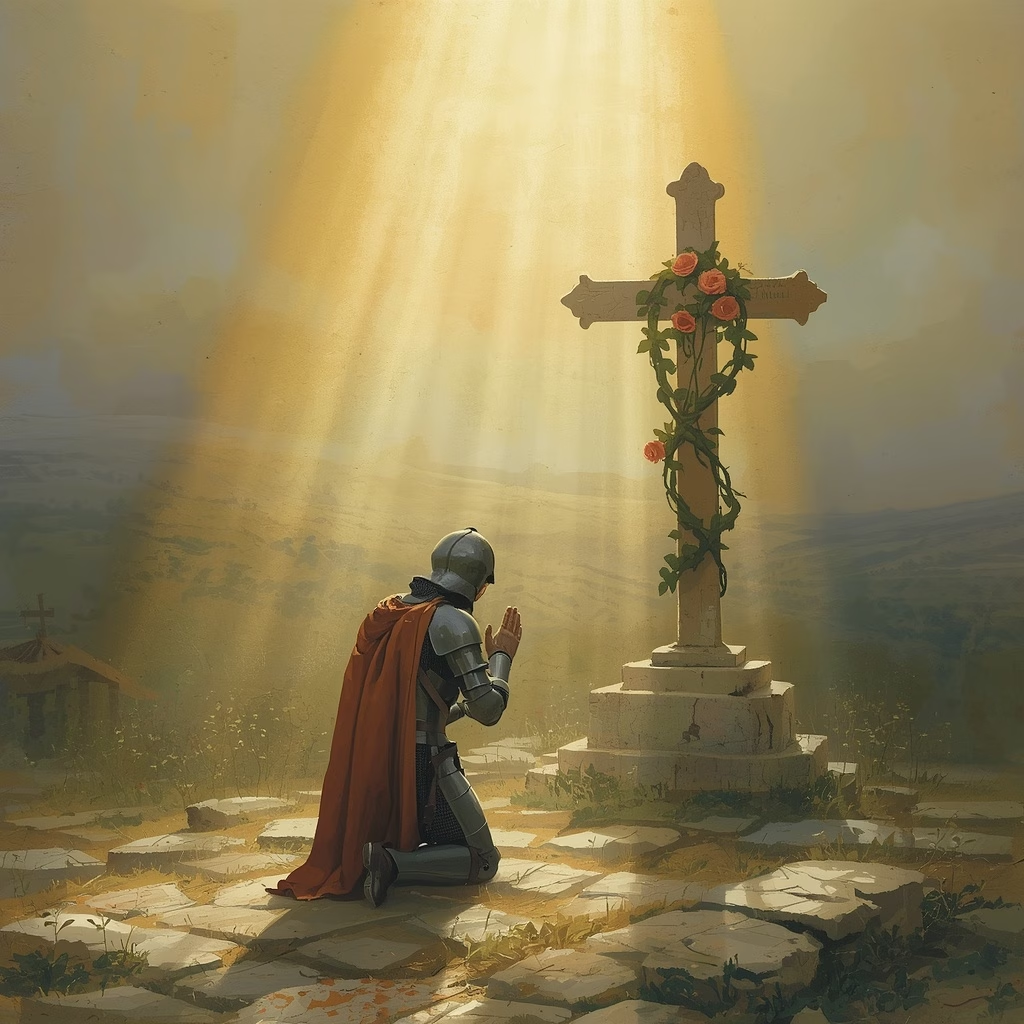
The full article on Substack covers the specific vision Novalis records at Sophie’s grave in the Third Hymn, Steiner’s account of a prehistoric age before death entered creation, the Being who held back until the Mystery of Golgotha, and what all of this reveals about the true origin of the Blue Flower in Novalis’s unfinished novel. Free to read on Substack.
Read the full article free on Substack →