Something remarkable happens in the first seven years of a child’s life. A being descends from the spiritual world into a physical body — and must, in the course of those seven years, make that body its own. Not simply grow within it, but genuinely take possession of it — learning to walk, to speak, to think, gradually shaping the physical instrument into the vehicle for a spiritual individuality that has existed across multiple previous incarnations.
Rudolf Steiner’s account of child development is among the most practically significant dimensions of his entire work. He addresses it in GA 293 (“Study of Man”), GA 294 (“Practical Course for Teachers”), and GA 309 (“The Essentials of Education”).
The Child as a Being Descending From the Spiritual World
The first and most fundamental thing Steiner says about the child is this: the child who enters earthly life is not an empty vessel to be filled. He is a spiritual being — an individuality with an entire karmic history, with specific capacities developed across previous incarnations, with specific gifts, challenges, and a developmental task this incarnation is intended to serve.
Steiner describes in GA 293 how the child descends from the spiritual world carrying the fruits of everything developed across previous lives. These fruits lie dormant in the soul’s depths, gradually appearing through the specific character, gifts, and difficulties the child exhibits as development proceeds. The parent or teacher who perceives the child as a being whose nature precedes birth and will outlast death brings to that relationship a quality of genuine reverence — already doing something of the highest importance for that child’s development.
The Threefold Birth
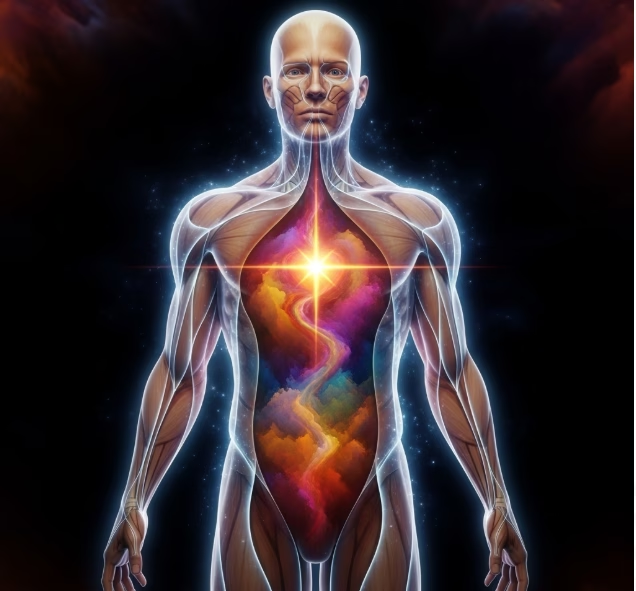
Steiner describes what he calls the threefold birth of the human being — a concept of the greatest practical significance. Physical birth is only the first of three. The etheric body — the body of life forces — remains enclosed within a protective etheric sheath that gradually dissolves during the first seven years. When it has fully dissolved at approximately the time of the change of teeth around age seven, the etheric body is truly born: the second birth. The birth of the astral body — the third birth — occurs at puberty, around the fourteenth year.
This is not metaphor. It is a precise account of how the spiritual members of the human being gradually incarnate and take possession of the physical organism — with direct and specific practical consequences for how the child should be treated at each phase.
The Child as Complete Sense Organ
Steiner makes a practically transformative statement in GA 293. The young child is essentially a complete sense organ — a being whose entire organism is open to the direct impression of everything in the surrounding environment in a way the adult organism is not.
The adult has developed specific sense organs and the protections of developed consciousness. The young child has not. His entire organism receives and responds to the quality of everything surrounding him with directness and completeness that the adult no longer possesses. The young child absorbs not only the explicit content of what adults say and do — but the entire quality of the inner life those adults carry. The anger an adult suppresses, the genuine warmth a warm adult radiates — both are absorbed directly, before any interpretation, through the child’s entire organism.
Consequently, the most important question for anyone caring for a young child is not what educational method to apply. It is what quality of inner life to develop in oneself. The adult who develops genuine inner warmth and genuine moral seriousness is already providing the most nourishing developmental environment possible.
Imitation and the Will
The developmental mode of the first seven years is imitation. The child learns everything — walking, speaking, basic emotional orientations — through deep, instinctive, organism-level imitation of what he encounters around him. And Steiner connects this specifically with the will forces. The specific quality of genuine inner initiative that the adult will eventually be able to develop — the capacity to translate moral intention into moral action — is being formed in its deepest foundations now.
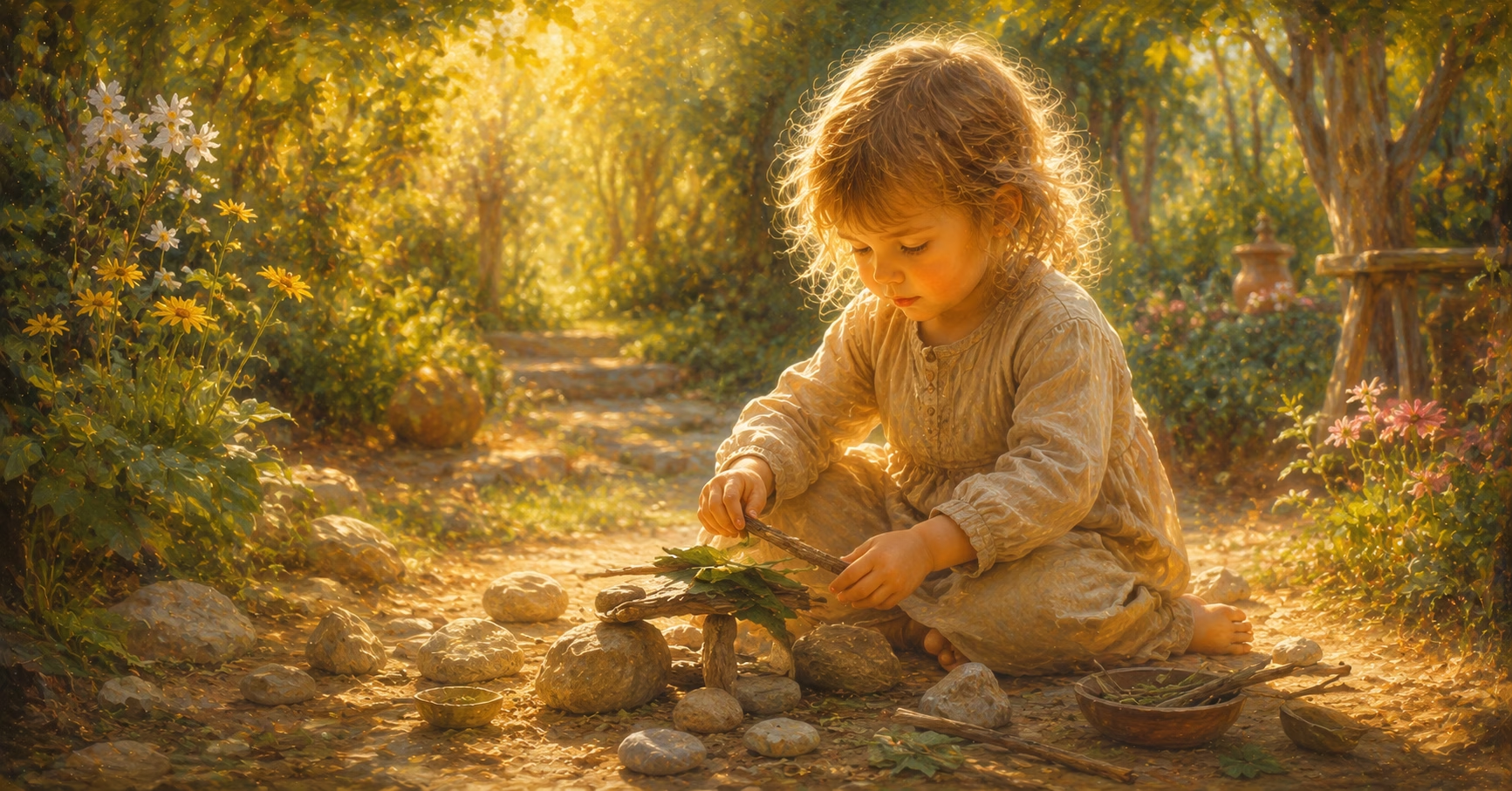
This formation occurs through free, purposeful, self-directed physical play. The child who has had this freedom in the first seven years arrives at the second period with a will foundation of genuine inner initiative. The child who has been excessively directed or stimulated arrives without it — and this deficit is far more difficult to remediate in later development than is commonly understood.
What Children Need Most
Steiner’s practical guidance converges on three principles. Warmth — not primarily physical warmth, but the warmth of genuine human love and genuine interest in the specific child as a spiritual individuality. Rhythm — the consistent, predictable, living rhythm of daily life that the etheric body needs to develop healthily. And freedom in play — the freedom that allows the child to follow his own inner developmental impulse in the self-directed, imaginative activity that is his natural mode of making sense of the world he has entered.
The adult’s responsibility toward the young child is among the most serious of all human responsibilities — because what is done or left undone during these years shapes the entire arc of the soul’s development in ways that later education can only partially correct.
The full article on Substack covers the complete account of the threefold birth and its practical implications, the second seven-year period and the role of living imagination and genuine authority, and Steiner’s specific practical guidance for Waldorf early childhood environments. Free to read on Substack.
Read the full article free on Substack →