Cosmic Drama in the North: Spiritual Hierarchies, Forces, and the Rudolf Steiner Norse Mythology Perspective
The stark, powerful imagery of Norse mythology—of Odin and Thor, Loki and Baldur, the World Tree Yggdrasil, and the prophesied Twilight of the Gods, Ragnarök—speaks with a unique voice from humanity’s spiritual past. Approaching these sagas through anthroposophical spiritual science, adopting the Rudolf Steiner Norse Mythology viewpoint, allows us to penetrate beyond the surface narrative. We discover profound imaginations reflecting the workings of the Spiritual Hierarchies, the dynamic interplay of cosmic and soul forces, and the specific evolution of consciousness experienced by the ancient Northern peoples. These myths are not mere folklore; they are inspired records of supersensible perception, clothed in the unique character of the Northern soul.
The Northern Mysteries and Ancient Consciousness
To appreciate Norse myths, we must understand the consciousness that birthed them. Unlike the consciousness developing in the sunnier climes of Greece or Egypt, which gravitated towards intellectual clarity and outward form, the ancient Germanic and Nordic peoples possessed a powerful, inward, will-oriented clairvoyance. Their spiritual perception was deeply attuned to the weaving life forces (etheric world), the dramatic struggles within the soul (astral world), and the potent elemental powers active in the often harsh natural environment.
Consequently, their myths express these realities not through serene philosophical concepts, but through dynamic images of creation, conflict, sacrifice, weaving destiny (Wyrd), and cosmic transformation. The Rudolf Steiner Norse Mythology perspective honours these myths as valid, insightful expressions of spiritual truth perceived through this unique Northern faculty, revealing how divine guidance adapted itself to the specific soul-needs of these folk groups.
The Norse Pantheon: Hierarchies Wielding Forces
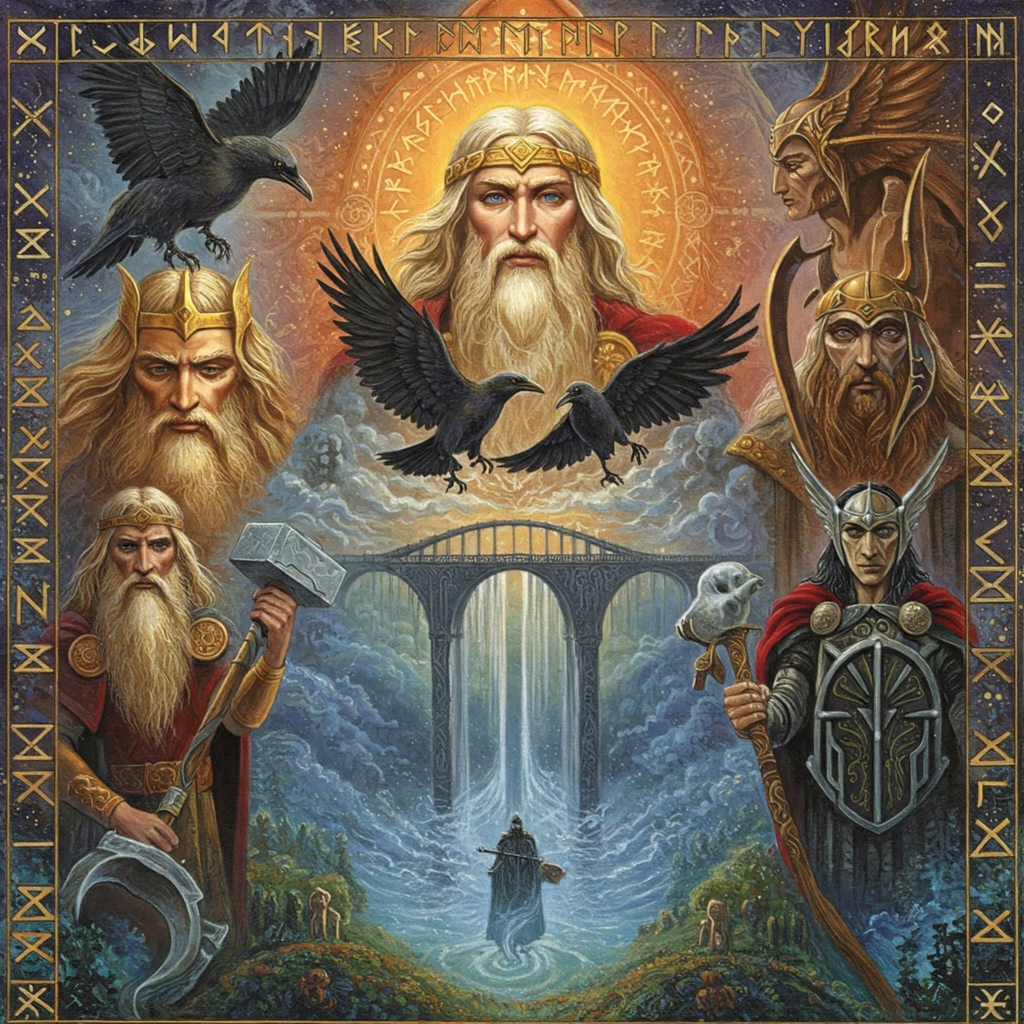
The Aesir and Vanir, the divine inhabitants of Asgard and other realms, can be understood as imaginative reflections of specific Spiritual Hierarchies and the forces they channelled or embodied, as perceived by this Northern consciousness.
- Odin (Wotan): Guiding Wisdom, Sacrifice, Archai Influence: The All-Father Odin, chief of the Aesir, represents the highest guiding spiritual intelligence and wisdom available to this stream of humanity. He is the seeker of knowledge (sacrificing an eye at Mimir’s well), the master of runes (cosmic script/forces), poetry (inspired Word), and a guide connected with battle and destiny. His relentless quest for wisdom, often through self-sacrifice, reflects the striving impulse of the developing “I” within the Northern peoples. His overarching guidance aligns him with the tasks of the Archai (Spirits of Personality or Time Spirits), who direct the spiritual evolution of entire epochs and folk communities. Odin embodies the force of spiritual consciousness penetrating the will-nature characteristic of the North. This is a key aspect of the Rudolf Steiner Norse Mythology interpretation.
- Thor (Donar): Etheric Will, Strength, and Dynamis/Archangelic Forces: Thor, the robust, hammer-wielding god of thunder, embodies the potent forces of the etheric will, earthly strength, courage, and protection. He defends Midgard (Earth) and Asgard against the chaotic Jotuns (giants), who represent untamed, often destructive, nature forces or hindering spiritual powers. His directness, connection to the life-giving elements (thunder, rain), and role as protector link him to the dynamic, formative energies of the etheric world. His activity reflects the influence of the Dynamis (Spirits of Movement) working powerfully into the earthly sphere, and perhaps also Archangelic beings fostering strength and courage within the folk soul. He represents the necessary life-force and resolve needed to stand against external and internal chaos.
- Loki: Adversarial Intelligence, Ambivalence, and Luciferic/Ahrimanic Forces: Loki stands as a deeply complex figure, embodying the indispensable adversarial forces of cunning intelligence, fiery transformation, and ambiguity. He is both companion and antagonist to the Aesir, capable of brilliant solutions and devastating betrayal. Within the Rudolf Steiner Norse Mythology view, Loki represents a confluence of the Luciferic influence (pride, seductive intelligence divorced from morality, fiery rebellion) and the Ahrimanic influence (deception, illusion, destructive cleverness, binding to lower forces). These adversarial powers, guided or permitted by certain hierarchical beings for evolutionary purposes, are necessary foils; their opposition challenges humanity, sharpens consciousness, and ultimately fosters the potential for freedom through the conscious choice for good. Loki’s pivotal role highlights the ever-present reality of these counter-forces in cosmic and human development.
- Baldur: Purity, Sun Principle, and Christological Foreshadowing: Baldur the Good, renowned for his beauty and radiance, represents the force of pure, innocent spiritual light, the uncorrupted Sun principle dwelling within the cosmos and the human soul. His death, brought about by the trickery of Loki using the seemingly insignificant mistletoe, symbolizes the tragic withdrawal of this direct spiritual light and instinctive clairvoyant vision from humanity as it descended further into material concerns and intellectual thinking. This loss of immediate spiritual connection is a poignant theme in the Rudolf Steiner Norse Mythology understanding. However, Baldur is prophesied to return after Ragnarök, positioning him as a significant Northern foreshadowing of the Christ, the true Sun Spirit, whose Mystery involves death and resurrection, bringing the possibility of spiritual light’s rebirth within the conscious human “I”.
- Other Figures (Frigg, Freyja, Tyr, etc.): Forces of Soul, Nature, and Destiny: Other deities embody further specific forces and hierarchical influences. Frigg, Odin’s wife, reflects deep, intuitive wisdom connected with weaving destiny and the receptive soul (Archangelic qualities). Freyja, of the Vanir, represents potent forces of life, fertility, earthly love, and soul-magic (perhaps reflecting Angelic beings working closer to nature). Tyr, the god of law and justice who sacrifices his hand to bind the Fenris wolf, embodies the force of selfless, courageous will dedicated to upholding cosmic order, potentially reflecting aspects related to the Exusiai or higher guiding principles. Each figure contributes to the rich tapestry depicting the interaction of spiritual hierarchies, cosmic forces, and the developing Northern soul-life.
Ragnarök: Twilight of the Gods, Dawn of Human Consciousness
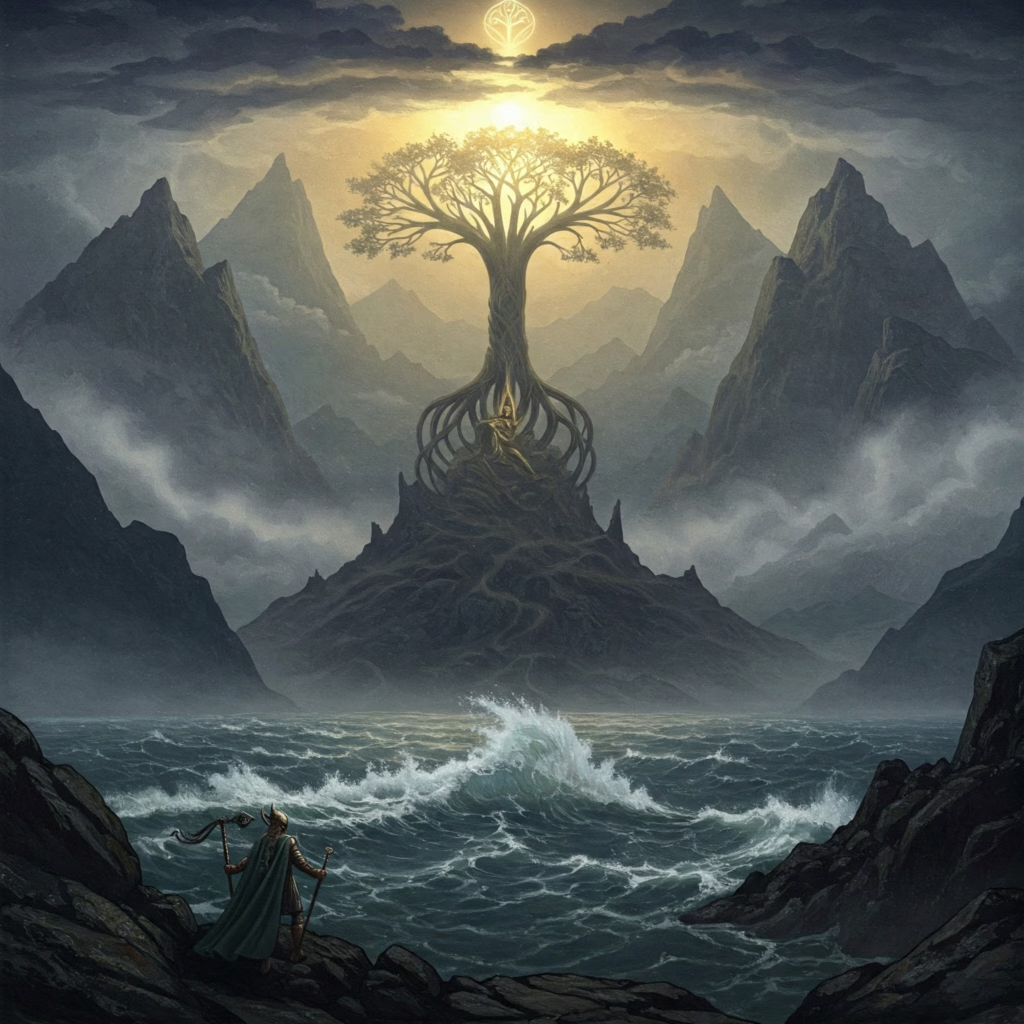
Ragnarök, the prophesied doom of the gods, is perhaps the most dramatic element of Norse mythology. Spiritual science interprets this not as a literal apocalypse, but as a powerful, imaginative portrayal of a profound transition in cosmic ages and human consciousness.
- The Fading of Old Clairvoyance: The prelude to Ragnarök, marked by failing oaths, harsh winters, and especially the death of Baldur, signifies the waning of humanity’s direct, instinctive connection to the spiritual world. The old gods represent the guiding powers accessible through this fading clairvoyance.
- Culmination of Conflict: The final battle, where Aesir confront Loki, giants, and monstrous forces, depicts the intensified struggle between guiding spiritual powers and consolidated adversarial forces (Luciferic and Ahrimanic combined) that occurs as humanity develops greater self-consciousness and freedom, and thus greater potential for deviation. It is the necessary confrontation with the consequences of past actions and the challenging powers that oppose spiritual progress.
- The “Death” of the Old Gods: The perishing of Odin, Thor, and others does not mean their annihilation, but the transformation of their mode of influence. The old form of direct, overpowering guidance suitable for an earlier epoch recedes as humanity enters the age demanding the development of the individual “I” and the capacity for independent moral judgment – the age of the Consciousness Soul. The Rudolf Steiner Norse Mythology view stresses this evolutionary necessity.
- Renewal and the Future: Ragnarök, however, leads not to ultimate oblivion but to purification and renewal. A new, regenerated earth emerges. Baldur returns, signifying the potential for spiritual light to be reborn within humanity. Crucially, figures like Vidar (Odin’s silent son who avenges him) and Vali survive, representing the new forces – perhaps the strength of the individual human spirit itself, now ready to take up its task, guided by the Christ impulse – that will shape the future age.
Norse Mythology and the Christ Impulse
While the Greek and Hebrew streams more directly prepared the historical and cultural ground for the Mystery of Golgotha, the Northern myths, according to the Rudolf Steiner Norse Mythology perspective, represent a parallel, equally valid stream of spiritual development. They reflect the unique challenges and spiritual insights of the Northern peoples.
The focus on inner struggle, the confrontation with powerful natural and adversarial forces, the motifs of sacrifice and the dying/resurrected god (Baldur), all served to cultivate within the Northern soul capacities needed to eventually receive the Christ impulse in its own way. The twilight of the old gods pictured in Ragnarök imaginatively reflects the historical moment when the old clairvoyant consciousness had to fade to make way for the development of individualised thinking and the possibility of consciously receiving the Christ, the light that shines within the darkness.
Conclusion: The Enduring Spirit of the North
Therefore, engaging with Norse mythology and Ragnarök through the lens offered by the Rudolf Steiner Norse Mythology perspective allows us to appreciate these sagas as profound spiritual documents. They are not merely tales of bygone gods but inspired reflections of the workings of Spiritual Hierarchies, the dynamic forces shaping the cosmos and the soul, and the specific challenges and insights of the ancient Northern consciousness. Odin, Thor, Loki, Baldur – these figures embody timeless spiritual principles and soul forces. Ragnarök reveals itself not as a literal end, but as a powerful picture of cosmic transformation and the evolution of human consciousness.
By understanding the hierarchical connections, the forces at play, and the evolutionary context, we can recognise the enduring spiritual value within these Northern myths. They offer a unique window into humanity’s past relationship with the divine and provide powerful archetypes that still resonate within the depths of the modern soul, reminding us of the ongoing struggle between light and darkness,