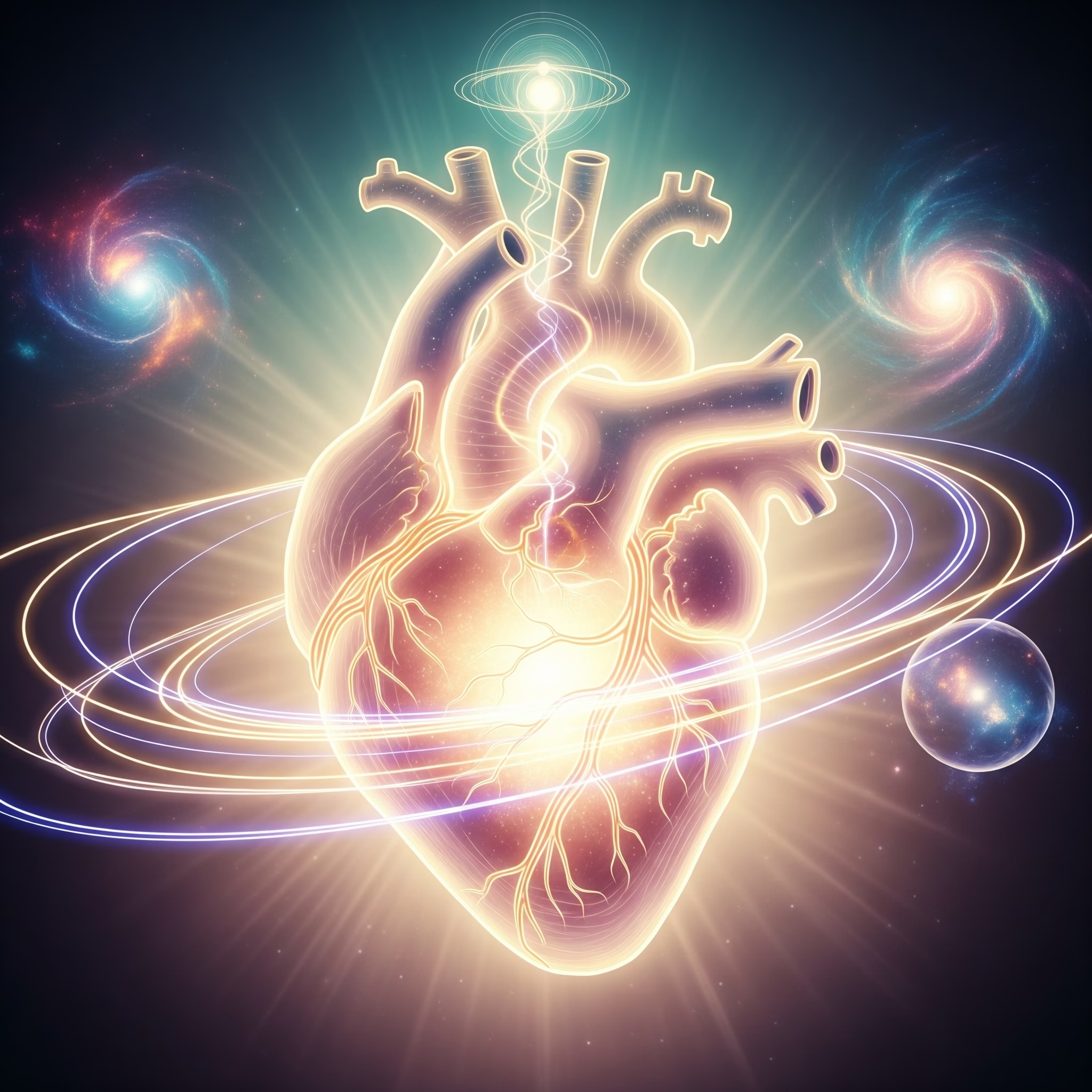
To speak of the human heart is to touch upon a profound mystery, one that extends far beyond the confines of mere physical anatomy. In the prevailing scientific understanding of the modern age, the heart is often conceived primarily as a mechanical pump, ceaselessly driving blood through the circulatory system. This view, while describing a crucial physiological function, falls short of encompassing the heart’s true, living reality and its central role in the deepest aspects of human existence. Rudolf Steiner’s spiritual path led him to a deeper, spiritual-scientific understanding of this vital organ, revealing it not merely as a physical pump, but as a complex organ of perception, intimately connected with our soul life, moral development, and even the unfolding of human karma. This article will explore Rudolf Steiner’s spiritual insights into the living heart, challenging conventional views and illuminating its profound significance for a holistic understanding of the human being.
The Mechanical View Versus Spiritual Reality: A Question of Perception
Conventional physiology, with its admirable dedication to empirical observation, has meticulously detailed the heart’s function within the human organism. It is observed contracting and expanding, propelling blood with rhythmic precision. From this perspective, it appears undeniably as a pump. However, Rudolf Steiner pointed out that this conclusion stems from an external, materialistic mode of observation, which perceives only the final, solidified effect of deeper processes. He argued that to truly understand the heart, one must not merely observe its outward action, but penetrate to the dynamic forces that cause that action.
From a spiritual-scientific perspective, the heart is not the origin of blood circulation, but rather a complex sensory organ that responds to the forces and movements already present within the flowing blood. The rhythmic movement of the blood is primary, generated not by a mechanical push, but by subtle, inner impulses connected to the soul’s life and the individual’s “I”-organization. The heart, in this view, is like a highly sensitive barometer or a specialized eye, perceiving and responding to the dynamic ebb and flow of life within the human being, a phenomenon that then, as a secondary effect, manifests as the rhythmic contraction and expansion that appears as “pumping”. The heart’s activity is a consequence of the inner life, not its mechanical cause.
The Heart as an Organ of Perception and Moral Activity
If the heart is not fundamentally a pump, then what is its true nature and function? Rudolf Steiner revealed the heart as a profound organ of perception, a “supersensible organ of perception” deeply involved in the intimate experiences of the human soul. It perceives not merely physical sensations, but the moral qualities of life, the truth or untruth in human interactions, and the subtle spiritual currents flowing through the organism.
This understanding elevates the heart beyond a purely biological apparatus. It is inextricably linked to our moral development, our capacity for compassion, and our ability to experience truth directly within our being. When an individual engages in an act of profound morality, when truth resonates deeply within, these experiences are not merely cerebral; they permeate the very core of the being, impacting the delicate processes centered in the heart. The warmth of human love, the chill of untruth, the inner conviction of a moral deed – these are “felt” not just in an abstract sense, but as concrete experiences in the region of the heart, influencing its dynamic activity.
The blood itself, which the heart so intimately guides, is not merely a physical fluid. It is saturated with the individual’s “I”-organization, serving as the bearer of the ego’s spiritual essence. The heart, therefore, stands in a unique relationship to this “I,” allowing the spiritual principle of the human being to impress itself upon the physical and etheric flows of life. This intimate connection means that the heart is not merely a muscle but a dynamic center where spirit, soul, and life forces continually interpenetrate.
The Heart’s Role in Karma and Reincarnation
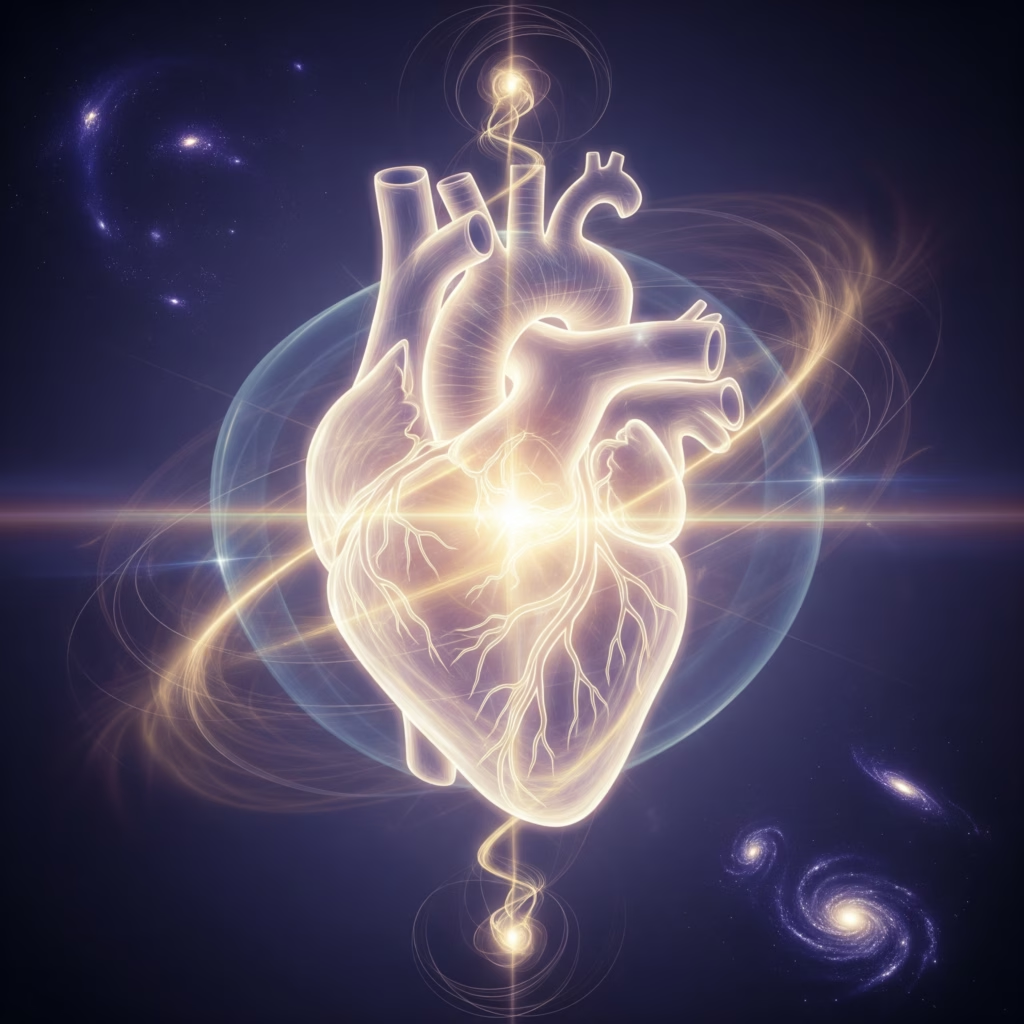
The spiritual perception of the heart extends its significance far into the realms of karma and reincarnation. If the heart is indeed an organ of perception and a focal point for the “I,” then its condition and subtle activities are profoundly influenced by past lives and, in turn, influence future karmic unfolding. Steiner emphasized that experiences from previous incarnations are not merely abstract memories; they are “inscribed” in the very structure and dynamic functioning of the human organism, particularly in the heart.
Consider, for instance, a soul returning to a new earthly existence. The predispositions, capacities, and challenges that constitute its karma are not arbitrarily assigned. They are the living consequences of actions, thoughts, and feelings from previous lives. These karmic threads weave themselves into the individual’s deepest physical and etheric processes, finding a unique expression in the heart’s constitution. The heart, therefore, carries the “after-effects of events that occurred in previous lives on earth”. It is shaped by what the soul has experienced and striven for across multiple incarnations.
The transformation of karma is thus not a distant, abstract process, but one intimately bound to the heart’s activity. Through conscious moral development, through the cultivation of truth, empathy, and selfless love—qualities that resonate deeply with the heart’s spiritual nature—an individual can actively work to transmute karmic imprints. For example, Steiner described how a soul with a particular karmic background might develop a strange debility in their larynx, affecting their voice, as a consequence of past “improper art of gold-making” or a materialistic spiritual striving. This negative influence on the larynx could be tied to an “ahrimanized gratitude” from a past life. The subsequent shame and wild opposition experienced in the current life are seen as karmic outworkings that transform previous errors. Such radical examples illuminate how even seemingly negative “karmic circumstances which inform the whole destiny arising in the anthroposophical movement from previous incarnations of those united in this Society” are part of a larger picture of development and transformation.
Indeed, the very act of a person finding their way into the Anthroposophical Society is seen as a profound karmic predestination. Many individuals drawn to Anthroposophy today are those who, in their previous lives, particularly in the early Christian centuries (e.g., 3rd, 4th, 5th, or even 7th-8th centuries AD), approached Christianity with an instinctive, heartfelt devotion, but without the full cosmic understanding of Christ’s being. These souls, deeply Christian at heart, yet with an unconscious yearning for a more cosmic understanding of Christ’s descent from the sun, experienced a kind of spiritual void after death, sensing that Christ had become “mingled in their souls with currents of doubt and uncertainty”. The supersensible “sacrament or communion” that unfolded in the spiritual world during the first half of the nineteenth century, involving “mighty cosmic imaginations” of a “new Christianity,” served as a preparation for their current incarnation, awakening a “longing for Christ” and a subconscious urge towards Anthroposophy. This demonstrates how the heart’s spiritual longing, shaped by karmic history, guides souls toward Anthroposophy as a path of redemption and deepened understanding.
The Heart and the Human Constitution: A Tri-Fold Perspective
Rudolf Steiner’s anthropology describes the human being as a complex weaving of physical, etheric (life), astral (soul), and “I” (spirit) members. The heart, while deeply connected to the physical body, also serves as a vital bridge to the higher members, particularly the etheric and astral bodies, and fundamentally to the “I”-organization.
The physical body, with its mineral composition, provides the necessary foundation for earthly existence. Interpenetrating and enlivening this is the etheric body, the bearer of life forces, growth, and reproduction. The astral body, or soul body, is the vehicle for feelings, desires, and passions, and the “I”-organization, the unique spiritual core, is the true individuality.
The heart stands as a central organ within the rhythmic system, which mediates between the nerve-sense system (primarily associated with the head and intellectual activity) and the metabolic-limb system (associated with digestion, metabolism, and will-activity). The heart’s rhythmic activity is not a mechanical function driving the other systems, but a sensitive response to the interplay of forces between these two poles. The warmth of the blood, guided by the heart, is intimately connected with the etheric body, bearing life forces throughout the organism. When the astral body and “I” withdraw from the physical and etheric bodies during sleep, the heart continues its rhythmic work, maintaining the life of the lower members. This rhythmic life is vital for restoration and preparing the physical and etheric bodies for the awakening of the soul and “I” in the morning.
This comprehensive understanding of the human constitution highlights the heart’s pivotal role not just as a physical organ, but as a dynamic spiritual entity that bridges the various members of the human being. It is in the rhythmic system, centered around the heart, that the constant interplay between waking and sleeping, thinking and willing, heaven and earth, finds its expression.
The Heart’s Rhythmic System and Cosmic Connection
The rhythmic system, embodied by the heart and lungs, serves as a crucial mediator between humanity and the cosmos. Just as the heart responds to inner soul processes, it also resonates with cosmic rhythms. Steiner pointed out that the 72-year cycle, in which the sun falls behind the stars by one day, mirrors the typical human lifespan. This celestial rhythm is not arbitrary; it signifies a deep connection between human earthly existence and the broader cosmic dance. The heart, as the orchestrator of inner rhythms, is subtly attuned to these grander cosmic cadences.
This cosmic dimension of the heart’s activity is further illuminated by the understanding of sleep and dreams. When the astral body and the “I” leave the physical and etheric bodies during sleep, they embark on a journey into the spiritual world. This “soul’s nightly sojourn” into spiritual realities involves a deeper connection to cosmic influences and higher beings. The heart, remaining with the physical and etheric bodies, maintains their vitality and serves as a silent witness to this nightly detachment. Dreams, from this perspective, are not merely random psychological phenomena, but can be glimpses of the spiritual world experienced during sleep, or “symbolic pictures” of “inner bodily processes” transformed by the “subdued life of the consciousness”. The heart thus participates in a continuous, unconscious cosmic conversation, receiving impulses that later influence our waking life and contribute to our karmic unfolding.
The spiritual understanding of festivals throughout the year, such as Christmas, Easter, St. John’s Tide, and Michaelmas, further illustrates this cosmic connection. These festivals are not merely historical commemorations but correspond to profound cosmic rhythms and offer specific opportunities for inner soul development. The human heart, receptive to the influx of spiritual forces mediated through these cosmic-earthly rhythms, can consciously participate in these celebrations, transforming them into paths of spiritual growth. For example, the Michaelmas festival, linked to the Archangel Michael, is seen as a time when Michael’s battle against Ahriman comes to the fore, requiring humanity to unite intelligence with spirituality in their hearts.
Challenging Modern Materialism: Implications for Health and Self-Understanding
Rudolf Steiner’s insights into the heart represent a radical departure from the prevailing materialistic paradigm in medicine. If the heart is merely a pump, then medical interventions will logically focus solely on mechanical and chemical adjustments. However, if the heart is a highly sensitive organ of perception, responding to and shaping our soul and spiritual life, then true healing must encompass these dimensions. Diseases of the heart, from this perspective, are not merely mechanical malfunctions but can be deep expressions of karmic imbalances, soul conflicts, or disharmonies in the individual’s relationship to truth and morality.
This spiritual understanding of the heart opens a profound path to holistic health and self-understanding. It encourages us to cultivate not just physical well-being, but also a rich inner life, recognizing that our moral choices, our thoughts, and our feelings have a direct, formative impact on our physiological processes. For instance, in his lectures on disease, karma, and healing, Steiner often pointed to the intricate connections between an individual’s destiny, their moral experiences, and the manifestation of illness. The heart, as a reflection of the “I”-organization and its karmic journey, becomes a key area for such understanding and therapeutic intervention.
Cultivating the Spiritual Heart: Practical Paths
The recognition of the heart as a spiritual organ of perception and transformation calls for a conscious cultivation of its faculties. This involves more than just intellectual understanding; it requires inner practices that can quicken and refine the heart’s subtle capacities.
One such path is the cultivation of inner exercises, such as those found in Anthroposophy, which aim to develop clarity of thought, control of feeling, and a purified will. These exercises help to consciously connect the human being with the “spiritual forces of knowledge” that “break through into the individual man”. By engaging in such inner work, individuals can begin to perceive the spiritual dimensions of their own being and the world around them, not in a vague, mystical way, but with the same clarity and precision attained in mathematical thinking.
Another crucial aspect is the development of genuine empathy and moral intuition. By actively striving to understand others deeply, to feel their experiences as if they were one’s own, and to align one’s actions with universal moral principles, one nurtures the heart’s perceptual capacities. This means moving beyond abstract intellectual judgments to an “experiencing with inner commotions, tensions, and releasings”.
The conscious engagement with the arts – particularly those that reveal the spiritual within the sensible – can also serve to cultivate the heart. Steiner emphasized that true art offers a path for the “world of spirit within the world of sense”. Music, poetry, and drama, when approached with a receptive heart, can awaken subtle perceptions and foster a deeper connection to the spiritual realities that pervade existence. For example, the art of speech, as later cultivated by Marie von Sievers in the Anthroposophical Movement, sought to restore the “beauty” and “spiritual” essence of the word, which had been lost in its purely intellectual or utilitarian function. This demonstrates how conscious artistic practice can be a means to re-enliven the human heart’s connection to the spiritual.
Conclusion: The Enduring Mission of the Living Heart
Rudolf Steiner’s spiritual path unveiled a profound truth: the human heart is far more than a mere mechanical pump. It is a dynamic, living organ of perception, intimately interwoven with our soul-spiritual evolution, karmic destiny, and connection to the vast cosmic rhythms. This understanding fundamentally challenges the materialistic worldview, offering a pathway to holistic health and deeper self-knowledge. By recognizing the heart as a place where the human “I” actively engages with the spiritual fabric of the world, we are called to cultivate our inner life, transforming our experiences into conscious participation in the ongoing evolution of humanity and the cosmos. This continuous striving to unite spiritual perception with clear, objective thought is the very essence of Anthroposophy, guiding individuals toward a future where the living heart truly reveals its divine nature.