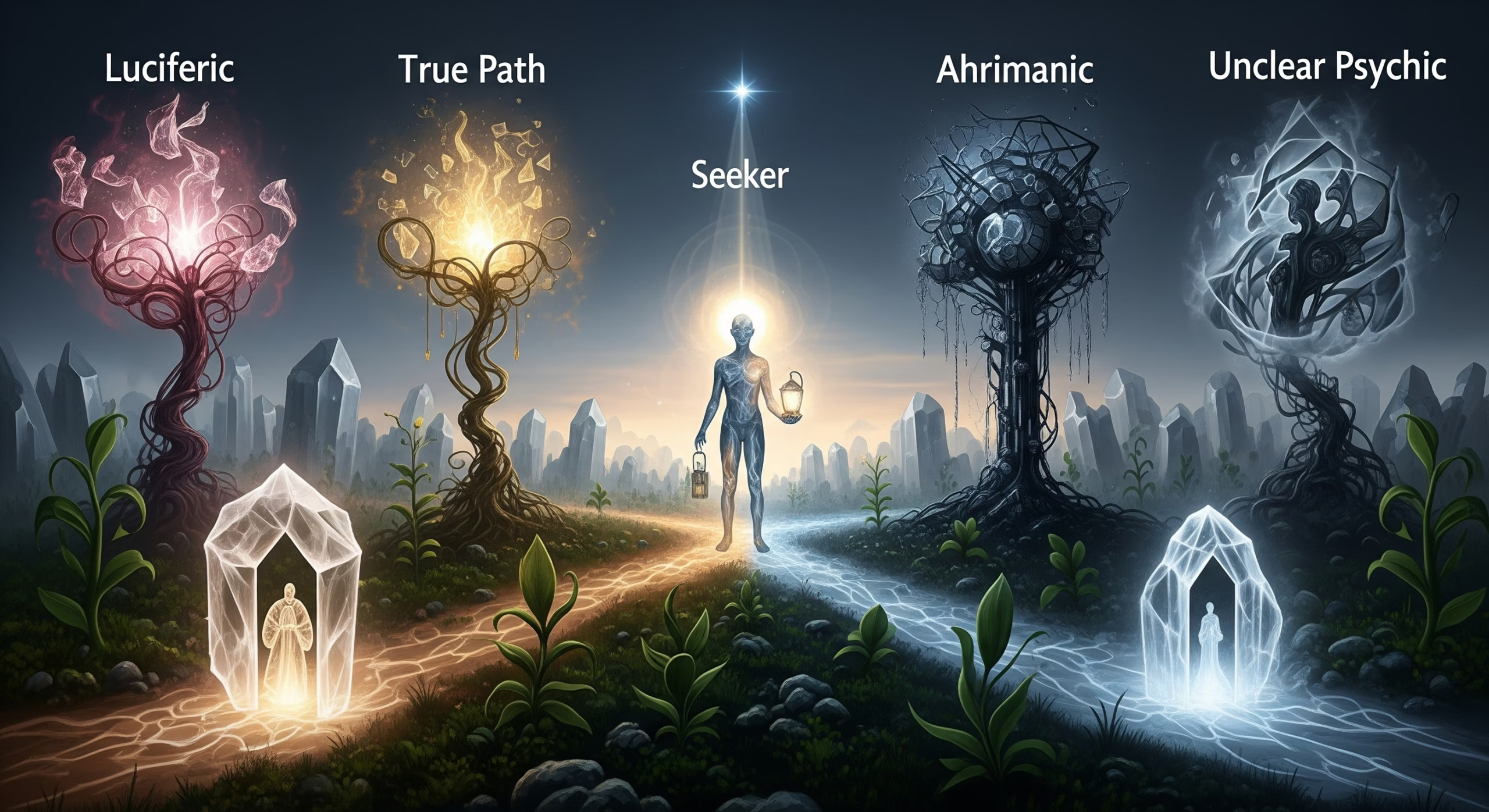
Many people today feel a deep yearning for spiritual knowledge. They seek direct experience of realities beyond the everyday physical world. This quest has led to a proliferation of spiritual paths and claims. How can the earnest seeker navigate this complex landscape? How can one distinguish genuine spiritual development from illusion or even danger? Rudolf Steiner’s spiritual science, Anthroposophy, offers crucial points of discernment. He clearly outlined the characteristics of a true, modern path to Initiation Consciousness. He also warned against various false paths and spiritual byways. Understanding “Rudolf Steiner Initiation Consciousness true false paths spiritual knowledge” is vital. It provides guidance for authentic inner development. It also helps avoid pitfalls common in contemporary spiritual seeking. This article explores Steiner’s distinctions. We will look at moral prerequisites. We will also examine the nature of healthy spiritual perception. Finally, we will see the importance of clear thinking and a strong connection to earthly life.
The Call for a Modern Path of Initiation: Consciousness and Freedom
Rudolf Steiner emphasized that the methods of spiritual training must evolve. They must suit the changing consciousness of humanity. Ancient paths of initiation often involved different conditions. These might include inducing trance-like states. They might also rely on the direct authority of a master in ways less suitable for modern individuals. (See GA 10, Knowledge of the Higher Worlds and Its Attainment).
Our current age, the Fifth Post-Atlantean Epoch, is characterized by the development of the consciousness soul. This means humanity is striving for greater self-awareness. We also seek individual freedom and personal responsibility. Therefore, a genuine modern path of initiation must:
- Fully Engage Waking Consciousness: It should not seek to dim or bypass clear, objective thinking. Instead, it enhances and spiritualizes it.
- Respect and Foster Individual Freedom: The seeker must tread the path out of their own free insight and resolve.
- Integrate with Moral Development: Spiritual progress must go hand-in-hand with ethical growth and a strengthening of character.
- Connect with Earthly Life: True spirituality does not lead to an escape from earthly duties. It enables one to engage with them more effectively and compassionately. Steiner’s Anthroposophical path of knowledge is designed to meet these modern requirements. It is a path of conscious, self-directed inner work.
Indispensable Foundations: Moral Prerequisites for Healthy Esoteric Training
Before embarking on specific exercises for spiritual perception, Rudolf Steiner stressed certain moral prerequisites. These are not arbitrary rules. They are essential for ensuring that the soul develops in a healthy, balanced way. Without this ethical foundation, awakening spiritual faculties can lead to serious illusions or even harm. (These are detailed in GA 10 and GA 245/42, Guidance in Esoteric Training).
Key moral qualities to cultivate include:
- Reverence and Veneration: A deep respect for truth, wisdom, and the spiritual beings guiding evolution. This opens the soul.
- Inner Truthfulness: Absolute honesty with oneself about one’s motives, weaknesses, and experiences.
- Selflessness and Love for Humanity: The path should be undertaken not for personal gain or power, but out of a desire to serve humanity and spiritual truth.
- Patience and Perseverance: Spiritual development is a gradual process. It requires sustained, patient effort.
- The Six Basic (Ancillary) Exercises: These cultivate control of thought, will, and feeling. They also foster positivity, open-mindedness, and inner harmony. They build a strong and healthy soul constitution. (See Six basic exercises Rudolf Steiner.pdf). These moral foundations ensure that as spiritual perception awakens, it is guided by a pure heart and clear mind. They protect against self-deception.
Hallmarks of a Genuine Spiritual Path According to Rudolf Steiner
A true path to Initiation Consciousness, as described by Steiner, has several key characteristics:
- Strengthening the ‘I’ (Ego): The path must always aim to strengthen the individual spiritual self, the ‘I’ or Ego. It should enhance self-awareness, inner freedom, and moral responsibility. Any path that seeks to diminish, dissolve, or bypass the ‘I’ prematurely is suspect from this perspective.
- Clarity of Thinking as a Safeguard: Clear, logical, and critical thinking is not abandoned. It is refined and elevated. Thinking itself becomes an instrument of spiritual perception. It also acts as a crucial safeguard against illusion and fantasy.
- Gradual and Conscious Development: Progress is typically gradual. It occurs through systematic inner work and specific meditative exercises. These exercises lead to distinct stages of higher cognition. Steiner named these Imagination, Inspiration, and Intuition. Each stage is attained with full waking consciousness.
- Integration with Earthly Life and Responsibilities: Genuine spiritual development does not lead to withdrawal from the world. Instead, it enhances one’s capacity to fulfill earthly duties. It brings greater insight, compassion, and effectiveness to one’s work and relationships.
- Freedom from Dogma and Blind Belief: While guidance is valuable, the emphasis is always on the seeker’s own experience. It also stresses verification through their developing spiritual faculties. True knowledge is born from inner insight, not blind acceptance of authority.

Illusory and Dangerous Paths: Recognizing Spiritual Byways and Deceptions
Rudolf Steiner was very clear about the dangers of certain spiritual practices or phenomena if misunderstood or pursued unhealthily. He sought to provide criteria for discernment.
1. Mediumship and Passive Clairvoyance
Steiner strongly cautioned against mediumistic practices. These involve surrendering one’s own ‘I’-consciousness. They allow other entities, often of an unreliable or even detrimental nature, to speak or act through the medium. This passive clairvoyance can lead to deception. It can also weaken the individual’s own spiritual core. In contrast, modern initiation strives for active, ‘I’-controlled spiritual perception.
2. Hallucinations, Visions, and Subjective Mysticism
It is crucial to distinguish genuine spiritual perception from subjective hallucinations or uncontrolled visions. These can arise from an overstimulated astral body. They may also stem from personal wishful thinking or psychological imbalances. A true spiritual experience has an objective character. It can be investigated and verified through spiritual science. A path that revels in vague, sentimental mysticism without clear, conceptual understanding can also be misleading.
3. Luciferic Aberrations on the Spiritual Path
Luciferic influences can tempt the spiritual seeker in various ways:
- Spiritual Pride and Egoism: Using spiritual knowledge or apparent faculties for self-aggrandizement or to gain power over others.
- Ungrounded Idealism and Fantasy: Escaping into beautiful but illusory spiritual worlds. This often involves neglecting earthly responsibilities and practical life.
- Fascination with the Sensational: Seeking extraordinary phenomena, miracles, or “occult secrets” for their thrill, rather than for genuine spiritual understanding and moral development.
- Premature Self-Deification: Believing oneself to be a great initiate or divine being without having done the necessary inner work of purification and self-knowledge.
4. Ahrimanic Distortions of Spiritual Striving
Ahrimanic influences represent the opposite pole. They can also distort the spiritual path:
- Materialistic Interpretation of Spirit: Reducing spiritual experiences to purely physiological or psychological phenomena (e.g., brain chemistry, archetypes of the unconscious).
- Intellectualism Without Heart: Seeking spiritual knowledge merely as an abstract, intellectual system. This lacks genuine inner transformation or moral engagement.
- Rigid Dogmatism and Literalism: Turning spiritual teachings into hardened dogmas. This stifles free inquiry and individual insight.
- Fear-Based Spirituality: Focusing on fear of negative entities or cosmic doom. This can paralyze the soul and prevent healthy development.
- Exploitation of Spiritual “Techniques”: Using spiritual methods for purely utilitarian or selfish gain, without reverence or moral responsibility. Ahriman also promotes the idea that spiritual development can be achieved through purely external, technological means.
5. Atavistic Clairvoyance and Forced Awakening
Rudolf Steiner warned against attempts to forcefully awaken spiritual senses. He also cautioned against trying to revive older, atavistic forms of clairvoyance. These forms were natural to humanity in earlier epochs. However, they are not suited to modern ‘I’-consciousness. Such attempts can lead to soul imbalance, illusions, or even physical and psychological harm. Healthy development is gradual. It respects the current stage of human evolution.
The Guardians of the Threshold: Tests of Readiness and Self-Knowledge
On a genuine path of initiation, as described by Steiner, the seeker will eventually encounter beings known as the Guardians of the Threshold.
- The Lesser Guardian: This being is, in essence, an objective confrontation with one’s own lower self. It is the sum of one’s unredeemed karma, unpurified desires, and habitual errors. This meeting is a profound test of self-honesty and courage.
- The Greater Guardian: At a more advanced stage, one meets the Greater Guardian. This sublime spiritual Being reveals the immense gap between one’s current state and true spiritual perfection. He also shows the divine potential that lies within the human ‘I’.
These encounters are not arbitrary. They are essential safeguards. They ensure that only those who have achieved a certain degree of self-knowledge and moral maturity can proceed safely into the higher spiritual worlds. They help to strip away illusions. They also strengthen the seeker’s resolve.
The Christ Impulse: The True Guide and Safeguard in Modern Initiation
For Rudolf Steiner, the Christ impulse is central to all genuine spiritual striving in the modern age. The Christ Being, who accomplished the Mystery of Golgotha, is the great prototype of human spiritual evolution. He is also the ultimate source of the forces that enable true inner freedom and spiritual perception. (Standard English capitalization is used for pronouns referring to the Christ).
A healthy path of modern initiation will always be in harmony with the Christ impulse. It will lead to a deeper understanding of His deed and His ongoing presence in Earth evolution (e.g., as the Etheric Christ). The Christ impulse strengthens the ‘I’. It imbues it with selfless love. It also provides the ultimate protection against Luciferic and Ahrimanic deceptions on the spiritual path. True Initiation Consciousness in our time, Steiner indicated, involves a conscious connection with this living Christ reality.
Discernment for the Modern Seeker: Navigating the Spiritual Landscape with Clarity
Given the many spiritual paths and claims available today, how can the earnest seeker find their way? Rudolf Steiner’s indications offer crucial points for discernment:
- Maintain Clear, Critical Thinking: Do not abandon your capacity for reason. True spirituality enhances, not negates, clear thought.
- Observe the Moral Fruits: Does the path lead to greater selflessness, compassion, truthfulness, and a sense of responsibility?
- Strengthening the ‘I’: Does it empower your individual self-consciousness and freedom, or does it demand surrender of your ‘I’ to external authorities or unseen influences?
- Connection to Earthly Life: Does it help you to engage more fully and fruitfully with your life tasks and relationships, or does it encourage escape?
- Humility and Patience: Beware of paths that promise quick, easy enlightenment or special powers without demanding rigorous inner work and moral development.
- Seek Trustworthy Guidance: While individual effort is key, guidance from genuinely experienced spiritual teachers or well-tested spiritual traditions that uphold human dignity can be invaluable. Steiner’s own written works offer such guidance.
Conclusion: Towards an Awake, Responsible, and Modern Spiritual Knowing
Rudolf Steiner’s teachings on Initiation Consciousness provide an invaluable service. They offer clear distinctions between true and false paths to spiritual knowledge. In an age of widespread spiritual seeking and potential confusion, his criteria for discernment are more relevant than ever. Understanding Rudolf Steiner’s Initiation Consciousness true and false paths on spiritual knowledge empowers us. It helps us to navigate the spiritual landscape with clarity, responsibility, and inner freedom.
The path to genuine spiritual perception is not one of sensationalism or passive receptivity. It is a path of conscious, diligent inner work. It requires moral purification. It demands the strengthening of our thinking, feeling, and willing. It calls for a courageous engagement with both the spiritual world and our earthly responsibilities. By embracing such a path, modern individuals can awaken their slumbering spiritual capacities. They can achieve a true Initiation Consciousness. This consciousness is in harmony with the highest spiritual impulses guiding humanity. It allows us to become free, loving, and creative participants in the ongoing evolution of spirit.