A Journey of Inner Unveiling: The Genesis of Anthroposophy
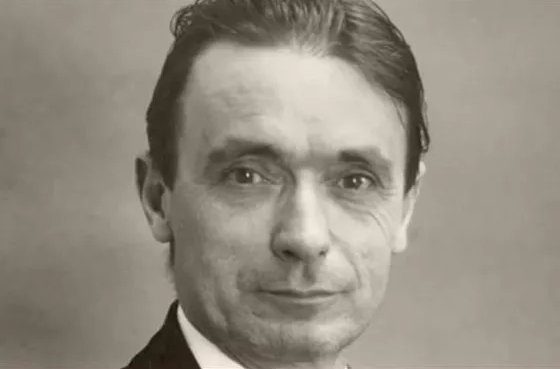
To comprehend the very essence of Anthroposophy, one must first endeavor to grasp the unique spiritual path that led to its revelation. It is not a system born of abstract speculation or inherited dogma, but the direct fruit of a lifelong quest for truth, rooted in immediate spiritual experience and cultivated with the rigorous discipline of scientific inquiry. Rudolf Steiner’s life, from its earliest dawn, was a continuous unfolding of the spiritual, a persistent dialogue between the “seen” and the “unseen” worlds, culminating in the foundational insights that became Anthroposophy, a spiritual science for the modern age. This article will explore Rudolf Steiner’s spiritual path, tracing the pivotal experiences and intellectual battles that transformed a philosophical seeker into an initiate of the higher worlds.
Early Glimpses: The World of the “Unseen” in Childhood
Rudolf Steiner’s earthly sojourn began on February 27, 1861, in Kraljevec, a small village on the border between Hungary and Croatia, though his parents hailed from Lower Austria, north of the Danube. His father, a telegraphist for the Southern Austrian Railway, was a man of good will but of a passionately aroused temper, finding little joy in his work save for his keen interest in political developments. His mother, a true child of the South Austrian forest country, devoted herself entirely to her children and home, her days filled with loving care. The family soon moved to Pottschach, in Lower Austria, where Steiner spent his formative years, from his second to his eighth, amidst a landscape of striking beauty, dominated by the majestic “Snow Mountain” and the Rax Alps.
Even as a very young child, his individuality asserted itself. He possessed a peculiar conviction that a soup-bowl or coffee cup was meant for single use, leading to their regular demise beneath the table if he were not watched. Yet, this was no mere destructive impulse, for his toys were handled with the utmost care, particularly picture-books with figures moved by strings, from which he even taught himself to read.
His formal schooling began in the village, under an old schoolmaster whose teaching felt burdensome to him, as did his being taught by him. His skepticism towards him deepened when he observed the schoolmaster’s son, a “scamp,” whose mischievous acts, such as inking up all the ink-wells, led to Steiner’s false accusation and his father’s swift decision to withdraw him from the school. From that point, his father took over his instruction, and though Steiner learned from imitating his father’s writing, true interest in direct lessons eluded him. What captivated him, rather, were the practicalities of the railway office and, more profoundly, the laws of nature that seemed to beckon to him. His early writing lessons were less about penmanship and more about observing how quickly dust dried ink or testing the elasticity of a quill, revealing a nascent curiosity about the physical world.
It was during this period that Steiner developed a unique relationship with phenomena, oscillating between a profound understanding of certain “combinations of things” and confronting the “limits of understanding”. The friendly mill near his home, where he could observe the intricate workings of a miller, represented the former, allowing him to “force a way for myself into the ‘interior of nature'”. Conversely, the nearby yarn factory, whose inner workings were strictly forbidden to his view and remained an “insoluble problem,” symbolized these limits. These early experiences of observing and questioning nature, often without satisfactory answers from his surroundings, instilled in him a deep reservoir of unanswered questions.
A profound influence was the local priest of St. Valentin, a liberal and witty Catholic cleric, who frequented his parents’ home. He introduced practical wisdom, such as baking acacia blossoms, and crucially, explained the Copernican system of astronomy to Steiner, then a boy of ten. This sparked an insatiable “search for knowledge” in this subject. Even more significantly, the solemnity of the Latin liturgy and the church services deeply impressed his young soul, mediating between the sensible and the supersensible in a way that his “freethinking” father could not. His spirit lived in this “other world” of spiritual experience, even while navigating the mundane.
The Embrace of Thought: From Geometry to “The Philosophy of Freedom”
The family’s move to Neudorfl, a Hungarian village, brought new influences. Here, Steiner owed much to the assistant teacher who, noticing his early reading ability, lent him a geometry book. This encounter was transformative. Living solely within the mind, shaping forms perceived only within oneself, brought him the “deepest satisfaction” and a “solace for the unhappiness which his unanswered questions had caused him”. Geometry was his first experience of the joy of pure thought.
It was through geometry that the budding concept of a “soul-space” within man, distinct from external space, as the arena of spiritual realities, first emerged in him, unconsciously at first, but gaining definite form by his twentieth year. This spiritual world was as real to him as the physical. His experience of the spiritual world required justification, which he found in the self-contained truth of geometry, knowing that “Here one is permitted to know something which the mind alone, through its own power, experiences”. He distinguished between things “which are seen” and those “which are not seen,” preferring to live in the latter, as the physical world would have been a “spiritual darkness” without the light from that side.
His intellectual hunger extended beyond geometry. At around fifteen years old, he discovered mathematics books by Lubsen, which allowed him to teach himself analytical geometry, trigonometry, and even differential and integral calculus, long before he learned these subjects in school. This self-taught mathematical foundation became crucial for him as a basis for all his later strivings after knowledge. It demonstrated a system of percepts and concepts attainable independently of sense impressions, yet capable of revealing the laws of sense-reality. A decisive experience in this realm was the realization from synthetic geometry that a line, prolonged endlessly, would return to its starting point, liberating his understanding of space. This, however, intensified his “profound unrest” concerning the riddle of time, for which he then saw no way out.
A significant turning point was his encounter with Kant’s Kritik der reinen Vernunft (Critique of Pure Reason) in a bookshop window. Though he knew nothing of Kant’s historical context, his “boundless interest” stemmed from an inner striving to understand what human reason could truly achieve. He secretly read Kant during history lessons, absorbing pages multiple times, driven by the desire to build thought in a surveyable, precise manner, establish harmony with religious teachings, and understand the full scope of human thought’s capacity to “lay hold upon the things and events of the world”. This contrasted sharply with Kant’s limitations, which he struggled to reconcile.
His studies at the Technische Hochschule in Vienna, though originally intended to prepare him for a railway civil engineer position, became a rich ground for philosophical exploration. He delved into Fichte’s Wissenschaftslehre (Theory of Science), seeking to express the living “weaving of the human mind” and seeing the human ego’s activity as the “sole starting-point for true knowledge”. His endeavor was to move from understanding nature to conceiving the ego, and then from the ego to penetrate nature’s becoming. Spirit and nature stood before him in their “absolute contrast,” and while the spiritual world of beings was a “matter of direct perception,” nature “would not pass over into this spirit-world” of his experience.
Throughout these years, the reality of the spiritual individuality revealed itself to him in clear vision, perceiving that the physical body was merely its manifestation. He even followed “dead men” on their journey in the spiritual world. Yet, his experiences in this realm were met with silence or dismissal by others, forcing him into a profound loneliness in his spiritual perceptions. It was then that he became acquainted with a simple man, a gatherer of medicinal plants, with whom he could talk about the spiritual world as with “one who had his own experience therein”. This man seemed a mouthpiece for a “spiritual content which desired to utter itself out of hidden fountains,” offering glimpses into the “secrets of nature”. This encounter profoundly shaped Steiner’s conviction that true spiritual experience could exist outside of scholarly frameworks, a living wisdom.
The inability of philosophy to fully encompass his spiritual perceptions led him to formulate his own “theory of knowledge”. Thought itself became an experience, a reality “into which…doubt could find no entrance”. He sought to show that when conscious, sense-free thought meets sense-perception, illusion is permeated with reality, and the human spirit unites with the spirit of the world that weaves within the sense-world. This rigorous approach to thought and inner experience laid the groundwork for his book, The Philosophy of Spiritual Activity (often known as The Philosophy of Freedom), where he argued for the freedom of the human will arising from moral intuitions in sense-free thought.
Weimar and Berlin: Deepening Spiritual Science and Engaging the Modern World
Rudolf Steiner’s life entered a new chapter with his move to Weimar in 1888. He was invited to work on the Weimar edition of Goethe’s works, which he described as a “festival time” in his life. For years he had lived in Goethe’s thoughts; now he was immersed in the very places where they had arisen. His task was to edit Goethe’s scientific writings, which allowed him to delve deeper into Goethe’s “world-conception” and, crucially, to understand his unique approach to cognition as a “vital perception”. Goethe, for Steiner, perceived the whole of nature, not as a collection of isolated facts, but as a living unity, a “sensible-supersensible form” that could be revealed through meticulous observation. This was a constant confirmation of Steiner’s own spiritual experiences, as he saw how Goethe’s methods paved a way for the spiritual to shine through nature itself, contrasting sharply with the purely materialistic science of the time.
Steiner believed that Goethe was “the Galileo of the organic,” having discovered how one must think about living phenomena in a way that generates concepts not as fixed, lifeless abstractions, but as “images living in the form of thoughts,” dynamically transforming, just as nature itself metamorphoses. This direct opposition to the prevalent materialistic understanding of nature, which saw only “dead” concepts applicable to the inorganic, became a central theme in his work. His Erkenntnistheorie der Goethe’schen Weltanschauung (Theory of Knowledge Implicit in Goethe’s World Conception) was born from this necessity, arguing for a theory of cognition that could embrace Goethe’s living perception.
His time in Weimar also brought him into contact with the thought of Friedrich Nietzsche. Nietzsche’s Jenseits von Gut und Böse (Beyond Good and Evil) both fascinated and repelled him. While Steiner admired Nietzsche’s style and keenness, he found his approach to profound problems lacked the conscious spiritual experience he held as essential. Nevertheless, Steiner felt a deep proximity to Nietzsche’s struggle, seeing him as a tragic figure, a soul of unusual depth battling against the unspiritual tendencies of the natural-scientific age. Nietzsche’s concepts of “eternal repetition” and the “superman” resonated with deep spiritual truths that, in his genius, he intuited despite the limitations of his time’s materialistic thought. Steiner’s book, Nietzsche as the Adversary of His Age, expressed this complex relationship, an attempt to articulate the luminous spiritual background behind Nietzsche’s tragic journey.
Steiner’s life in Weimar, though outwardly communal, was often one of profound inner loneliness in his spiritual perceptions. His circle of friends, while intellectually stimulating, often lacked the capacity to grasp the living reality of the spiritual world as he experienced it, viewing his insights as mere abstractions. This compelled him to develop the “art of understanding in love that which made no move toward understanding what he carried in his own soul”.
During his years in Berlin, Steiner undertook the editorship of the Magazin für Literatur, an old weekly journal. This task, though financially challenging, provided a platform to express spiritual impulses to a wider public. He found himself immersed in the “spiritual life” of the time, engaging with diverse perspectives, from those focused on nationalism to the emerging socialist ideas. He found it personally distressing that materialism held sway in public discourse, asserting that “material economic forces” drove human evolution, with the spiritual as mere “ideal superstructure”. His conviction was firm: the “social question” could only be rightly addressed from a “spiritual world-conception”.
It was also during this period that Steiner taught at the Berlin Workers’ School, where he encountered men and women of the proletariat. He insisted on lecturing entirely according to his own views of human history, challenging the prevalent Marxist materialistic conception. He aimed to show that while economic forces gained prominence later, the spiritual-ideal impulses were paramount in earlier history. This allowed him to introduce “realism to arise out of materialism”. He observed the tragic reality that the workers’ intense craving for knowledge was often met only by “the grossest materialism”. His efforts sought to bridge this gap, even as the “leaders” eventually opposed his approach.
His experiences through this period, characterized by the turn of the century, confirmed a profound truth: the ideas of the age, particularly those of physics and physiology, were “harmful” because they conceived of matter in a way that severed it from spirit, leading to a world of “illusion”. He saw that a true understanding required perceiving “spirit” manifesting within matter itself, rather than hypothesizing an unknown reality “behind subjective experience”. His Riddles of Philosophy (originally Conceptions of the World and of Life in the Nineteenth Century) further developed this critique, seeking to “strike the spiritual sparks” from the natural-biological explanations of the age.
The Birth of Anthroposophy: Public Revelation of Esoteric Truths
A pivotal moment in Steiner’s life was the decision to give public expression to the esoteric insights he had gained through inner experience. This marked a crucial shift. The very notion of “mysteries,” once necessary to guard sacred knowledge in ancient times, had become an anachronism in an age demanding “publicity wherever any sort of knowledge appears”. His path was distinct from traditional mysticism; he sought not a subjective, idea-void inner world, but a spiritual reality revealed through “spirit-illuminated ideas,” a clarity comparable to mathematical thinking.
In 1902, Marie von Sievers (later Marie Steiner) and Steiner took over the leadership of the German section of the Theosophical Society. This was not a move driven by a desire to conform to existing Theosophical dogmas; rather, it was the sole institution then “worthy of serious consideration in which there was present a real spiritual life”. From the outset, he made it clear that he would present only the results of his own “spiritual vision” and research through perception, not merely “ancient wisdom”. This led to works like Mysticism at the Beginning of the Modern Spiritual Life and Christianity as Mystical Fact, where he traced the evolution from ancient mysteries to the Mystery of Golgotha, revealing cosmic events and supramundane influences at work. These were not mere theoretical assertions but insights directly “brought out of the spiritual world”.
The establishment of the monthly Luzifer (later Luzifer-Gnosis) with Marie von Sievers was crucial, as it allowed Anthroposophy to “evolve out of its own germ”. It was here that foundational anthroposophical works like Knowledge of the Higher Worlds and Its Attainment and articles From the Akashic Record first appeared in serial form. This distinct trajectory led to the eventual independent founding of the Anthroposophical Society, particularly as the Theosophical Society began to manifest “deterioration” and promote doctrines such as the belief that a Hindu boy was the reincarnation of Christ, which Steiner found utterly absurd. His constant emphasis was on the need for “fully conscious knowledge of the spirit” in contrast to the “dreamlike” ancient clairvoyance or the suppression of consciousness found in some modern spiritual movements.
The Culmination: From Philosopher to Spiritual Scientist
The latter period of Steiner’s life, especially after his thirty-sixth year, saw a profound “mental revolution”. While spiritual understanding had always been self-evident to him, comprehending the sense-world in full awareness had always posed the greatest difficulty. Now, his capacity for observing the physical world deepened and intensified. He realized that humanity typically mingles sensory perception with spiritual experience instinctively, leading to an impure conception of both. For Steiner, this newfound objective perception of the sense-world illuminated the spiritual realm by providing a clear opposite, allowing him to appreciate the spiritual in its unmingled purity.
This led him to the insight that “man himself is [the] solution” to the world’s riddles, and that knowledge is not merely a copying of reality, but man’s active “participation in the creation of the world”. Meditation became not just a valuable practice, but a “necessity of existence” for his mental life, a continuous interchange with the spiritual world that allowed the will to shed its arbitrary nature and unite with spiritual knowledge. This deeper, all-encompassing experience of knowledge allowed him to refute the idea of limited human knowledge, understanding that the “unattainable” is so only “for the present,” until man develops the capacity to unite with it.
He saw materialism as flawed not in its attention to matter, but in its inability to recognize that matter itself is a “metamorphosed continuation” of spirit. The fundamental error lies in conceiving of matter as something separate and dead, rather than as spirit manifesting in a particular form to enable human self-consciousness. His Riddles of Philosophy (originally Conceptions of the World and of Life in the Nineteenth Century) further developed this critique, seeking to “strike the spiritual sparks” from the natural-biological explanations of the age.
The sum of Rudolf Steiner’s life’s experiences, both personal and intellectual, converged to make the public expression of Anthroposophy an inner necessity. This was not a forced endeavor but the natural unfolding of a path that had been prepared through decades of rigorous inner work and conscious spiritual perception. From the early fascination with geometry as a gateway to “unseen” realities, through the philosophical strivings to grasp the essence of freedom and knowledge, and culminating in the direct experience of the spiritual world as objectively real, his life became the very ground upon which spiritual science could emerge. It was a journey of constantly pushing the boundaries of conventional understanding, integrating diverse fields of knowledge, and always striving to perceive the spirit active in all things, not as a mystical abstraction, but as a living, knowable reality.
Conclusion: The Enduring Mission
Rudolf Steiner’s path was one of unceasing striving to unite the deepest spiritual perception with the clearest scientific thought, to show that the spiritual is not a “beyond” inaccessible to human consciousness, but the very essence woven into the fabric of the world, waiting to be rediscovered through conscious spiritual activity. This is the enduring mission of Anthroposophy: to guide humanity to this expanded consciousness, enabling a true understanding of the human being and the cosmos in their profound spiritual reality.