Memory is among the most ordinary and least understood of all human capacities. Modern neuroscience describes it as a function of specific brain structures. This description is not wrong — but it is radically incomplete, and it cannot explain several of the most basic and puzzling features of memory that anyone who has ever tried to remember something honestly encounters.
Rudolf Steiner’s spiritual science addresses precisely what the purely neurological description cannot reach. He reveals memory not as a storage mechanism in brain tissue but as a genuine activity of the etheric body — the body of life forces carrying the living record of everything a human being has genuinely experienced. Steiner addresses memory in GA 293 (“Study of Man”) and GA 21 (“Riddles of the Soul”).
Why the Brain Alone Cannot Explain Memory
Steiner’s account begins with a genuinely puzzling observation. The physical substance of the brain is continuously broken down and rebuilt through ordinary metabolic processes. This presents a real puzzle: if brain matter is continuously replaced, in what sense can a specific memory formed at a specific moment remain retrievable years later, using physical substance bearing no direct material continuity with the substance present when the memory was originally formed?
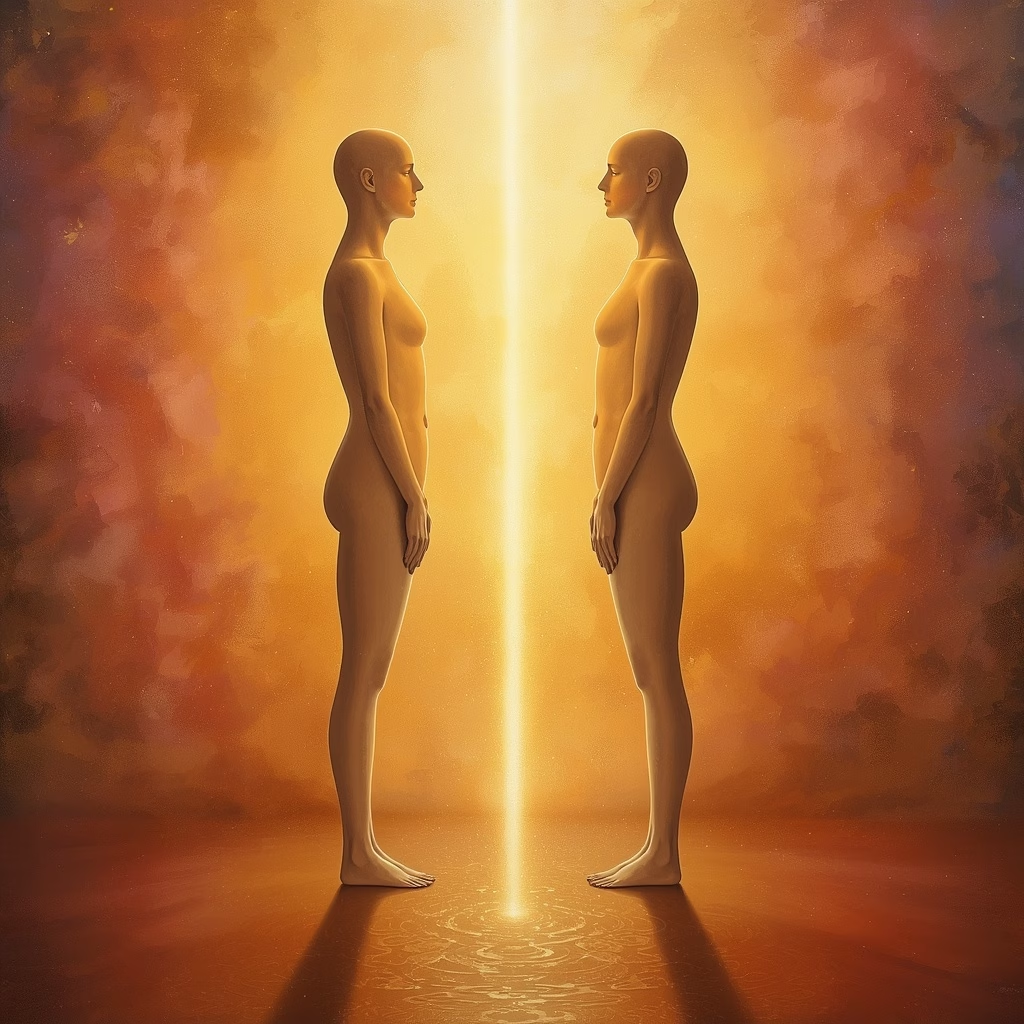
Steiner indicates that the physical brain is not the storage location of memory at all. It is the instrument through which memory — genuinely held elsewhere, in the etheric body — becomes accessible to waking consciousness. The brain functions more like a musical instrument making audible a music whose genuine source lies elsewhere, rather than a filing cabinet physically containing what it stores.
The Etheric Body as the True Vehicle of Memory
Steiner describes the etheric body as the body of life forces maintaining growth and vital process. He indicates in GA 293 that this same body is also the genuine vehicle of ordinary memory — the substance maintaining a living record of experience across a single incarnation. The astral body carries immediate present-moment feeling but does not maintain a lasting record. The “I” provides the organizing centre but is not itself the storage medium. The etheric body, by contrast, is specifically structured to maintain continuity across time.
Furthermore, Steiner indicates this record is not static like a photograph. It is a living record that continues developing and interacting with subsequent experience — explaining why memories genuinely change over time, becoming coloured by later understanding, in ways a purely mechanical storage model cannot account for.
The Panoramic Life Review
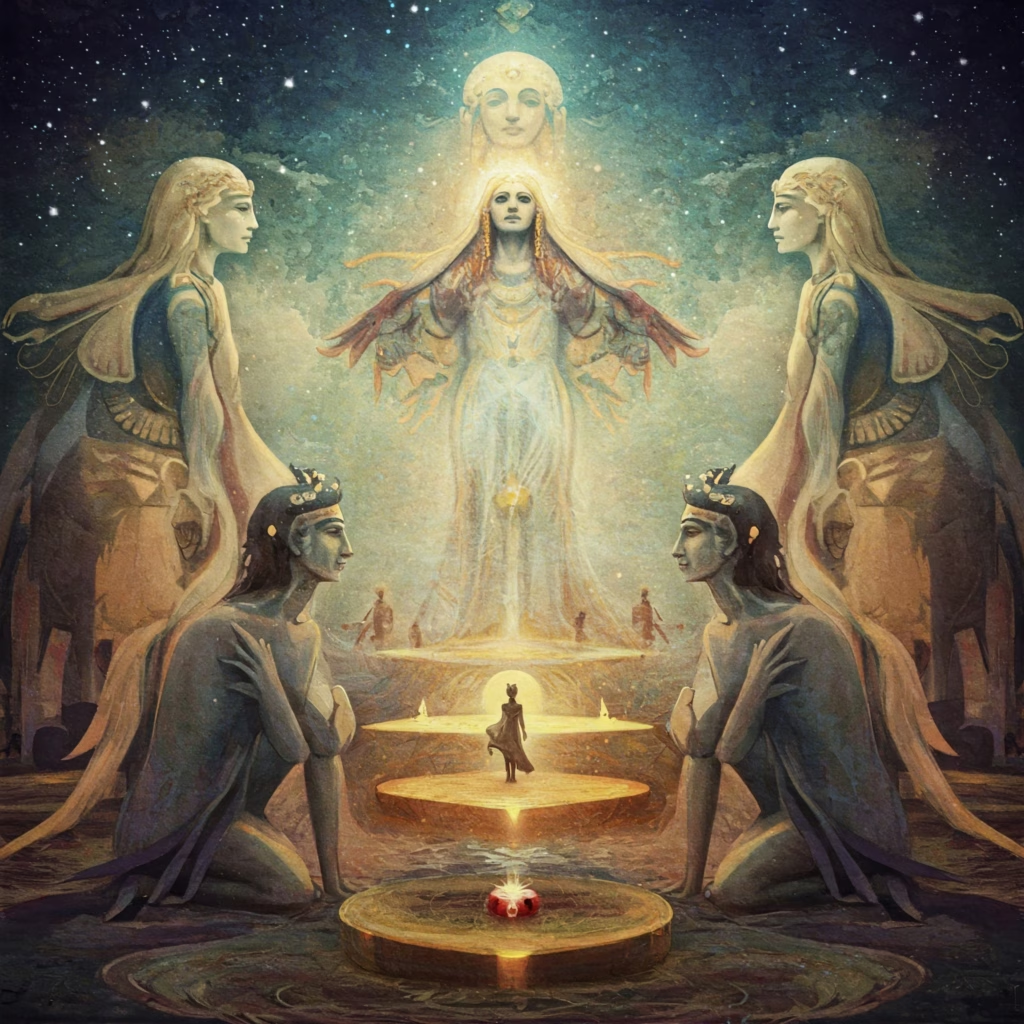
Steiner’s account illuminates the panoramic review of the entire earthly life occurring immediately after death, in which the soul perceives its whole past incarnation simultaneously rather than sequentially. This panoramic capacity reflects the etheric body’s genuine nature more fully than ordinary waking memory does. During life, the etheric body’s memory function is constrained by its connection with the physical brain — a connection allowing only a sequential, limited portion of the record to become accessible at any moment. At death, this constraint temporarily loosens, and the soul briefly perceives the record in its own simultaneous, panoramic nature.
Why Some Things Are Remembered and Others Forgotten
Steiner offers practical guidance on why certain experiences are readily remembered while others fade quickly. The specific quality of feeling and attention brought to an experience directly affects how deeply it is registered within the etheric body’s living record. An experience met with genuine attention and presence leaves a deep, durable impression. An experience passed through with divided attention leaves a correspondingly shallow one — never entirely erased, but far less accessible.
This has significant practical implications. The cultivation of genuine presence — connected with reverence and the beginning of the inner path — directly affects the depth and durability of the memories a human life produces. The person moving through existence with divided attention is producing, in the etheric record, a correspondingly thin memory of that portion of life.
Furthermore, Steiner addresses how traumatic experience produces a specific etheric disturbance — an overwhelming impression the etheric body’s ordinary processes of living reworking cannot immediately absorb. This produces the intrusive, fragmentary quality of traumatic memory. Genuine healing involves the etheric body’s gradual recovery of its normal capacity for integration, which specific artistic and meditative practices are designed to support.
Memory and Karma
Steiner connects ordinary etheric memory with the deeper karmic memory explored in an earlier article on past lives — the memory producing déjà vu and inexplicable talent. This deeper memory is maintained not in the etheric body but in the astral body and the “I,” the members persisting across death and rebirth. Ordinary etheric memory and deep karmic memory represent two distinct but related forms of the same underlying capacity — one confined to a single life, the other extending across the soul’s entire evolutionary journey.
The full article on Substack covers the complete relationship between genuine presence and etheric impression depth, the specific therapeutic approaches Anthroposophical medicine uses for trauma recovery, and Steiner’s complete account of how karmic memory differs structurally from ordinary single-incarnation memory. This is a paid article.
Read the full article on Substack — paid subscribers only →
Paid subscribers receive all articles in full plus an exclusive monthly guided reading of a Steiner text. Join here →https://anthroposophist.substack.com/