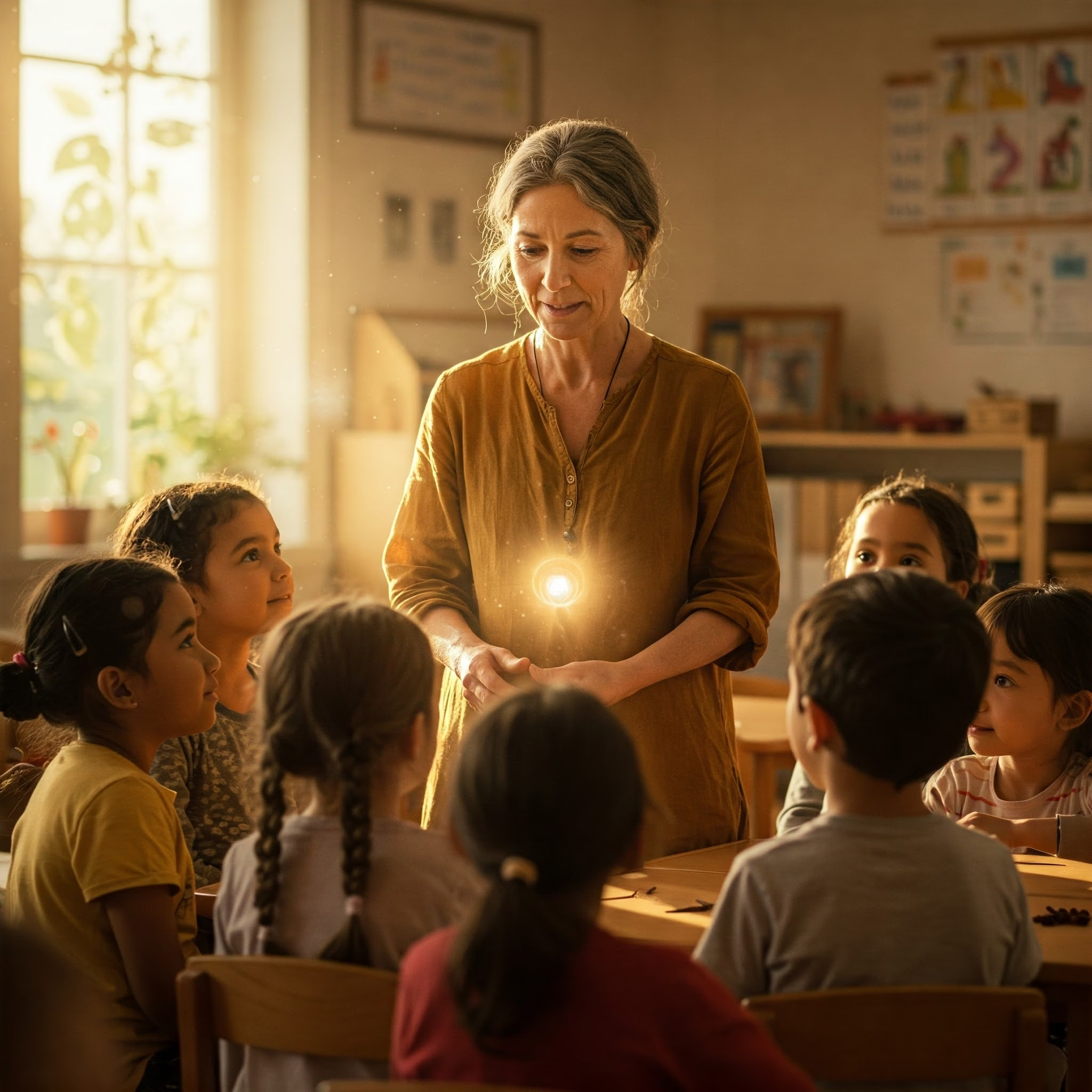
In considering an education that aims to nurture the whole developing human being – body, soul, and spirit – one factor emerges as paramount, outweighing specific techniques or materials: the inner life and developmental striving of the teacher. An education founded upon spiritual science recognizes teaching not simply as a job or even a profession, but as a sacred calling. The quality of the relationship between teacher and child, the atmosphere created in the classroom, and the subtle influences flowing from the educator’s own being are potent forces shaping the child’s destiny. Therefore, understanding the Rudolf Steiner’s teacher inner path—the ongoing journey of self-knowledge, moral cultivation, and spiritual practice—is essential for anyone seeking to truly guide the young.
Beyond Methods: The Teacher’s Being as the True Curriculum
Modern education often places immense emphasis on curriculum design, teaching methodologies, assessment tools, and external standards. While structure and content have their place, spiritual science reveals that the most significant educational impulses flow directly from who the teacher is. Children, particularly in the elementary years, are exquisitely sensitive to the inner state of the adults around them. They absorb not only the spoken word but also the unspoken attitudes, the underlying moral substance, the quality of enthusiasm or indifference, the reverence or lack thereof, that live within the teacher’s soul.
In the first seven years, the child learns primarily through imitation; the educator is the environment the child absorbs. Between seven and fourteen, the child looks to the teacher as a natural, beloved authority, an interpreter of the world; the teacher’s inner conviction and warmth become the medium through which knowledge awakens feeling and connects with life. Even in adolescence, when critical thinking awakens, the young person responds deeply to the teacher’s authenticity, enthusiasm for truth, and moral integrity. Consequently, the foundation of effective pedagogy lies less in external techniques and more in the continuous inner work undertaken by the teacher. The teacher inner path is thus not an optional add-on, but the very source from which genuine educational artistry flows.
The Inner Path of the Educator: Cultivating Essential Soul Forces
What, then, constitutes this essential inner path for the teacher? It involves the conscious cultivation of specific soul qualities and capacities, nurtured through self-reflection, meditative practice, and engagement with spiritual knowledge. Key elements include:
- Self-Knowledge and Spiritual Practice: A teacher cannot truly understand the developing child without striving for self-knowledge. This involves honest observation of one’s own thoughts, feelings, habits, strengths, and weaknesses. Regular meditative practice helps quiet the soul, strengthen concentration, and open pathways to intuitive understanding – both of oneself and of the children under one’s care. Engaging deeply with spiritual science, particularly the anthroposophical understanding of human development, provides invaluable orientation and insight.
- Reverence: A profound feeling of reverence for the spiritual mystery manifesting in each child is indispensable. The teacher must see beyond the child’s immediate personality or challenges to the eternal Ego striving for expression. This reverence prevents objectification and fosters a delicate handling of the child’s unfolding potential. It creates an atmosphere where the child feels seen and respected in their deepest being.
- Love and Enthusiasm: Genuine, unselfish love for the children – an active interest in their unique individuality and destiny – is the warmth that allows learning to flourish. Coupled with this must be a living enthusiasm for the subjects being taught. Knowledge presented drily or mechanically deadens the child’s soul; knowledge brought with the teacher’s own genuine interest and passion ignites the child’s feeling life and awakens a love for learning itself. This requires the teacher to continuously renew their own connection to the material they bring.
- Truthfulness and Moral Responsibility: Children have an innate sense for authenticity. The teacher must strive for unwavering truthfulness, not only in word but in gesture and inner conviction. Any hypocrisy or inner contradiction is subtly perceived by the children and undermines trust. Furthermore, the teacher must cultivate a deep sense of moral responsibility, recognizing that their actions and attitudes have a profound, lasting impact on the children’s developing moral compass. The Rudolf Steiner teacher inner path intrinsically involves moral development.
True Authority: Guidance Born of Inner Substance
Especially during the second seven-year cycle (ages 7-14), the child has a natural need to look up to the teacher as an authority. However, spiritual science distinguishes sharply between true, natural authority and mere external, enforced authority.
- Authority Rooted in Being: True authority in teaching arises organically from the teacher’s inner substance – from their genuine knowledge, their manifest love for the children, their moral integrity, and their self-evident connection to the subjects they teach. It is an authority the child freely grants out of respect and affection, feeling instinctively that this adult can be trusted to interpret the world truthfully and lovingly. The teacher becomes a natural representative of the world’s goodness and wisdom for the child.
- Contrasting Coercion: External authority based on position, fear, punishment, or rigid rules is counterproductive. It may achieve outward compliance but stifles the child’s inner development and can breed resentment or apathy. True authority guides; external authority compels. The goal of the Rudolf Steiner teacher inner path is to develop the inner qualities that naturally evoke respect and trust, making coercive measures unnecessary.
- The Teacher as Artist: Wielding true authority is an art. It requires sensitivity, pedagogical tact, and the ability to meet each child individually while guiding the class as a whole. It involves presenting material imaginatively, varying the rhythm of lessons, and responding flexibly to the changing needs of the children. This artistry flows directly from the teacher’s cultivated inner life and intuitive understanding.

The Teacher as Mediator and Destiny Helper
The sacred calling of the teacher extends beyond instruction into the realm of mediation and karma.
- Mediating World and Spirit: The teacher stands as a mediator between the developing child and the complexities of the world, interpreting experiences and presenting knowledge in an age-appropriate, life-giving way. Furthermore, the teacher acts, often unconsciously, as a mediator between the spiritual world and the child, helping the child’s eternal Ego to incarnate more fully and connect with its earthly tasks. This requires the teacher to be inwardly open to spiritual realities.
- Perceiving the Child’s Being: Through observation cultivated by self-knowledge and spiritual insight, the teacher can learn to perceive the unique constitution of each child, including their temperament (choleric, sanguine, melancholic, phlegmatic) and hints of their individual karma or destiny. Understanding these allows the teacher to meet the child’s specific needs more effectively, providing challenges and support in a way that helps the child navigate their unique life path. This perception is a fruit of the Rudolf Steiner teacher inner path.
- Working with Karma: While the teacher cannot change a child’s destiny, they can create an environment where the child develops the inner strength and resilience needed to meet their karmic challenges constructively and freely. Education becomes a form of assistance in the working out of destiny.
The Community of Teachers: A Wellspring of Strength
The demands of the Rudolf Steiner’s teacher inner path are significant. Therefore, the community of teachers working together within a school based on these principles becomes a vital source of mutual support, shared insight, and collective spiritual striving. Regular faculty meetings dedicated not just to administrative tasks but to deep study of the human being, child observation, and shared pedagogical challenges are essential. This collegial work strengthens each individual teacher and builds the spiritual substance of the school organism as a whole.
Conclusion: The Teacher as Servant of Human Becoming
Ultimately, the Rudolf Steiner teacher inner path is a path of service – service to the unfolding spirit of the child and service to the future of humanity. It demands continuous learning, self-reflection, moral effort, and a willingness to be transformed by the very process of educating. The authority it cultivates is not one of power over others, but the natural authority that arises from love, wisdom, and genuine inner substance. By embracing teaching as a sacred calling and dedicating themselves to this inner path, educators become true artists of human development, helping to nurture individuals capable of bringing creativity, freedom, and moral purpose into the world. This is the high ideal towards which an education grounded in spiritual science must continually strive.