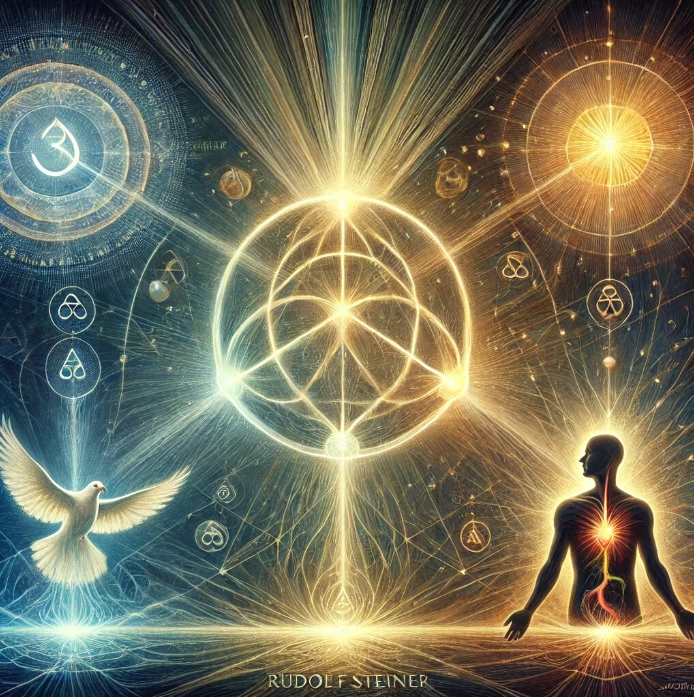
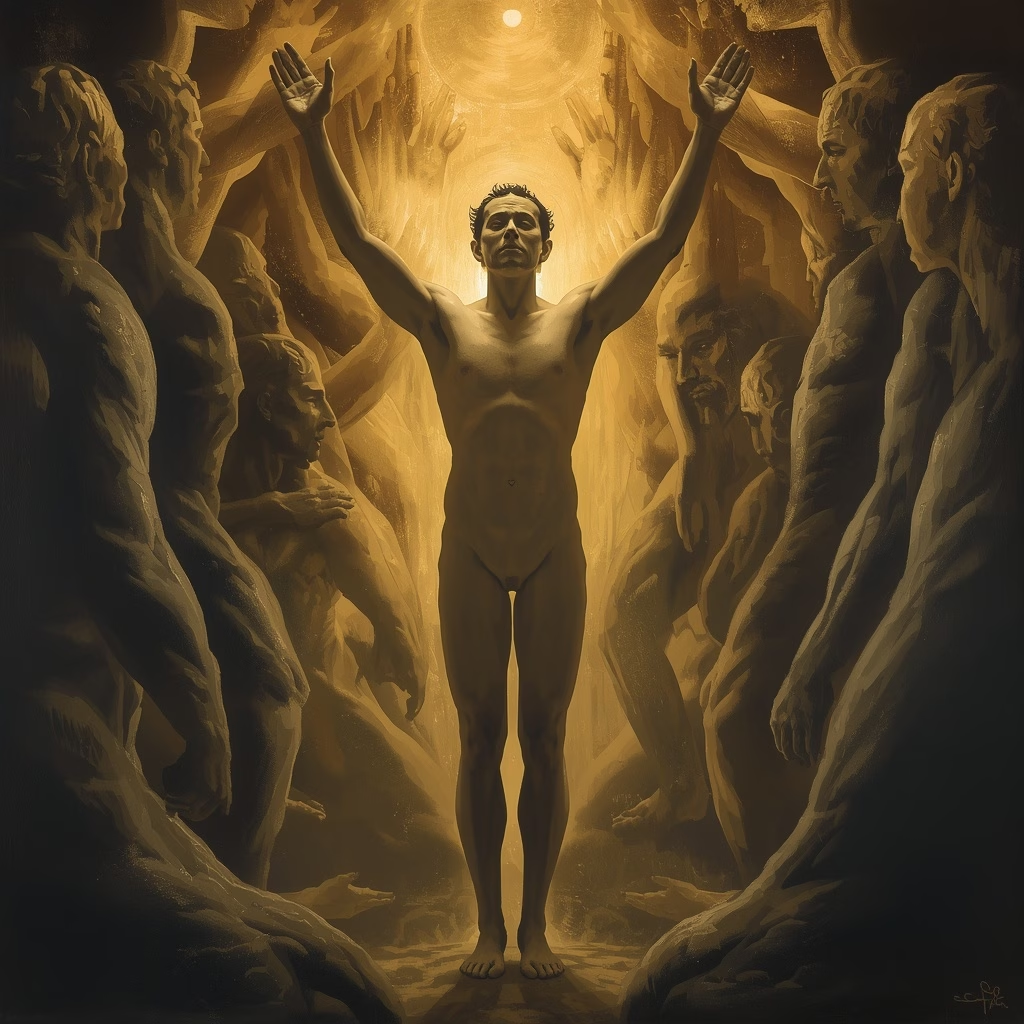
A genuine art of education must spring from a true knowledge of the human being. Surface observations or purely materialistic theories fall short of grasping the intricate reality of the developing child. Anthroposophical spiritual science reveals the human being as a threefold organism of body, soul, and spirit, whose soul life manifests primarily through the distinct yet interwoven activities of thinking, feeling, and willing. The pedagogical approach often associated with Waldorf education is founded upon understanding and nurturing these core capacities. Therefore, the Rudolf Steiner thinking feeling willing model is not an abstract psychological scheme, but a practical foundation for educating the whole child – head, heart, and hands – in a balanced and life-enhancing way. This approach seeks to cultivate intellectual clarity (thinking), emotional richness and balance (feeling), and purposeful, capable action (willing) in harmonious interplay throughout childhood and adolescence.
The Threefold Human Being: A Spiritual-Scientific Foundation
Spiritual science, through direct observation of the supersensible, perceives the human being’s organisation manifesting in three primary functional systems, each intimately connected with one of the soul faculties. Understanding this forms the basis of the Rudolf Steiner thinking feeling willing pedagogical approach.
- Thinking and the Nerve-Sense System (Head): Our capacity for clear thought, concept formation, perception, and memory is primarily centered in the nerve-sense system, with its main focus in the head. This system is characterized by coolness, form, and a certain detachment from the body’s metabolic processes. It allows us to create inner reflections of the outer world and to grasp universal truths. However, if overemphasized or stimulated prematurely, especially through abstract intellectual demands in early childhood, it can lead to dryness, nervousness, and a disconnect from life.
- Feeling and the Rhythmic System (Heart): The realm of feeling – encompassing emotions, sympathies and antipathies, aesthetic appreciation, and moral sensibilities – finds its physical anchor in the rhythmic system, particularly the interplay between breathing and circulation centered in the chest (heart and lungs). This system mediates between the cool consciousness of the head and the dynamic activity of the limbs. It is the realm of balance, harmony, and soul-warmth. A healthy feeling life, cultivated through artistic experience and imaginative engagement, allows the child to connect inwardly with the world and develop social understanding and moral sensitivity. Neglecting this sphere leads to emotional imbalance or shallowness.
- Willing and the Metabolic-Limb System (Hands): Our capacity for action, movement, and engagement with the physical world – the will – is primarily connected to the metabolic and limb system. This system involves processes of transformation, energy, and physical exertion, centered in the metabolism and extending into the active limbs (“hands”). It represents the dynamic, driving force within us. The will, initially operating unconsciously in the young child’s movements, gradually comes under the guidance of feeling and thinking. Educating the will involves not just physical activity, but cultivating purposefulness, perseverance, and the ability to translate ideals into deeds. A weak or unguided will struggles to engage effectively with life’s tasks.
These three systems interpenetrate and influence each other constantly. True health and capability arise from their harmonious collaboration. Thus, the core task highlighted by the Rudolf Steiner thinking feeling willing framework is to design education in such a way that thinking does not deaden feeling, feeling does not cloud thinking, and both can find expression in purposeful willing.
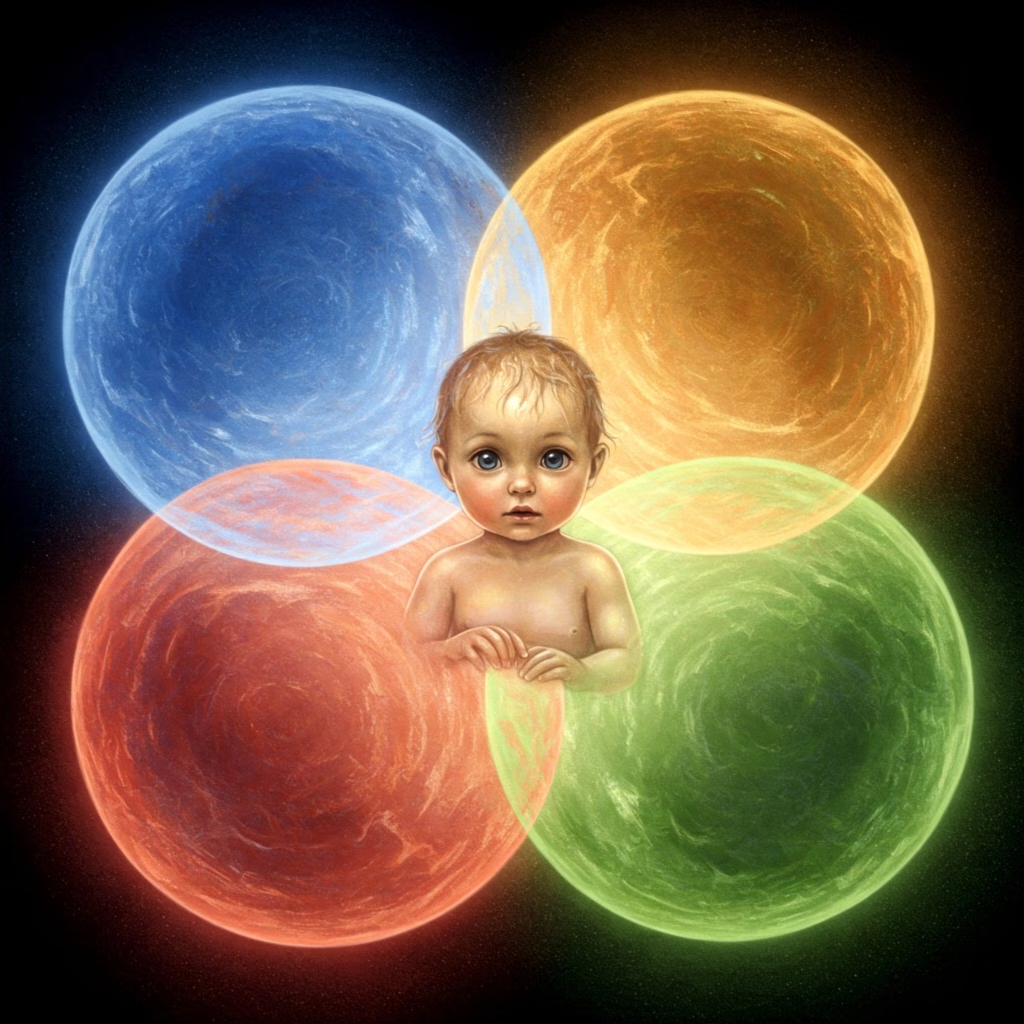
Developmental Unfolding: Addressing Thinking, Feeling, and Willing Through the Cycles
The emphasis placed on nurturing thinking, feeling, or willing shifts according to the child’s developmental stage, following the broad rhythm of the seven-year cycles.
- Early Childhood (Birth to Age Seven): Primacy of Willing and Imitation: In the first seven years, the child is fundamentally a “will-being.” Learning happens primarily through doing, moving, and imitating the actions and environment provided by the adults. The focus of education is therefore on the “hands”—providing opportunities for meaningful practical activity, free imaginative play (which is will imbued with fantasy), and surrounding the child with goodness worthy of imitation. Thinking is pictorial and deeply connected to action; feeling is immediate and absorbed from the surroundings. Prematurely demanding abstract thinking (“head” work) at this stage damages the child’s life forces. Nurturing the will through imitation and activity is the primary way to cultivate the Rudolf Steiner thinking feeling willing foundation in these early years.
- Middle Childhood (Age Seven to Fourteen): Awakening the Feeling Heart: With the change of teeth around age seven, the child enters a phase where the feeling life (heart) awakens with new intensity. The liberated etheric forces allow for learning through imagination, artistic experience, and a relationship with the teacher based on loving authority. While thinking develops through imaginative pictures and willing finds expression in artistic and practical activities, the central focus is the cultivation of a rich and balanced soul life. Music, painting, storytelling, drama, movement (eurythmy) – these are not peripheral subjects but core pedagogical tools that speak directly to the feeling realm. Academic subjects are presented artistically, appealing to the heart and imagination first, building a foundation for later conceptual understanding. This artistic immersion balances the Rudolf Steiner thinking feeling willing capacities beautifully during these crucial years.
- Adolescence (Age Fourteen to Twenty-One): Guiding Awakening Thinking: Puberty marks the birth of the independent astral body and the awakening of the capacity for abstract thought, independent judgment, and the power of ideals. The thinking (head) faculty now comes to the forefront, seeking understanding of causality, laws, and objective truth. Education must meet this need by presenting subjects intellectually, fostering critical thinking, and engaging the adolescent in a quest for genuine understanding. However, thinking must not become detached from life. It needs to be warmed by idealism (feeling) and directed towards responsible action (willing). Subjects like history, science, literature, and philosophy should be taught in a way that inspires moral engagement and a sense of purpose. The educator’s task is to guide the adolescent’s thinking towards clarity and truth, while helping them integrate it with their developing feeling life and capacity for purposeful action in the world, thus maturing the Rudolf Steiner thinking feeling willing dynamic towards freedom.
Harmonising Head, Heart, and Hands in Educational Practice
An education based on the Rudolf Steiner thinking feeling willing principle strives for integration across the curriculum and throughout the school day.
- The Central Role of Art: Artistic activity is not seen as a mere ‘extra’ but as fundamental to educating the whole human being. Painting, drawing, modelling, music, eurythmy, drama – these activities directly cultivate the feeling life (heart), train the will through disciplined practice (hands), and develop imaginative capacities that enrich thinking (head). They provide a vital bridge between the inner world of the soul and outer expression and understanding.
- The Value of Practical Work: Engaging in practical activities like handwork (knitting, sewing, woodworking), gardening, crafts, and even tasks related to maintaining the school environment, is essential for educating the will (hands). These activities develop dexterity, perseverance, planning skills, and a healthy relationship to the material world. They ground thinking and feeling in real-world application, preventing education from becoming purely theoretical or abstract.
- Integrated Subject Teaching: Even academic subjects are taught in a way that engages more than just the intellect. History is brought alive through stories and biographies that engage feeling. Geography connects the student imaginatively to different cultures and landscapes. Science is introduced through observation and phenomena first, allowing concepts to arise from experience, thus connecting thinking with perception and wonder (feeling). The aim is always to teach in a way that resonates with the child’s current developmental stage and engages thinking, feeling, and willing appropriately.
- The Teacher as Exemplar: Ultimately, the integration of thinking, feeling, and willing depends significantly on the teacher. Educators striving to work out of spiritual science must themselves cultivate balance in their own inner life. A teacher whose thinking is clear but cold, or whose feelings are warm but sentimental and lacking clarity, or whose will is strong but disconnected from thoughtful purpose, will unconsciously affect the children. The teacher’s own ongoing self-education, striving for inner harmony between head, heart, and hands, creates the most potent foundation for nurturing this balance in the students.
Conclusion: Towards Integrated Human Beings
The Rudolf Steiner thinking feeling willing framework provides a profound and practical basis for an education truly adequate to the needs of the developing human being. By consciously nurturing the capacities associated with the head (clear thinking), the heart (balanced feeling), and the hands (purposeful willing) in accordance with the child’s developmental stage, we move beyond fragmented or one-sided approaches. We help cultivate individuals who can think clearly, feel deeply and appropriately, and act effectively and responsibly in the world. Such an education, rooted in spiritual insight and artistic practice, aims not merely to impart skills but to foster the harmonious integration of the whole human being, laying the foundation for a life of freedom, purpose, and meaningful contribution to society.