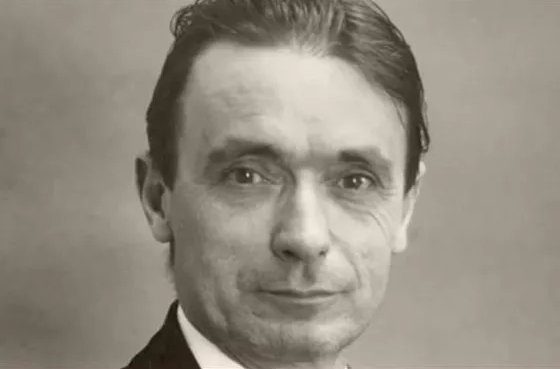
In the aftermath of the First World War, with empires collapsing and revolution spreading across Europe, most people saw only two live options for rebuilding society: capitalism or socialism. Rudolf Steiner, in a book that became one of the most widely discussed political works of its era, insisted both options made the same underlying mistake — trying to run an entire society out of a single center, whether that center was the market or the state. His proposal was a society as a living organism with three distinct, independent systems, each governed by its own logic.
Three Spheres, Not One
In Toward Social Renewal (GA 23) and The Renewal of the Social Organism (GA 24), Steiner argued a healthy society depends on the separate functioning of three spheres: a spiritual-cultural sphere covering education, science, art, and religion; a rights sphere covering law and equal protection; and an economic sphere covering production and consumption. Every person participates in all three simultaneously — what changes is not who participates, but how each sphere is governed, closer to how a body’s nervous, circulatory, and metabolic systems each follow their own laws while belonging to one organism. Steiner was careful to specify this does not divide people into three classes; it is a difference in governance, not in who takes part.
Liberty, Equality, Fraternity — In Their Right Places
Steiner connected this structure to the slogans of the French Revolution. Liberty belongs to cultural life, where science, art, and education function well only when free from external control. Equality belongs to the rights sphere, where every citizen stands equal before the law. Fraternity belongs to economic life, where production should be governed by actual need rather than unrestrained competition. The error of both capitalism and socialism, on this reading, was applying the wrong ideal to the wrong sphere.
What Happens When the Spheres Merge
Steiner was specific about what results when one sphere swallows the others: theocracy when culture dominates law and economy, unrestrained economic power writing its own favorable laws when business dominates politics, and a smothering central bureaucracy when the state attempts to run production and culture alike by decree. His diagnosis of the unitary state — a single central government administering all three spheres from one seat of power — was blunt: under this arrangement, an economic group gains the power to translate its own private interests directly into public law, since no structural wall prevents economic strength from becoming legal privilege. Genuine democracy, he argued, requires the opposite — real self-determination for both the cultural and economic spheres, precisely so the rights sphere can remain equal for everyone.
The Working Class Illusion
Steiner directed sharp criticism at the Marxist idea that culture is a mere “superstructure” generated by economic conditions. He considered this self-defeating for the workers who believed it, arguing that modern economic life had become pathological precisely because culture and law had already been reduced to mere appendages of economic power, with no independent ground from which to correct it. The path to genuine reform, he argued, runs through freeing cultural and legal life from economic dependency first, not through reorganizing the economy alone and hoping just laws and healthy culture follow automatically as an afterthought.
The full article on Substack covers Steiner’s striking proposal that capital should function as a tool rather than a private possession — passed on as a gift rather than sold or inherited — his model of self-governing economic associations as an alternative to both markets and central planning, and his sharp answer to the charge that all of this is merely utopian. Free to read on Substack.
Read the full article free on Substack →