Life presents many questions. Why do we face certain challenges? What is the source of our unique talents? What happens after death? These are ancient human inquiries. Rudolf Steiner’s spiritual science, Anthroposophy, offers profound answers. It does so through its teachings on karma and reincarnation. These are not mere philosophical speculations. Instead, Steiner described them as fundamental spiritual laws. They govern the human soul’s journey through multiple lives. Understanding “Rudolf Steiner karma reincarnation soul journey” can transform our view of existence. It brings meaning to our experiences. It also empowers us towards conscious self-development. This article explores Steiner’s insights into these great laws. It reveals their intricate workings and their deep relevance for modern life.
Reincarnation: The ‘I’s Journey Through Repeated Earth Lives
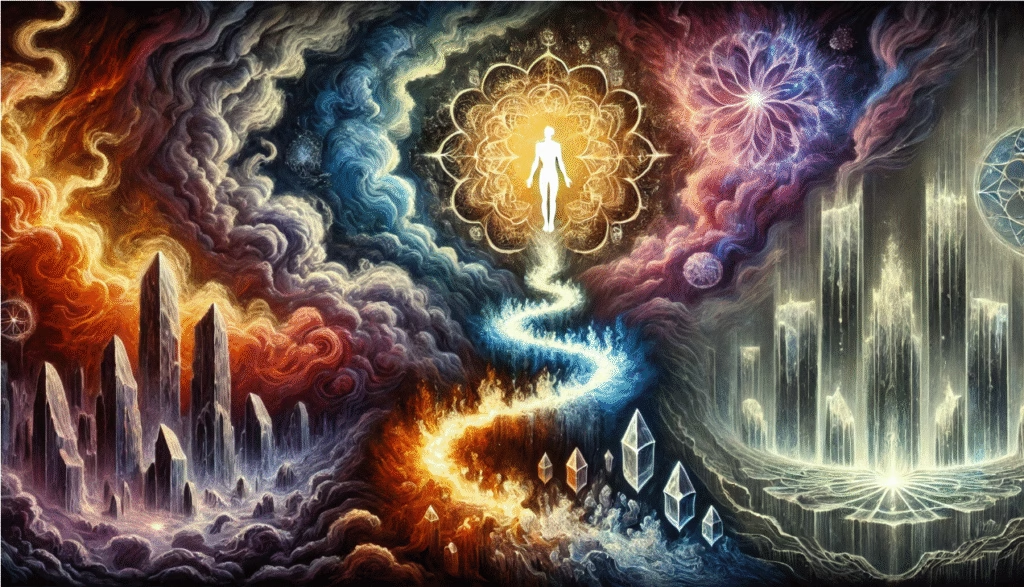
At the core of Rudolf Steiner’s teaching is the understanding of the human being. We are more than just a physical body that lives a single life. We are spiritual beings. Our innermost core is the eternal ‘I’ (Ego). This ‘I’ is our unique spiritual self. It undergoes a long process of evolution. This evolution unfolds through repeated earth lives, or reincarnation. (See GA 9, Theosophy, and GA 13, An Outline of Esoteric Science).
Each earthly incarnation offers new opportunities. The ‘I’ gains new experiences. It develops new faculties. It also works through the consequences of past actions. This is not an endless, pointless cycle. It is a purposeful journey. It leads towards ever greater spiritual maturity, wisdom, and freedom. The ‘I’ does not start afresh in each life. It carries the essence of its experiences. It also carries the developed capacities from one life into the next. This happens through the spiritual worlds between death and a new birth. This explains innate talents. It also explains deep-seated inclinations that appear early in life. These are fruits of past endeavors.
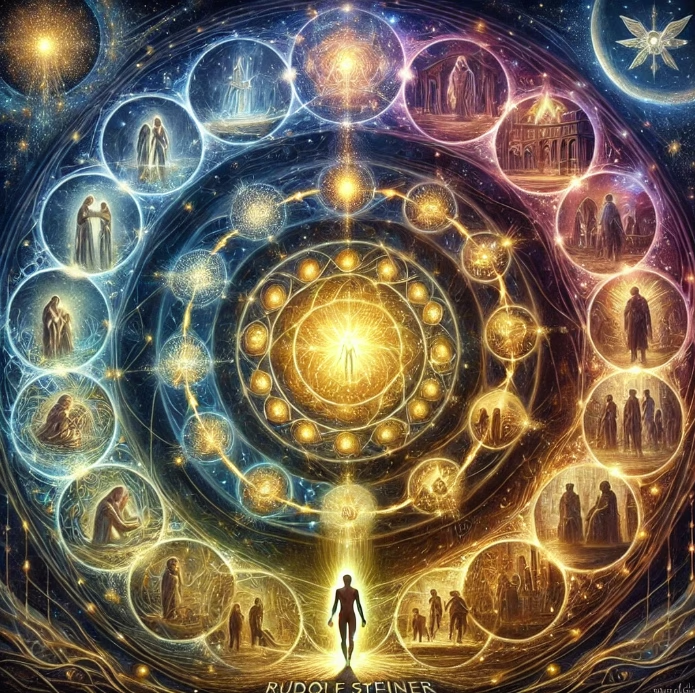
Karma: The Law of Spiritual Cause and Effect – “What is Woven”
Closely interwoven with reincarnation is the law of karma. The word “karma” means “deed” or “action.” However, in spiritual science, it refers to the law of spiritual cause and effect. This law extends across multiple lifetimes. It ensures that our actions, feelings, and thoughts have consequences. These consequences return to us. They do so not as arbitrary rewards or punishments. They return as opportunities for learning and balance.
How Karma Operates
Rudolf Steiner emphasized that karma is not a rigid, mechanical law. It is a living, dynamic process. It is guided by spiritual wisdom. What we sow in one life, we reap in a future one. This is so we can understand the full impact of our being in the world. For example:
- Actions that caused suffering to others may lead us to experience similar suffering. This helps us develop empathy and understanding.
- Unused talents or neglected responsibilities in one life may create an inner urge. This urge is to develop those capacities or fulfill those duties in a subsequent life.
- The way we think and feel also creates karmic threads. These influence our future mental and emotional predispositions.
Karma shapes our destiny. This includes our physical constitution. It includes our health and illness. (See GA 107, Disease, Karma and Healing). It shapes our talents and weaknesses. It influences the people we meet. It also guides the major turning points in our lives. We often meet individuals with whom we have strong karmic connections from past lives. These connections can be positive or challenging. They always offer opportunities for mutual growth and the balancing of past deeds.
The Journey Between Death and a New Birth: A Spiritual Odyssey
What happens to the human soul between earthly lives? Rudolf Steiner provided detailed spiritual-scientific accounts of this journey. This journey is crucial for processing the past life. It is also essential for preparing the next one. (See GA 141, Between Death and Rebirth, and GA 153, The Inner Nature of Man and the Life Between Death and a New Rebirth).
Immediately After Death
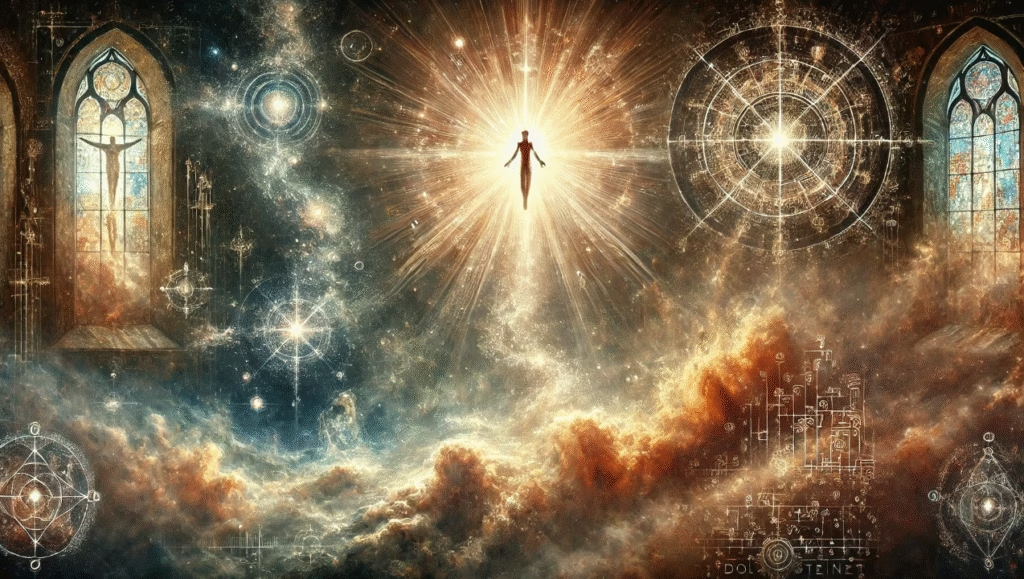
When the physical body dies, the etheric body (life body) initially remains with the ‘I’ and astral body. For a few days, the soul experiences a vast, panoramic memory tableau. This is a vivid review of the entire past life in reverse order. The etheric body then dissolves into the general cosmic ether.
Kamaloka: The Realm of Soul Purification
Next, the ‘I’ and the astral body (soul body) enter a period of purification. Steiner sometimes used the Eastern term Kamaloka for this phase. Here, the soul relives its past earthly experiences again in reverse. However, it now experiences them from the perspective of those affected by its actions. It feels the joy it gave. It also feels the pain it caused. This is a crucial process. It cleanses the astral body of desires and attachments tied to the physical world. This purification prepares the soul for higher spiritual regions. The duration and intensity of Kamaloka vary. It depends on the individual’s past life.
Life in Spiritland (Devachan): Assimilation and Cosmic Learning
After Kamaloka, the ‘I’ ascends into the purely spiritual worlds. Steiner often referred to this as Spiritland or Devachan. This is a realm of immense spiritual light, harmony, and wisdom. Here, the soul is free from earthly limitations. It works to assimilate the essence, the spiritual fruits, of its past life. It transforms earthly experiences into capacities and moral strength.
In Spiritland, the ‘I’ also collaborates with hierarchical spiritual beings. These beings guide cosmic and human evolution. The soul participates in the spiritual archetypes of earthly existence. It experiences the wisdom underlying the cosmos. This period is one of profound learning. It is also a time of creative spiritual activity. It is not a static heaven. It is a dynamic, evolving state of consciousness.

Preparing for a New Birth
The experiences in Spiritland eventually lead to an impulse for a new earthly life. The ‘I’ begins to feel a longing for new experiences. It feels the need to further develop its capacities. It also desires to balance its remaining karma. Guided by its karma and its spiritual insights, the ‘I’ gradually descends. It begins to form new, subtle bodies. It attracts an etheric body and an astral body. These are shaped by its past deeds and future tasks. It also participates in choosing its future parents. It chooses the cultural environment and life circumstances. These will provide the best opportunities for its next stage of evolution. This entire process is overseen by wise spiritual hierarchies.
Karma, Freedom, and the Christ Impulse: Transforming Destiny
Does karma mean we have no freedom? Rudolf Steiner strongly refuted this idea. Karma sets the conditions for our lives. It shapes the stage upon which we act. However, within those conditions, the human ‘I’ possesses the potential for freedom. We can meet our karmic destiny consciously. We can learn from our experiences. We can transform negative tendencies into positive virtues.
This capacity for freedom is central to human dignity. Moreover, the Christ impulse, which entered Earth evolution through the Mystery of Golgotha, profoundly impacts how karma works. The Cosmic Christ Spirit incarnated in the man Jesus at the Baptism in Jordan. His subsequent deed on Golgotha, His death and Resurrection, infused humanity with new spiritual forces.
The Christ impulse offers:
- New Moral Strength: It empowers the ‘I’ to act out of love and spiritual insight, rather than just karmic necessity.
- The Possibility of Grace and Forgiveness: While karma ensures balance, the Christ impulse allows for the transformation of guilt and the healing of karmic wounds in ways that transcend a simple “eye for an eye” principle.
- The Path to True Freedom: By connecting with the Christ impulse, the human being can increasingly act out of spiritual freedom. This means becoming a conscious co-creator of one’s destiny, rather than a passive recipient of it. The Christ did not come to abolish karma. He came to enable humanity to bear it and transform it in a new, more spiritual way.
Recognizing Karma in Everyday Life: Clues and Insights
How can we become more aware of karma in our own lives? Direct perception of past lives requires developed clairvoyance. However, Rudolf Steiner indicated that we can find clues and develop a feeling for karmic connections through careful observation and reflection:
- Innate Talents and Weaknesses: Skills that come easily, or persistent challenges, often point to experiences from past lives.
- Sudden Strokes of Fate: Unexpected events, both positive and negative, can sometimes be understood as the ripening of karmic seeds.
- Deep Connections with People: Instant feelings of affinity or antipathy towards someone often signal a karmic link from a previous incarnation. Important relationships are rarely accidental.
- Recurring Life Patterns: Repeating themes or challenges in our lives can indicate karmic issues we are working to resolve.
- Physical Constitution and Health: Steiner showed how our physical form and even tendencies towards certain illnesses can be connected to our karmic past. (GA 107).
Understanding karma is not about blaming ourselves or others. It is about recognizing the meaningful interconnectedness of all life. It helps us to meet challenges with greater understanding and resilience. It encourages us to take responsibility for our actions, knowing they have far-reaching consequences.
The Relevance of Karma and Reincarnation for Modern Spiritual Seekers
The teachings of karma and reincarnation offer profound solace and meaning to modern individuals. Many grapple with existential questions in a seemingly chaotic world.
- Provides Meaning to Suffering: Karma helps us understand that suffering is not random or meaningless. It is often a consequence of past actions (our own or those of humanity collectively). It is also an opportunity for growth and the development of compassion.
- Offers a Sense of Purpose: Knowing that our ‘I’ evolves through many lives gives a larger context to our current existence. Each life has a unique purpose within this grand evolutionary journey.
- Encourages Moral Responsibility: If we understand that our thoughts, feelings, and deeds create our future, we are more likely to strive for moral integrity.
- Deepens Human Relationships: Recognizing karmic connections can transform our relationships. It helps us to approach others with greater understanding, patience, and forgiveness.
- Fosters True Self-Knowledge: The path of spiritual development involves becoming aware of our karmic patterns. This awareness is crucial for inner transformation.
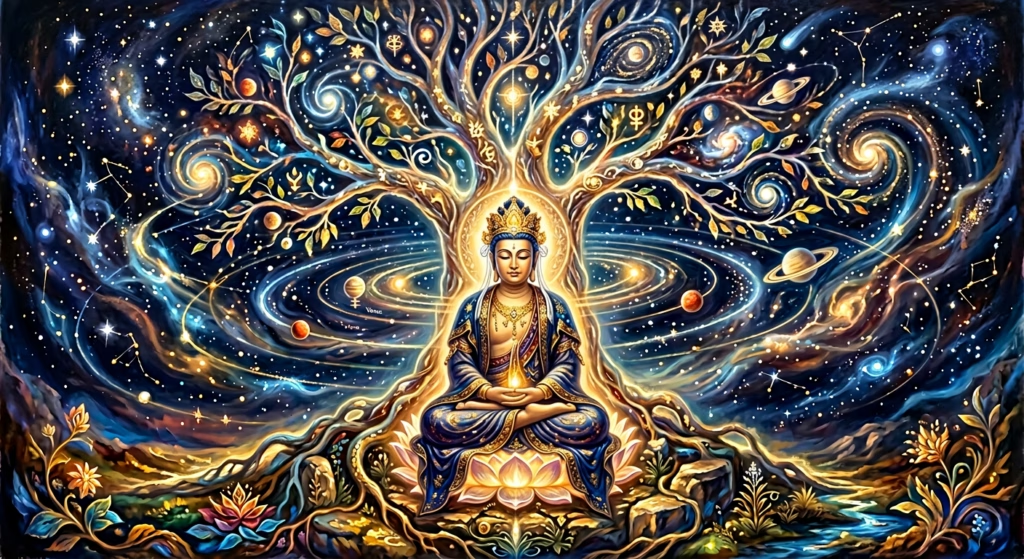
For modern spiritual seekers, these concepts provide a robust framework. It helps to navigate life with wisdom and purpose. It encourages us to see ourselves as spiritual beings on an eternal journey of learning and becoming.
Conclusion: The Soul’s Unfolding Path to Spiritual Freedom
Rudolf Steiner’s spiritual science unveils karma and reincarnation as fundamental laws. They underpin human existence and evolution. His insights into the “Rudolf Steiner karma reincarnation soul journey” are not fatalistic. Instead, they are deeply empowering. They reveal the human ‘I’ as an eternal, evolving spiritual being. This being actively shapes its own destiny across multiple lifetimes.
The journey between death and a new birth is a period of profound spiritual activity. It is not a void. Karma is the wise, guiding principle that ensures balance and learning. The Christ impulse offers the possibility of transforming this destiny in freedom and love. By understanding these great laws, we can begin to live more consciously. We can take responsibility for our inner and outer lives. We can meet our challenges with courage. We can embrace our unique path of spiritual development. This leads towards the ultimate goal of all human striving: to become free, loving, and creative co-workers in the great cosmic evolution.