The ancient Persian civilization, with its enigmatic prophet Zarathustra, stands as a pivotal epoch in human history. It brought forth a powerful worldview. This worldview centered on the cosmic struggle between Light and Darkness. Rudolf Steiner’s spiritual science, Anthroposophy, offers profound insights into this culture. It reveals the deep spiritual mission of Zarathustra. It also clarifies the significance of the Persian mysteries. These mysteries prepared humanity for a new stage of consciousness. Understanding “Rudolf Steiner Zarathustra Persian mysteries light darkness” illuminates a crucial chapter. It is a chapter in our collective spiritual journey. It also shows its enduring relevance for navigating moral challenges today. This article explores Steiner’s spiritual-scientific interpretation. We will look at ancient Persian wisdom. We will examine its great teacher. We will also consider its lasting impact on human evolution.
The Second Post-Atlantean Epoch: Persia’s Unique Cultural Mission
In Rudolf Steiner’s expansive view of history, humanity evolves through a series of post-Atlantean cultural epochs. (See GA 13, An Outline of Esoteric Science, and GA 11, Cosmic Memory). The Ancient Persian epoch was the second of these. It followed the deeply inward, spiritually nostalgic culture of Ancient India. The primary mission of the Indian epoch was to preserve a memory of humanity’s spiritual origins. Its people experienced the physical world as Maya, or illusion.
The Persian epoch, conversely, had a different task. Its mission was to turn humanity’s attention towards the physical Earth. It was to engage with the material world actively. It aimed to work upon it and transform it. This was a necessary step. It helped humanity to ground itself more firmly in earthly existence. It also prepared humanity for future stages of ‘I’-consciousness development. The primary focus of soul development during this age was the human astral body. This is the carrier of our feelings, desires, and active impulses. The Persians were called to cultivate this astral body. They were to do so in active engagement with the world. This meant making conscious moral choices.
Zarathustra (Zoroaster): The Great Initiate of the Sun Oracle
The guiding spiritual leader of the Ancient Persian epoch was the sublime initiate Zarathustra (the Greek form is Zoroaster). Rudolf Steiner described Zarathustra not merely as a wise philosopher. He was a being of immense spiritual stature. He possessed direct clairvoyant perception of the spiritual worlds. He was a messenger from the great Sun Oracle. This was the central spiritual source guiding Earth evolution at that time.
Steiner spoke of an original, primordial Zarathustra. This being was the founder of this cultural stream. His profound teachings were then renewed and adapted by later individuals. These individuals also bore the name or title of Zarathustra. This indicates a continuous spiritual stream. The original Zarathustra had a unique task. He was to impart to humanity a new understanding. This understanding concerned the spiritual beings active in the cosmos. It particularly focused on the great conflict between the Spirit of Light and the Spirit of Darkness.
Ahura Mazda: The Great Spirit of Light and the Sun Being
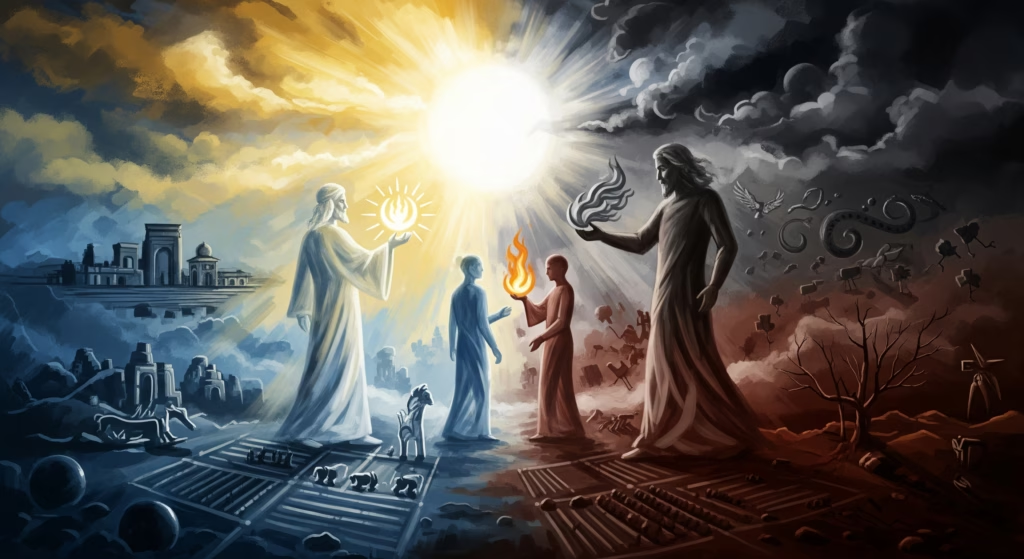
At the heart of Zarathustra’s teaching was the reverence for Ahura Mazda. Ahura Mazda means “Wise Lord” or “Lord of Wisdom.” He was perceived as the supreme Creator Being. He was the source of all light, goodness, truth, and life. Zarathustra taught his people to see the physical sun as the outer garment or manifestation of this sublime spiritual Being. Ahura Mazda was the Great Sun Spirit. His radiance permeated the cosmos. He created the world as a realm of light and order.
Rudolf Steiner revealed that Zarathustra’s vision of Ahura Mazda was a profound, prophetic anticipation. It was a foresight of the Cosmic Christ Spirit. The Christ, as the true Sun Being, would later enter Earth evolution in a unique way. Thus, the Persian mysteries, centered on Ahura Mazda, were a crucial preparation. They readied human hearts and minds. They prepared them to eventually understand the even greater revelation of the Christ impulse. This was a core aspect of Persia’s spiritual mission.
Angra Mainyu (Ahriman): The Opposing Spirit of Darkness and Deception
Zarathustra’s teachings were not one-sided. He also brought to human consciousness an awareness of an opposing power. This was the Spirit of Darkness, known as Angra Mainyu. This name means “Hostile Spirit” or “Destructive Spirit.” Angra Mainyu was the adversary of Ahura Mazda. He sought to corrupt the good creation. He introduced lies, disease, decay, and death into the world. He constantly tried to lead human beings away from the light. He aimed to bind them to darkness and illusion.
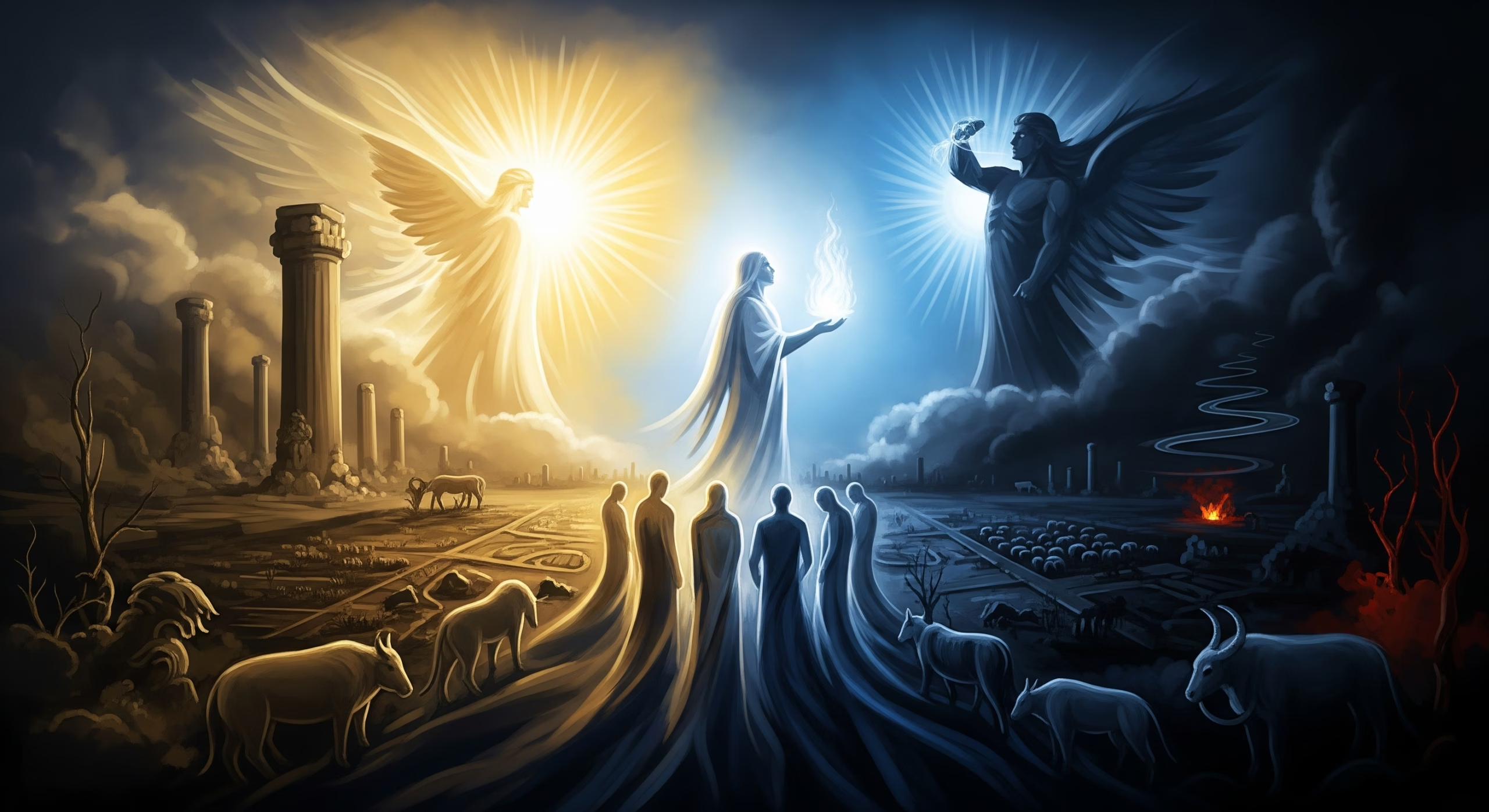
This understanding of a cosmic dualism—a fundamental struggle between Light (Ahura Mazda) and Darkness (Angra Mainyu)—was a hallmark of Persian spirituality. The world was seen as a battlefield. Human beings were called to be active participants in this struggle. They were to align themselves with the forces of Ahura Mazda. They were to combat the influences of Angra Mainyu. Rudolf Steiner identified Angra Mainyu as an early form or precursor of the being he later described more fully as Ahriman. Ahriman is the spirit of materialism, cold intellect, lies, and fear. He becomes particularly active in later human evolution, especially in our modern age. The Persian epoch thus provided humanity with its first great schooling. It taught us about these adversarial powers.
The Teachings and Mysteries of Ancient Persia: Working for the Light
The spiritual practices and cultural life of ancient Persia reflected this dualistic worldview. Zarathustra’s teachings emphasized:
- Active Engagement with the Earth: Unlike the world-renouncing tendency of some Indian spirituality, Persians were taught to work actively in the world. Cultivating the land, domesticating useful animals (like the cow and dog), and maintaining cleanliness were seen as religious duties. These actions supported the forces of Ahura Mazda. They helped to redeem the Earth from the influence of Angra Mainyu.
- Moral Responsibility: Human beings were seen as free to choose between good and evil. Their thoughts, words, and deeds had cosmic significance. They either supported Ahura Mazda or Angra Mainyu. This fostered a strong sense of moral responsibility.
- Reverence for Fire: Fire was held sacred. It was seen as a pure physical reflection of the divine light of Ahura Mazda. Sacred fires were maintained in temples. They served as focal points for worship and ritual.
- Truthfulness and Purity: Great emphasis was placed on truthfulness in thought, word, and deed. Purity of body and soul was also considered essential for aligning oneself with the Spirit of Light.
- Prophecies of a Future Redeemer: Persian cosmology included prophecies of future saviors or helpers of Ahura Mazda. The most significant was Sosiosh. He would ultimately overcome Angra Mainyu. He would bring about the final purification and renewal of the world (Frashokereti). This, too, can be seen as a prophetic anticipation. It foreshadowed the redemptive deed of the Christ.
The Persian Mysteries initiated individuals into these truths. They taught them about the cosmic struggle. They also showed them how to become conscious co-workers with Ahura Mazda.
Zarathustra’s Enduring Influence: Reincarnations and Spiritual Streams
Rudolf Steiner revealed that the great individuality known as Zarathustra did not limit his work to one lifetime. His powerful ‘I’ reincarnated in subsequent epochs. It continued to guide humanity. Steiner indicated that this same individuality later incarnated as:
- Hermes Trismegistus: The great teacher of the Egypto-Chaldean mysteries.
- Moses: The lawgiver of the Hebrew people. Eventually, Steiner revealed, this Zarathustra-individuality played a crucial role in the events leading up to the Mystery of Golgotha. He incarnated as one of the two Jesus children described in Anthroposophy. This was the Solomon Jesus child, whose birth and early life are narrated in the Gospel of St. Matthew. (See GA 123, The Gospel of St. Matthew). This child, gifted with the ancient wisdom of Zarathustra, prepared a part of the human vehicle. This vehicle was needed for the later incarnation of the Cosmic Christ Spirit.
Furthermore, the Magi (Wise Men from the East) who came to seek the newborn Jesus were pupils of the renewed Zarathustrian stream. They possessed star wisdom. This wisdom allowed them to recognize the signs of a great spiritual event. Their journey represents the culmination of ancient Persian prophecies. It showed the longing for the coming of the true Sun Spirit.
The Persian Epoch in the Context of Human Consciousness Evolution
The Ancient Persian cultural epoch represents a vital stage in the evolution of human consciousness.
- Transition from Inwardness to Outwardness: It marked a shift from the profound spiritual inwardness of Ancient India. It moved towards a more active engagement with the material world and its challenges.
- Development of the Astral Body: The primary focus was the cultivation of the astral body. This is the carrier of feelings, desires, and the dawning awareness of moral polarities.
- Awareness of Good and Evil: Humanity began to consciously grapple with the forces of good and evil in the world and within the human soul. This was a necessary step towards developing moral freedom.
- Preparation for Later Epochs: This stage prepared humanity for the subsequent development. This included the intellectual soul in the Greco-Roman epoch. It also prepared for the consciousness soul in our current Fifth Post-Atlantean Epoch. The experiences of duality and moral struggle were essential. They helped to forge the strength of the individual ‘I’.
Relevance for Modern Spiritual Seekers: Understanding Duality and Our Moral Tasks
The ancient Persian struggle between light and darkness resonates deeply with modern human experience. Rudolf Steiner showed that the adversarial beings, Ahriman (prefigured by Angra Mainyu) and Lucifer, are still active today. They influence our thinking, feeling, and willing in powerful ways.
- Recognizing Adversarial Influences: Understanding the Persian worldview helps us to identify these forces. We can see Ahriman in excessive materialism, cold intellectualism, and the denial of spirit. We can see Lucifer in spiritual pride, illusion, and ungrounded idealism.
- Conscious Moral Striving: Zarathustra’s call to actively choose the light and work for the good remains profoundly relevant. We are constantly faced with moral choices. We must strive to align ourselves with forces of truth, love, and spiritual progress.
- Transforming the World: The Persian impulse to transform the Earth, to make it a reflection of divine order, is also important. It encourages us to work actively and responsibly in our professions and communities. We should strive to bring spiritual values into all aspects of life.
- The Role of the Christ Impulse: While the Persians experienced a powerful dualism, Rudolf Steiner emphasized that the Christ impulse ultimately provides the means to overcome this duality. The Christ Being did not annihilate Ahriman or Lucifer. Instead, He entered into their sphere of influence. Through His deed on Golgotha, He brought the power to balance these extremes. He enables humanity to find a path of freedom between them. (Standard English capitalization is used for pronouns referring to the Christ).
For modern spiritual seekers, the legacy of Zarathustra is a call to wakeful consciousness. It is a call to moral courage. It is also a call to active participation in the spiritualization of the world.
Conclusion: Zarathustra’s Light in Humanity’s Spiritual Dawn
Rudolf Steiner’s spiritual-scientific interpretation of Zarathustra and the Ancient Persian epoch unveils a crucial chapter. It is a chapter in humanity’s long journey towards self-consciousness and spiritual freedom. “Rudolf Steiner Zarathustra Persian mysteries light darkness” guides us to profound understanding. The teachings of Ahura Mazda and the struggle against Angra Mainyu were not just ancient religious ideas. They were expressions of a developing human soul. This soul was learning to navigate the complexities of earthly existence. It was also preparing for future, even greater, spiritual revelations.
The Persian epoch, with its emphasis on moral choice and active engagement with the world, played a vital role. It helped to forge the capacities needed for later stages of human evolution. Its prophetic visions of a great Sun Spirit laid groundwork. This groundwork prepared for humanity’s eventual encounter with the Christ impulse. The light kindled by Zarathustra in ancient times continues to shine. It offers inspiration. It also offers guidance for all who strive to understand the cosmic dance of light and darkness. It calls us to work for the victory of goodness and truth in the world.