
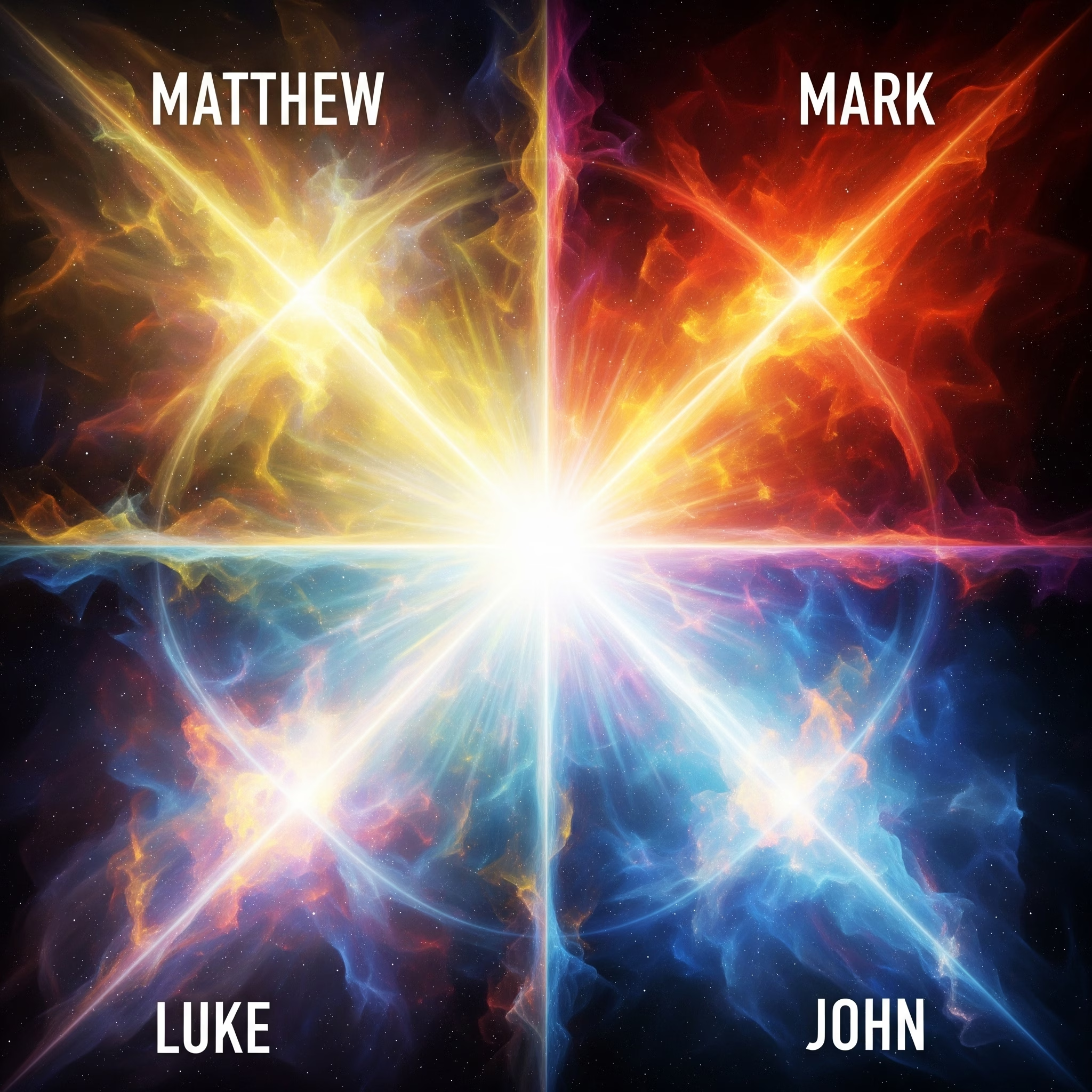
The Four Gospels of the New Testament stand as pillars of Christian faith. They narrate the life and deeds of Jesus Christ. Yet, they also present distinct, sometimes seemingly varied, accounts. How can we understand these differences? Rudolf Steiner’s spiritual science, Anthroposophy, offers a profound perspective. It reveals the Four Gospels not as contradictory, but as complementary. Each Gospel, Steiner showed, unveils a unique facet of the multifaceted Christ Being. Each addresses a different aspect of human nature and spiritual need. Understanding “Rudolf Steiner Four Gospels spiritual missions Christ” unlocks a deeper, more complete comprehension. It clarifies the Christ event and its enduring significance for humanity. This article explores Steiner’s insights. We will examine the specific character and mission of Matthew, Mark, Luke, and John.
Beyond Literalism: A Spiritual-Scientific View of the Gospels
Rudolf Steiner approached the Gospels as documents of profound initiation wisdom. They are not merely historical biographies in the modern sense. Instead, they are sacred texts. They were written out of deep spiritual insight. They aim to convey spiritual realities that transcend ordinary perception. Steiner often referred to the Akasha Chronicle, a spiritual record of all events. He indicated that the Gospel writers, or the spiritual streams behind them, drew from this source. They did so to portray the earthly life and cosmic significance of the Christ Being. (Foundational ideas in GA 8, Christianity as Mystical Fact, and GA 131, From Jesus to Christ).
The differences between the Gospels, therefore, are not errors. They are purposeful. They reflect the unique spiritual perspective of each evangelist. They also address the varied spiritual needs of humanity. Together, they offer a richer, more complete picture of the Christ. This is a picture that no single account could provide alone.
The Four Living Creatures: A Symbolic Key to the Gospels’ Natures
Rudolf Steiner often connected the Four Gospels to the Four Living Creatures described in the Book of Revelation (and Ezekiel). These are the Man, the Lion, the Bull (or Calf), and the Eagle. These ancient symbols, he explained, represent different spiritual principles. They also correspond to distinct aspects of the Christ Being’s manifestation. Furthermore, they relate to the primary soul forces within the human being.
- Matthew is associated with the Man. This symbolizes humanity, wisdom, and the human lineage of Jesus.
- Mark is linked to the Lion. This represents courage, royal power, and the dynamic force of the Christ.
- Luke corresponds to the Bull. This signifies sacrifice, devotion, healing strength, and selfless service.
- John relates to the Eagle. This symbolizes the highest spiritual insight, soaring vision, and connection to the cosmic Logos.
This symbolic key helps us understand the particular focus and spiritual atmosphere of each Gospel.
The Gospel of St. Matthew: Christ as the Messiah of Humanity (The Man)
The Gospel of St. Matthew presents Jesus Christ primarily as the Messiah. He is the fulfillment of ancient Hebrew prophecies. He is the long-awaited King from the royal line of David. (See GA 123, The Gospel of St. Matthew).
Lineage and Wisdom
Matthew begins with a genealogy. It traces Jesus’s lineage back to Abraham through the Solomonian line of David. Rudolf Steiner revealed a profound spiritual fact here. This Gospel describes one of the two Jesus children central to his Christology. The Solomon Jesus child possessed an old, highly evolved ‘I’ (ego). This ‘I’ was that of the great Persian initiate, Zarathustra, reincarnated. Thus, this Jesus child was born with immense wisdom. He had an inherent understanding of cosmic and human history. The Magi from the East recognized their master in this child.
Focus on Teachings
Matthew emphasizes the teachings of Jesus Christ. The Sermon on the Mount is a central feature. This Gospel portrays Christ as the great lawgiver. He fulfills and transcends the Mosaic Law. He brings a new moral and spiritual code for humanity. The human, kingly, and wisdom aspects of Jesus are prominent.
Mission
The mission of Matthew’s Gospel is to connect the Christ event to the historical stream of humanity. It shows Christ as the rightful heir to ancient spiritual traditions. It also presents Him as the one who brings these traditions to their highest fulfillment. It speaks powerfully to the human need for wisdom and righteous guidance.
The Gospel of St. Mark: Christ as the Bringer of Cosmic Power (The Lion)
The Gospel of St. Mark is the shortest and most dynamic of the four. It portrays Jesus Christ as a Being of immense cosmic power and activity. (See GA 139, The Gospel of St. Mark).
Deeds and Authority
Mark emphasizes Christ’s deeds and miracles more than His lengthy discourses. He shows Christ confronting and overcoming adversarial spiritual forces. He heals the sick. He commands the elements. The narrative is energetic. It moves swiftly from one powerful manifestation to the next. The lion, as a symbol of royal power and courage, aptly characterizes this Gospel’s depiction.
Immediate Impact
Mark’s Gospel highlights the immediate, transformative impact of the Christ Being on the world. It shows Him as a dynamic spiritual force. This force breaks into earthly existence. It overcomes obstacles. It brings renewal. There is less emphasis on genealogy or detailed teachings. The focus is on the direct revelation of divine power through action.
Mission
The mission of Mark’s Gospel is to reveal the Christ as a potent, active spiritual force. He is capable of transforming reality. It speaks to the human need to experience the divine not just as wisdom, but as living, world-changing power. It shows the courage needed to face and overcome darkness.
The Gospel of St. Luke: Christ as the Bringer of Universal Love and Healing (The Bull)
The Gospel of St. Luke presents Jesus Christ as the embodiment of boundless love, compassion, and healing. The symbol of the Bull, an ancient sacrificial animal, points to Christ’s selfless sacrifice and His deep connection to the suffering of humanity. (See GA 114, The Gospel of St. Luke).
Compassion and Inclusivity
Luke emphasizes Christ’s care for the poor, the sick, the outcast, and sinners. His parables often highlight themes of mercy, forgiveness, and the lost being found (e.g., the Prodigal Son, the Good Samaritan). This Gospel has a universal reach. It shows the Christ impulse extending to all humanity, regardless of social standing or background.
The Other Jesus Child
Luke also begins with a genealogy. However, this genealogy traces back to Adam through Nathan, another son of David. Rudolf Steiner explained that this Gospel describes the second of the two Jesus children. The Nathan Jesus child possessed a pristine, uncorrupted soul. This soul embodied pure love and innocence. It had been preserved from the harsher aspects of human evolution. Steiner also connected this Nathan Jesus child with the spiritual stream of Buddha. This stream brought immense compassion and peace to humanity.
Mission
The mission of Luke’s Gospel is to reveal the profound heart forces of the Christ Being. It shows His mission of universal healing and redemption. It speaks to the deepest needs of the human soul for love, forgiveness, and connection. It emphasizes the sacrificial nature of the Christ’s deed.
The Gospel of St. John: Christ as the Eternal Logos and Initiator (The Eagle)
The Gospel of St. John stands apart from the other three (the Synoptic Gospels). It is the most overtly esoteric and spiritual of the four. The Eagle, with its soaring flight and keen vision, symbolizes John’s capacity for the highest spiritual insight. (See GA 94, lectures on St. John, and GA 112, The Gospel of St. John and its relation to the other Gospels).
The Cosmic Word and the “I AM”
John begins with the majestic prologue: “In the beginning was the Word (Logos)…” This immediately establishes Christ’s identity as the eternal Cosmic Logos. He is the divine creative principle through whom all things were made. Throughout this Gospel, Jesus speaks as the “I AM.” This signifies His divine self-consciousness. It also points to the awakening of the ‘I AM’ within each human being as a spiritual goal.
Initiation Wisdom
John’s Gospel is structured around seven “signs” (miracles). These are portrayed as profound spiritual teachings, revealing different aspects of the Christ’s being and mission. His discourses are deep. They speak of eternal life, rebirth from spirit, and the intimate relationship between the Christ and His followers (“I am the vine, you are the branches”). Steiner showed that John’s Gospel is essentially an initiation document. It outlines the path to direct spiritual experience of the Christ.
Mission
The mission of John’s Gospel is to lead humanity to a conscious, experiential knowledge of the Cosmic Christ Spirit. It aims to awaken the deepest spiritual intuitions within the human soul. It reveals the Christ not just as a historical figure, but as an ever-present spiritual reality. This reality can be known through inner development.
The Two Jesus Children: A Key to Harmonizing the Gospels
Rudolf Steiner’s revelation of the two Jesus children provides a crucial key. It helps to harmonize the seemingly different accounts in Matthew and Luke. The Solomon Jesus (Matthew) brought the wisdom-filled ‘I’ of Zarathustra. The Nathan Jesus (Luke) brought pristine soul purity and Buddhic compassion. Steiner described how, at the age of twelve (as depicted in Luke’s temple scene), the Zoroastrian ‘I’ passed from the Solomon child into the Nathan child. The Solomon child then faded. The Nathan Jesus, now carrying this mature ‘I’, continued to develop. He became the unique human vessel. This vessel was prepared to receive the Cosmic Christ Spirit at the Baptism in the Jordan. This profound understanding reconciles the genealogies. It also explains the different qualities emphasized in Matthew’s and Luke’s infancy narratives.
Complementary Perspectives: The Gospels as a Unified Spiritual Whole
The Four Gospels, therefore, are not in contradiction. They are complementary perspectives. Each is essential for a complete understanding of the Christ event. They are like four streams flowing from a single divine source. They nourish different aspects of the human soul.
- Matthew connects the Christ to human history and ancient wisdom.
- Mark reveals His dynamic power to transform the world.
- Luke shows His infinite love and compassion for every individual.
- John lifts us to a cosmic understanding of His divine nature as the Logos.
Rudolf Steiner often pointed out that John’s Gospel provides a kind of spiritual key. It helps to unlock the deeper meanings of the Synoptic Gospels. (This is a theme in GA 112). Together, they form a harmonious fourfold chord. This chord resounds with the fullness of the Christ impulse.
Relevance for Modern Spiritual Seekers: Finding Our Unique Path to the Christ
For modern individuals seeking a deeper understanding of Christianity, Steiner’s insights into the Four Gospels are invaluable.
- Meeting Individual Needs: Different people may find a particular Gospel speaks most strongly to their current spiritual needs or temperament.
- A Holistic View: Studying all four perspectives provides a more complete and balanced understanding of the Christ Being and His mission.
- Guides for Inner Development: Each Gospel can be meditated upon. It can serve as a guide for specific aspects of inner development (e.g., Matthew for wisdom, Mark for will forces, Luke for heart forces, John for higher spiritual cognition).
- Understanding the Christ Now: These ancient texts, when illumined by spiritual science, become living guides. They help us to understand the ongoing work of the Christ impulse in our time, including His presence in the etheric realm.
The Four Gospels, understood through Rudolf Steiner’s Four Gospels’ spiritual missions cease to be merely historical documents. They become powerful tools for contemporary spiritual life.
Conclusion: The Fourfold Light of the Christ Event
Rudolf Steiner’s spiritual-scientific interpretation of the Four Gospels unveils their profound unity and their distinct spiritual missions. Matthew, Mark, Luke, and John each provide an essential window onto the multifaceted Being of Jesus Christ. They show His incarnation, His deeds, His teachings, and His pivotal Mystery of Golgotha. Together, they form a radiant, fourfold light. This light has illuminated humanity’s spiritual path for two millennia. It continues to offer guidance, strength, and inspiration for all who seek the living truth of the Christ impulse in our time. By engaging with these sacred texts through the lens of Anthroposophy, we can deepen our connection to the central spiritual event of Earth evolution. We can also find our own unique way to participate in its ongoing transformative power.




Please add me to your mailing list.
Sure